
Or at least I just about remember. And while that remains the case, I shall write about it that you may read it. You may also not read it. You may read some of it. There are many possible options here, but the die is cast.
During my 2022 World Tour of Andalucía I quite by chance met a writer from Estonia on an Artists Residence in the city. (Having checked the original post to see whether this was something that regular readers of this now decidedly irregular publication might recall, I realised that the original post is surprisingly and, to me at least, disappointingly, light on details of this enjoyable encounter.) After a thoroughly enjoyable initial conversation, I arranged to go and see her exhibition shortly before it closed and her residence finished. Along with my travel companion on the trip, we then spent an enjoyable evening ‘de tapeo’ and discussing … mostly feminism. Upon parting ways, my new friend asked if I would consider visiting Estonia. I said that I was now considerably more likely to do so than I had previously been before making the acquaintance of someone from Estonia.
2023 World Tour of … Austria
Cut to April 2023 and my friend down in Granada had become my friend in Graz, Austria. Given the grand tradition of visiting places previously unknown to me through this particular friend’s movements, I quite inevitably booked some flights (on Lauda Air enabling me to tick off something from 13-year-old Owain’s bucket list) to Vienna and a bus to Graz for the second half of my Easter break.
Lauda Air were operating the flights for Ryanair, and my friend would definitely have thought me a rube for paying for extra luggage, so I heeded the forecast that indicated it would rain for the entire duration of my trip and went wearing my shiny, new, waterproof boots … that were still shiny and new despite me having bought them a couple of months previous when it threatened to rain in Valencia. As foreshadowed by the previous sentence, it was, however, delightfully warm and sunny when I got to Graz, and as we started wandering around and up the Schlossberg I wondered if my feet might be a uncomfortably warm and not as agile as I might like for the next few days.


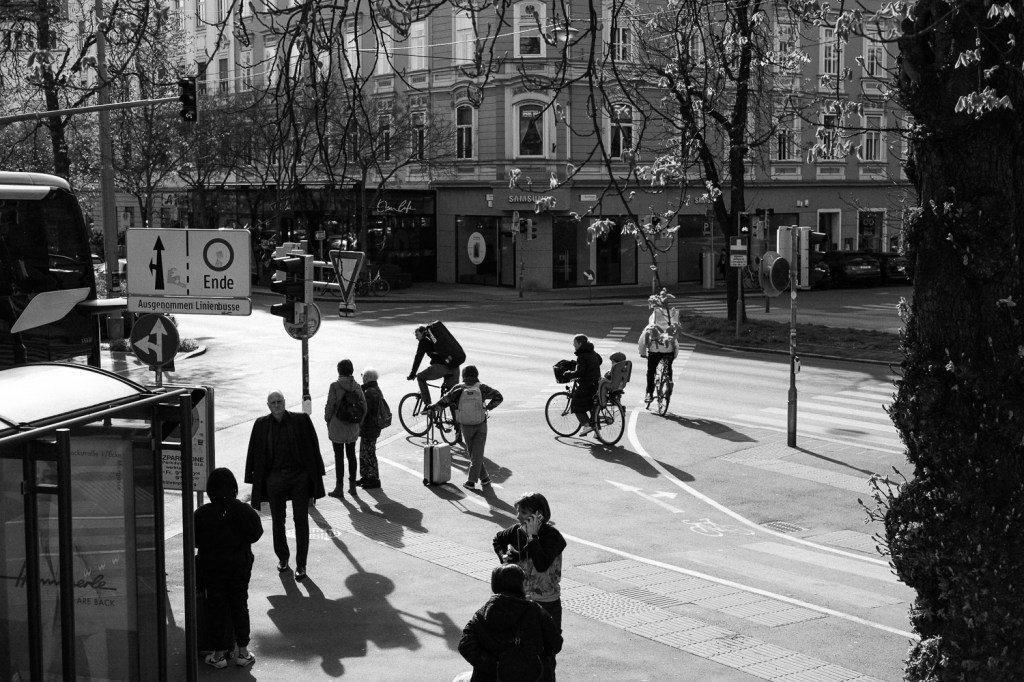
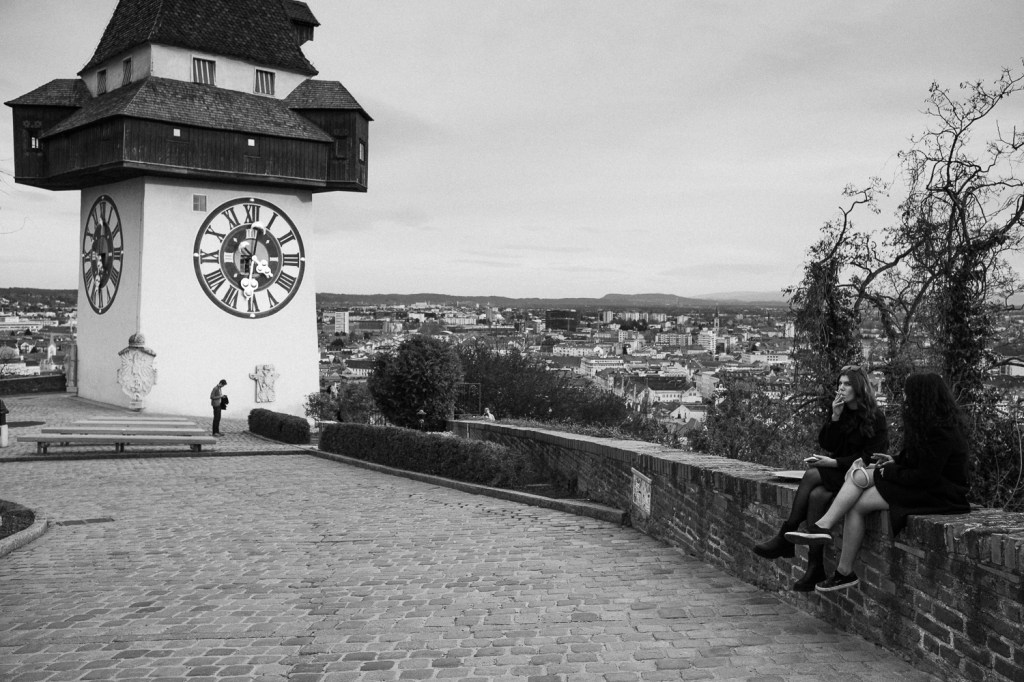
Austrians apparently like an early night as places stop serving food at around 8pm (before a lot of places in Spain are even open) and tend to shut for the evening entirely at around 10pm. This left us with just enough time for one attempt at ordering a drink in German at the bar on the corner before heading back to my friend’s for a quiet (otherwise, I’m told, Austrians become quite irked) night in until the next morning.
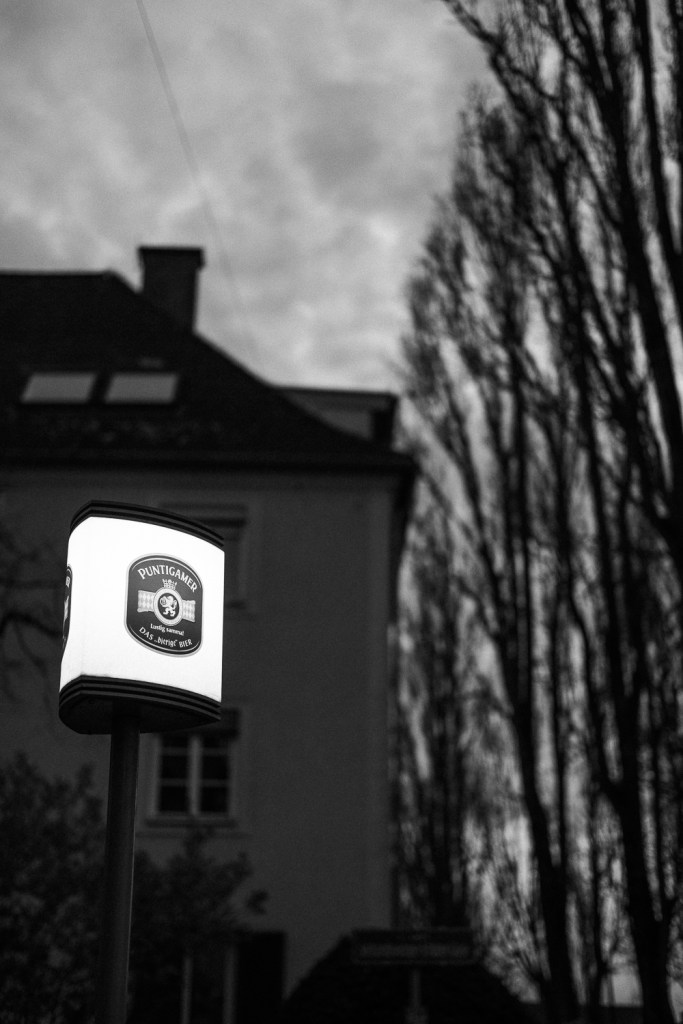
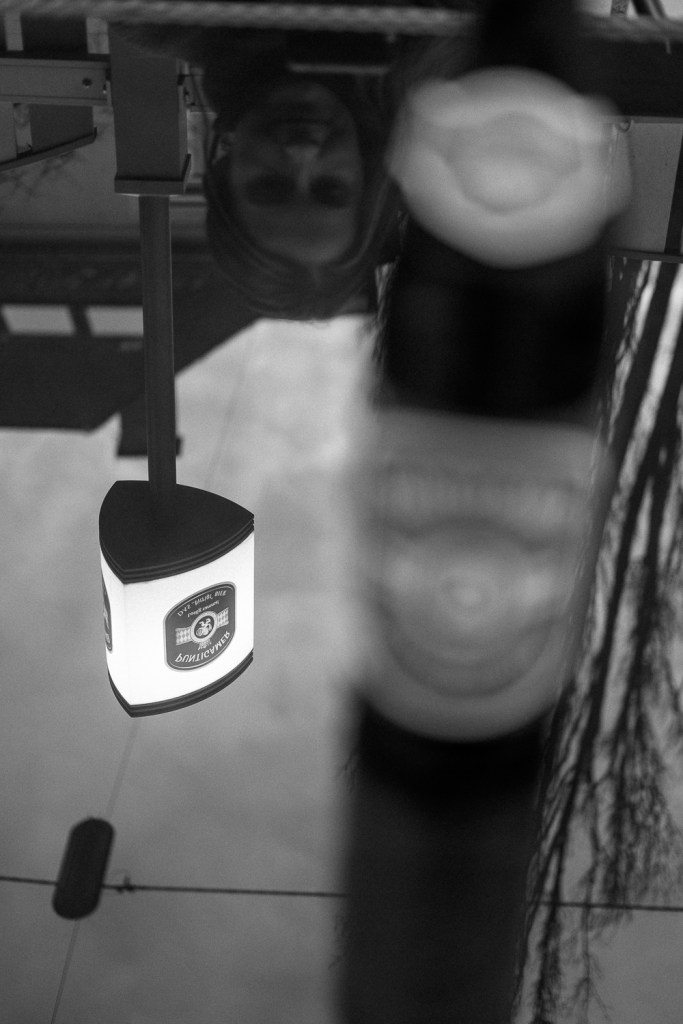
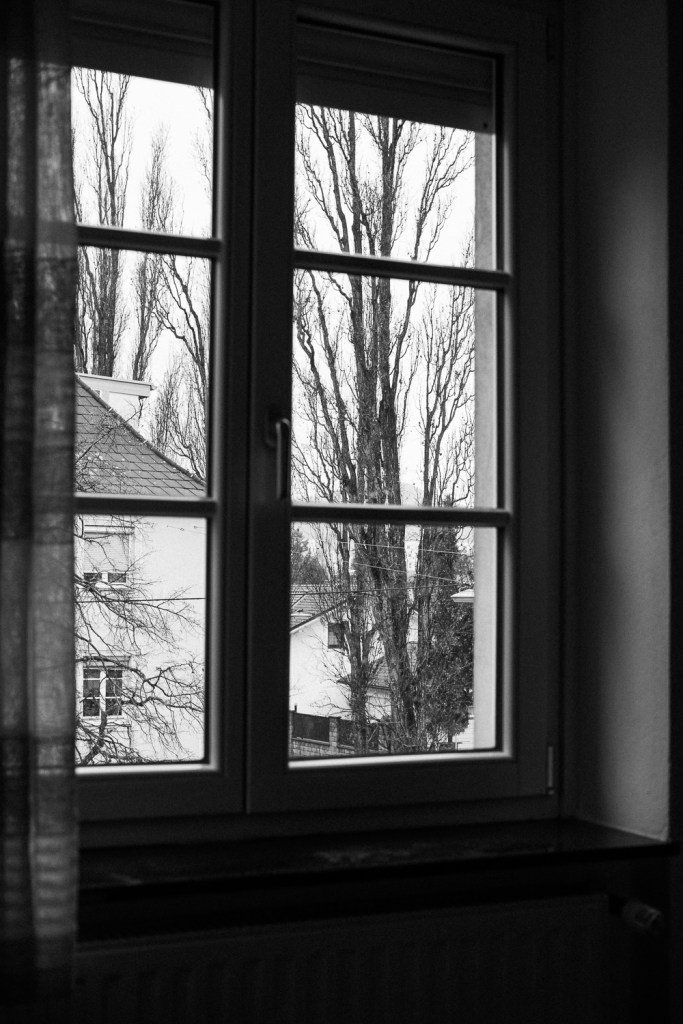
The next morning brightened slowly to reveal that my weather forecast for the trip had indeed been generally correct with the predicted rain having arrived, and planning to stay until I had left. Living in areas of Spain where it never rains but it pours for eleven years had given me something of a complex when it came to rain that I definitely wouldn’t have had when I still lived in the UK as there are simply enough sunny days to avoid doing things as far as possible when it does rain, particularly as often the weather Gods seem to be trying to make up for three months without rain all in one go. This trip was an apparently necessary reminder that there are places where it rains steadily but in reasonable amounts, and that life goes on in these places … you know there’s no such thing as bad weather, only bad kleather.
Fortunately, I had come prepared with weather appropriate kleather – my aforementioned boots, a waterproof coat and I had also stuffed an umbrella into the side pocket of my under-seat bag – and this would be plenty to repel the rains for the next few days.
We headed out through the cemetery apparently favoured by ‘los más ricos del cementerio’ (the richest people in the cemetery) to a café where my friend was to interview me for her PhD research – her PhD being what had brought her to Graz in the first place. I find it a little odd when people add their degree or other titles to email signatures (and even more odd when people have two lengthy quotes about themselves in their email signatures … although I’ve only actually know one person do this … and she works in PR) but it would seem Austrians also add them to their (often rather grandiose) gravestones.
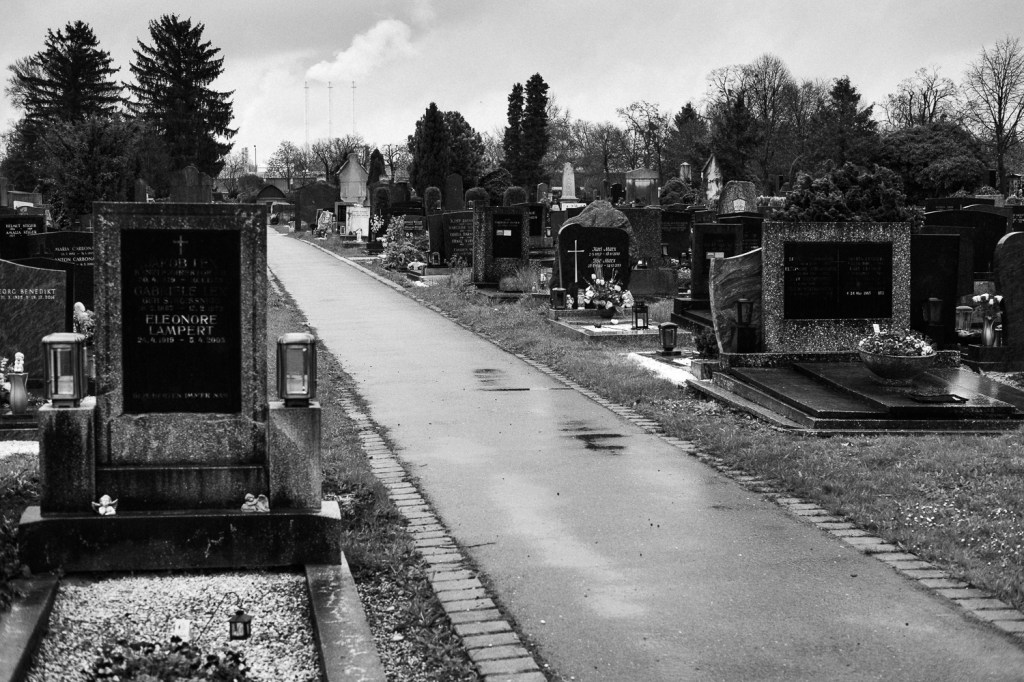
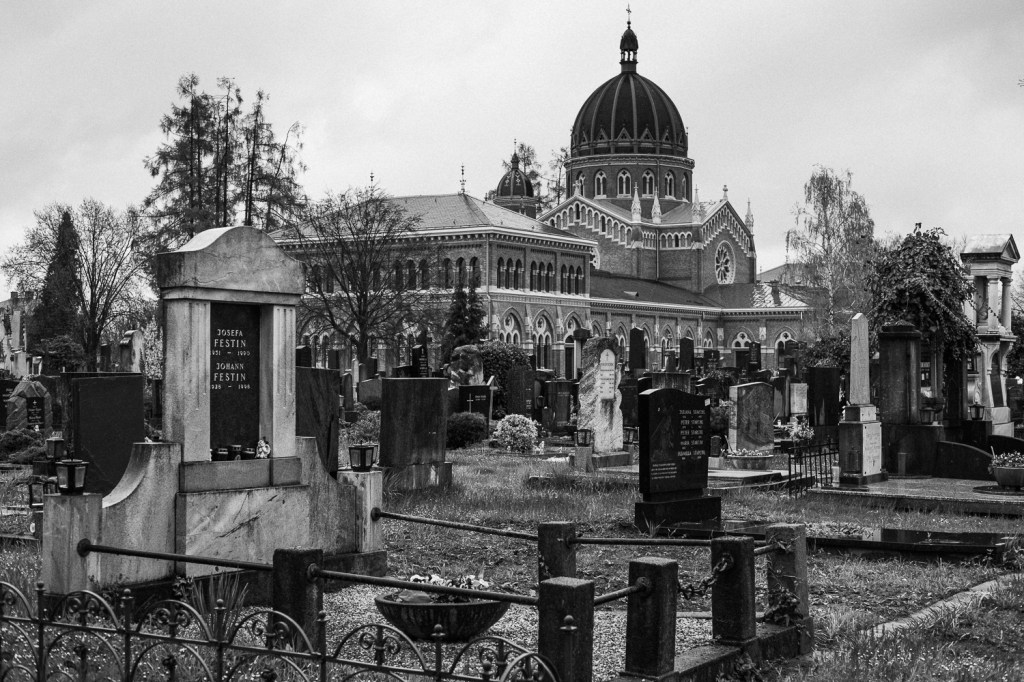
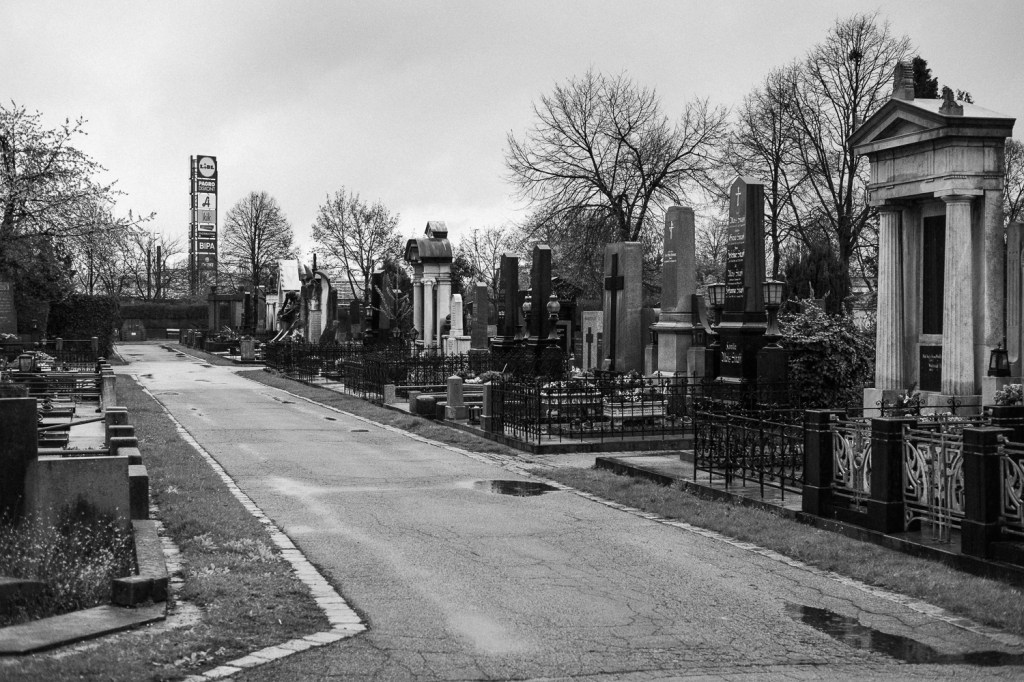
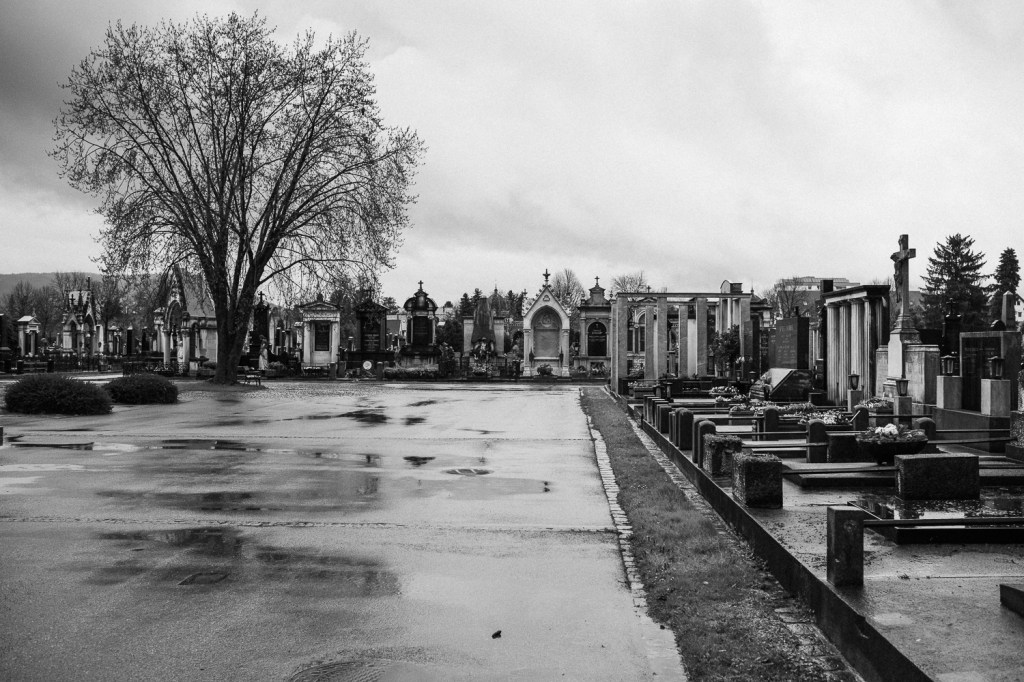
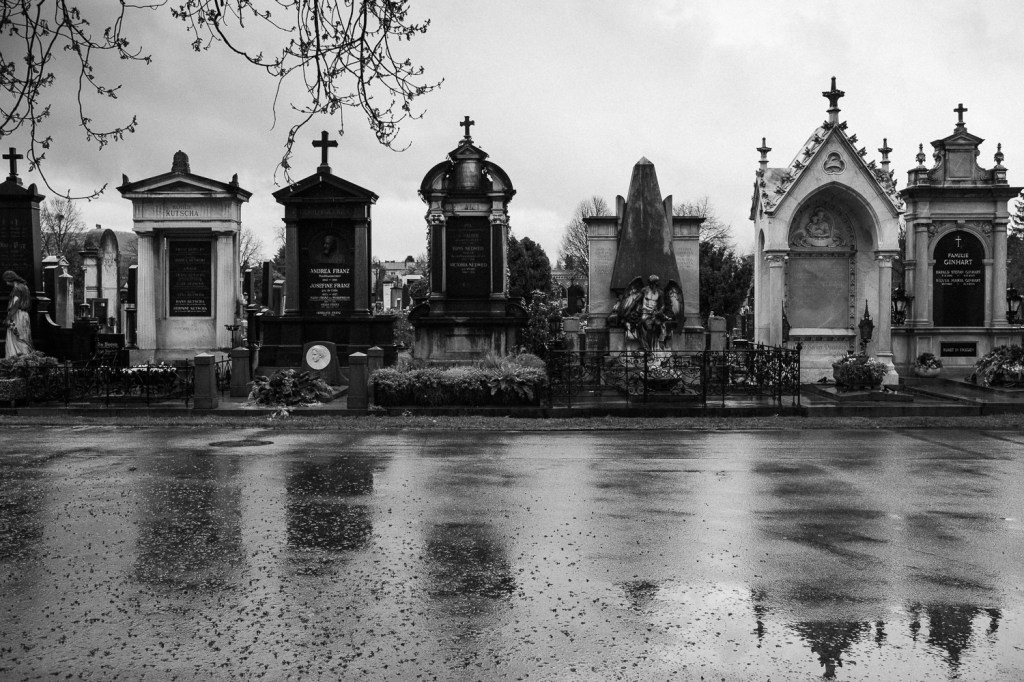

After some coffee, cake and (academic) chat we headed back to the flat. I’m not sure … because I’m writing about events that happened in April towards the end of November, and doing so from memory rather than anything written down … but I believe my friend either had another interview planned for the afternoon, or needed to type up ours from that morning … either way, I believe (and it’s not a lie, if you believe it) I then walked into Graz to wander around on my own for a few hours before my friend joined me for dinner before it was too late by Austrian standards for such things.
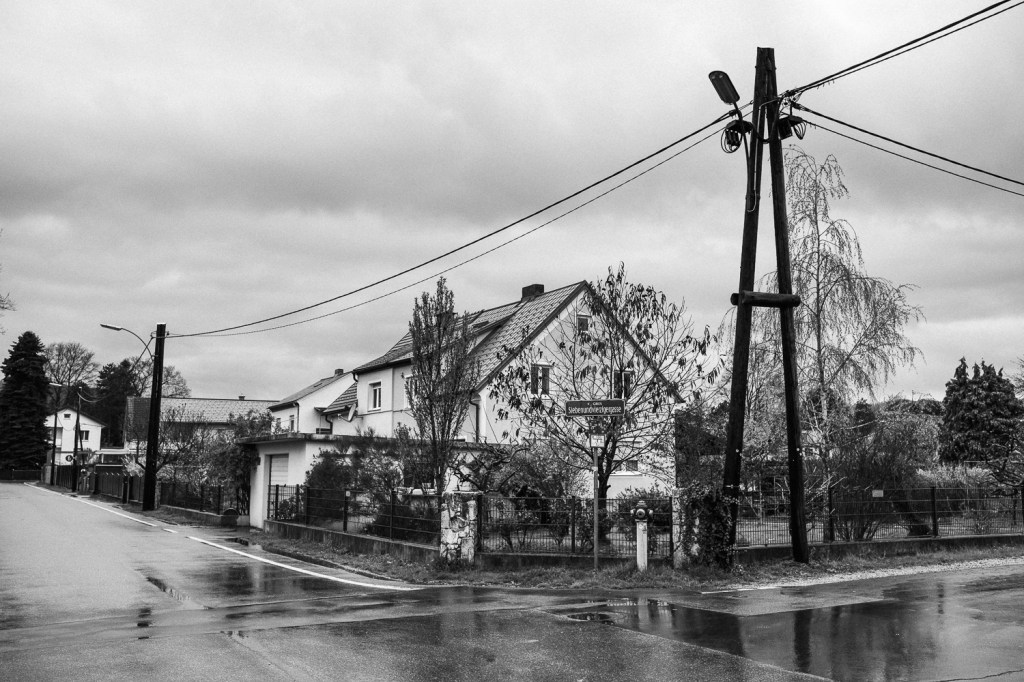
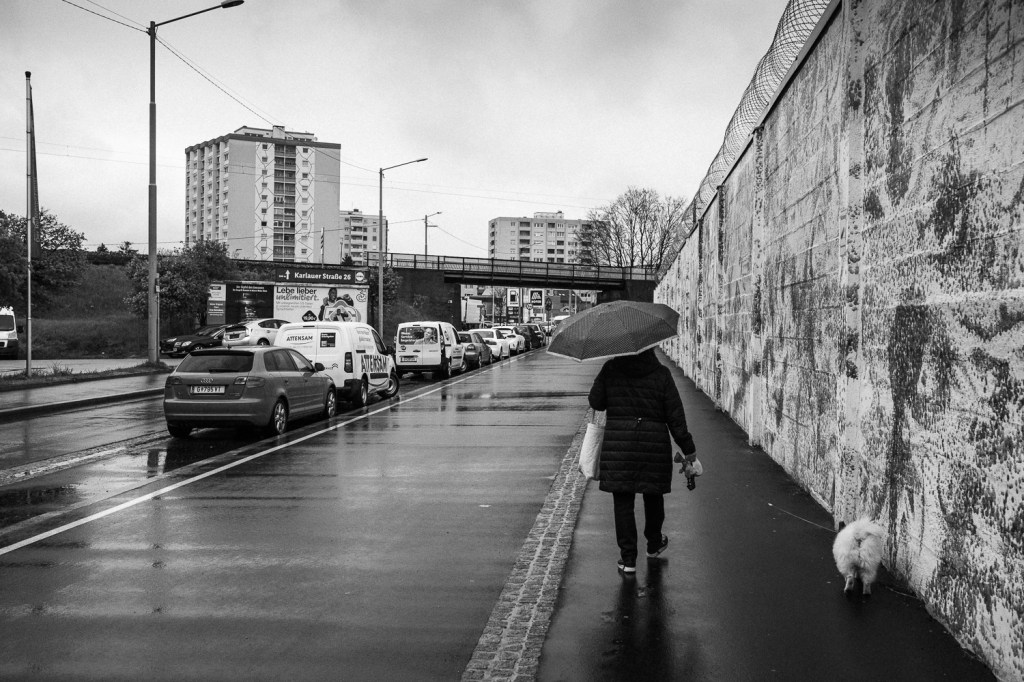
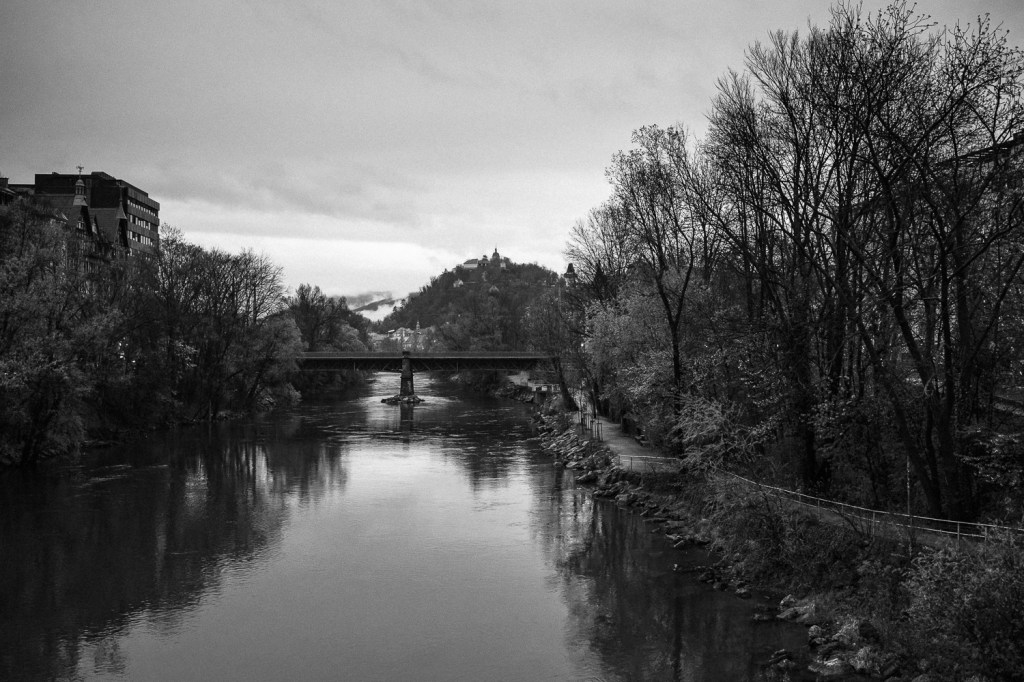
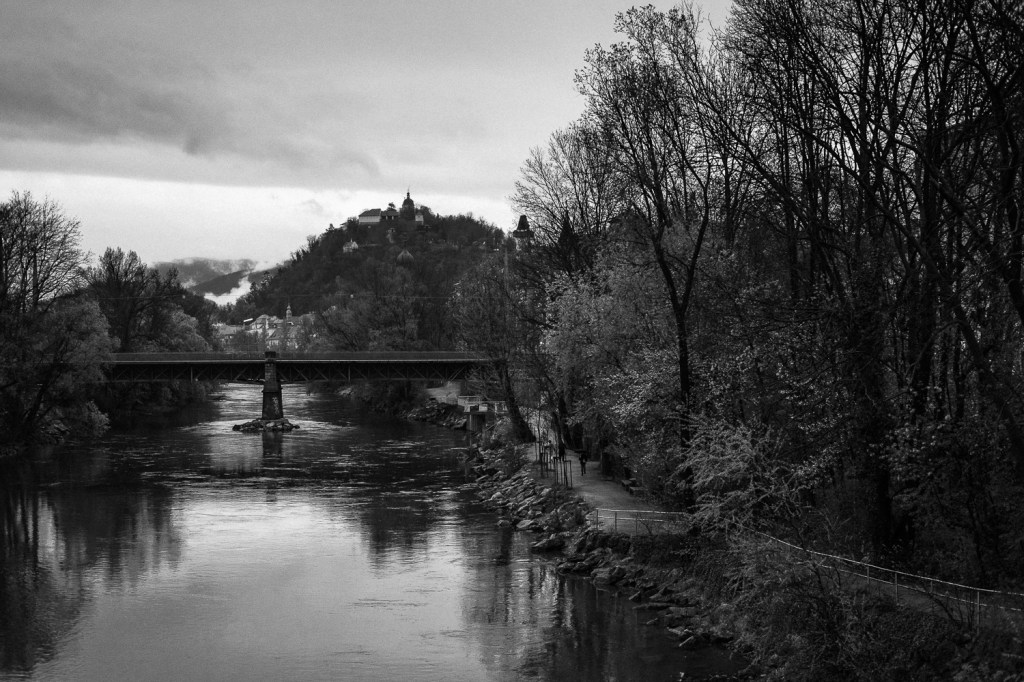
Shortly after the second photograph in the above set was made, adjacent to Austria’s third largest prison (smuggling that entirely useless fact in there) I had what was at the time my longest conversation in German for at least eight years with a lady who lived locally but needed directions to a supermarket. I tried explaining that I was a tourist and didn’t really know where one was but she asked me to ‘try anyway’ so I drew upon the vague memory of having passed a Lidl at some point the previous evening and pointed her towards where I thought that it may have been.
The following morning I do recall my friend had arranged to help her brother out (she was assisting her actual male sibling) with some tests for his research studies, and we had arranged to meet for lunch somewhere in the University area of the city. Prior to that meeting I was free to wander, and naturally chose to use that freedom to confirm that I hadn’t been a bad samaritan and sent someone searching for a Lidl that might not even exist. As it turns out there was a supermarket where I had indicated and by no Lidl coincidence it was even of the type I’d suggested it might be. George W Bush.
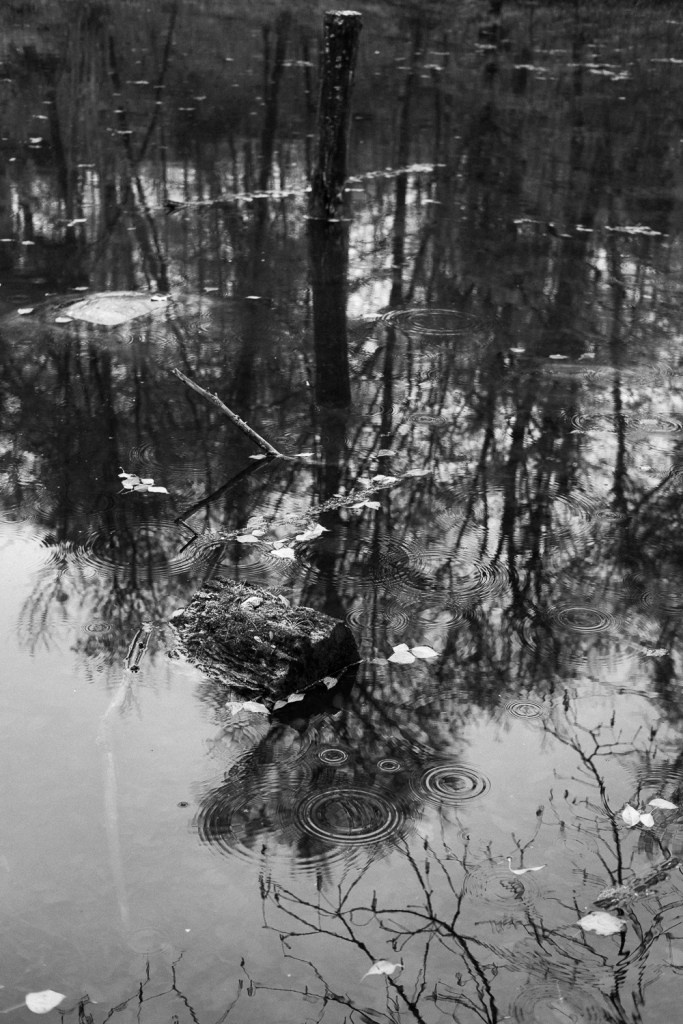
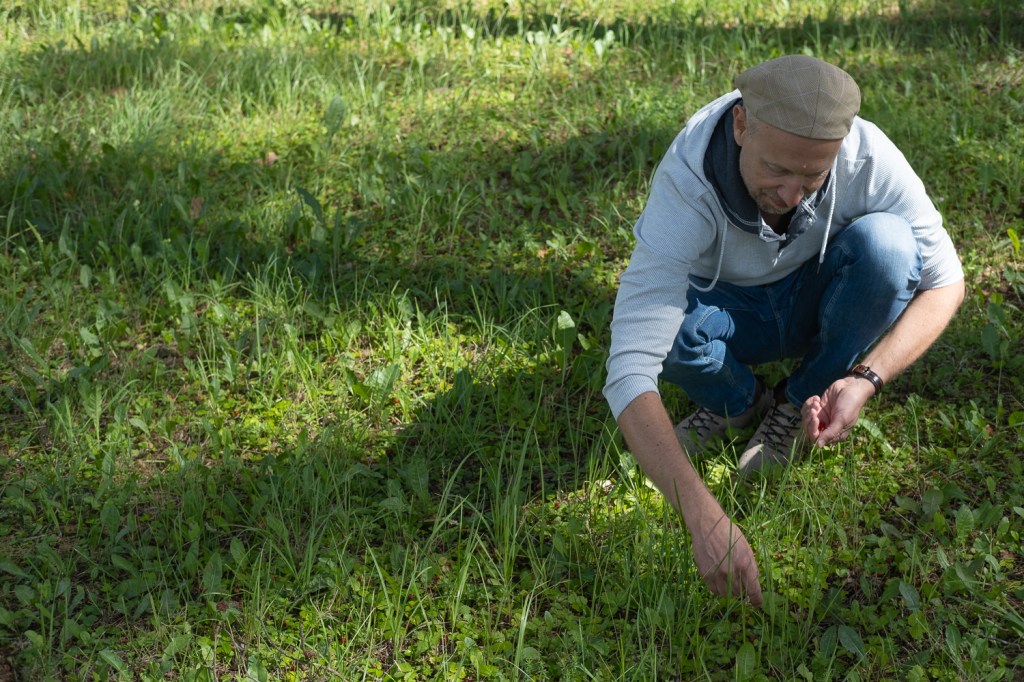
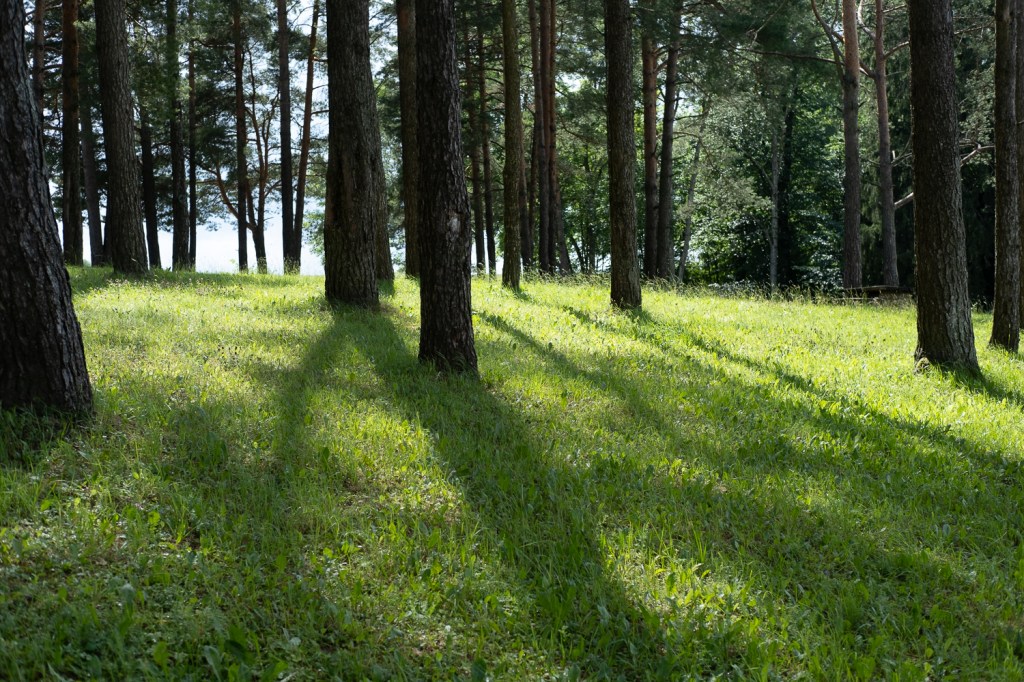
After this diversion (y diversión también) I was off across to a hillside park near the University area where I came across an elderly lady carrying a fair-sized kitchen knife for picking mushrooms in a manner which I had previously assumed only happened in episodes of Midsomer Murders. I made some pictures in these woods but I’ll admit to being too startled to try out my German on asking the lady for a portrait.
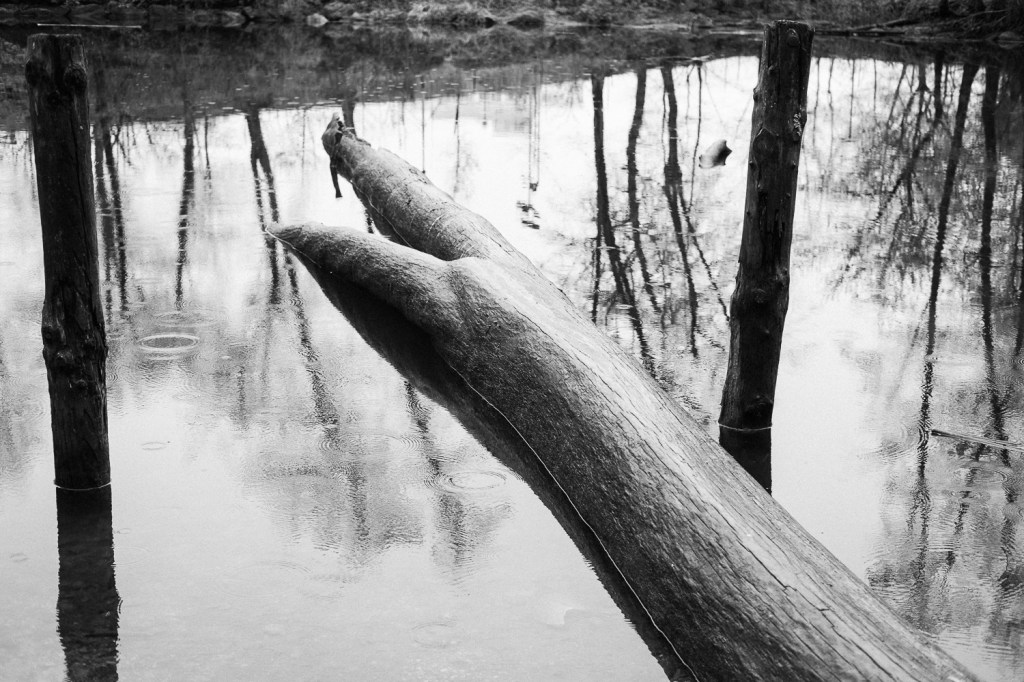
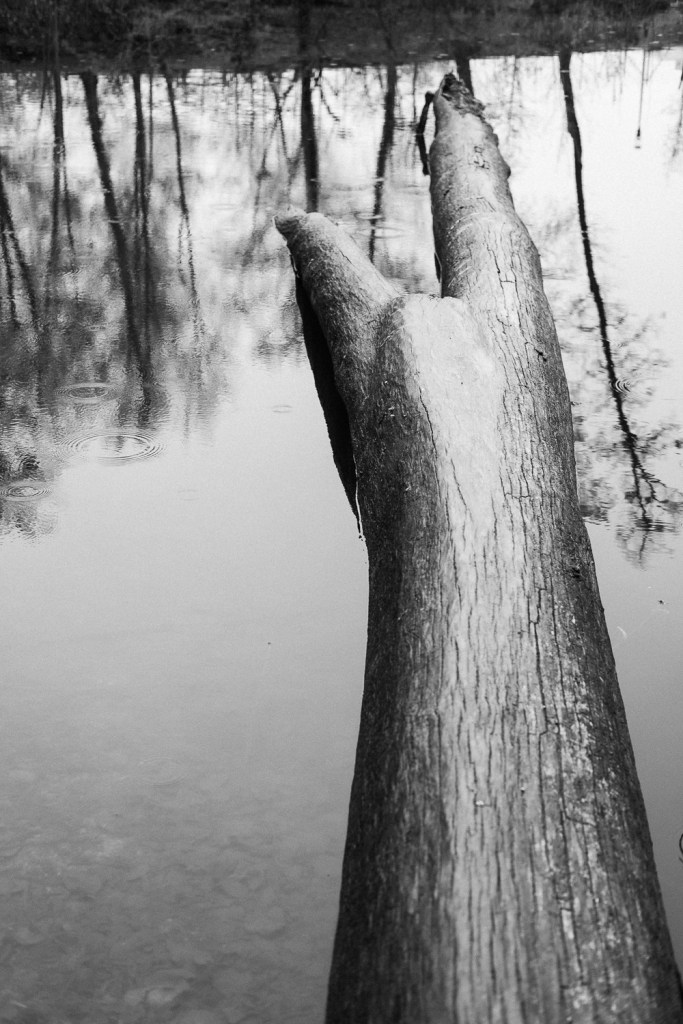
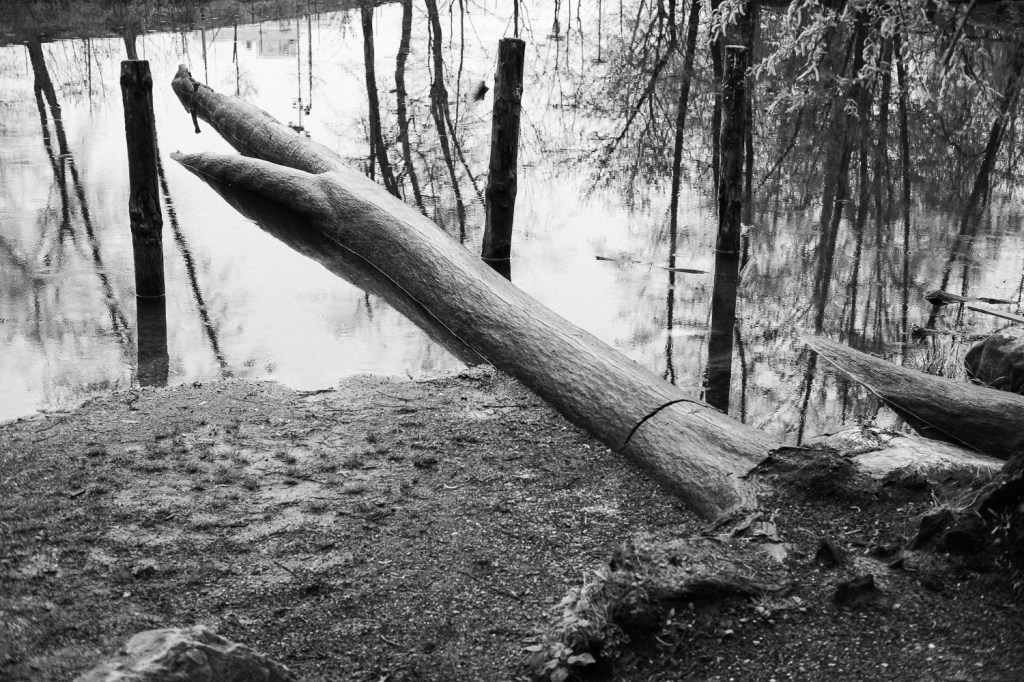
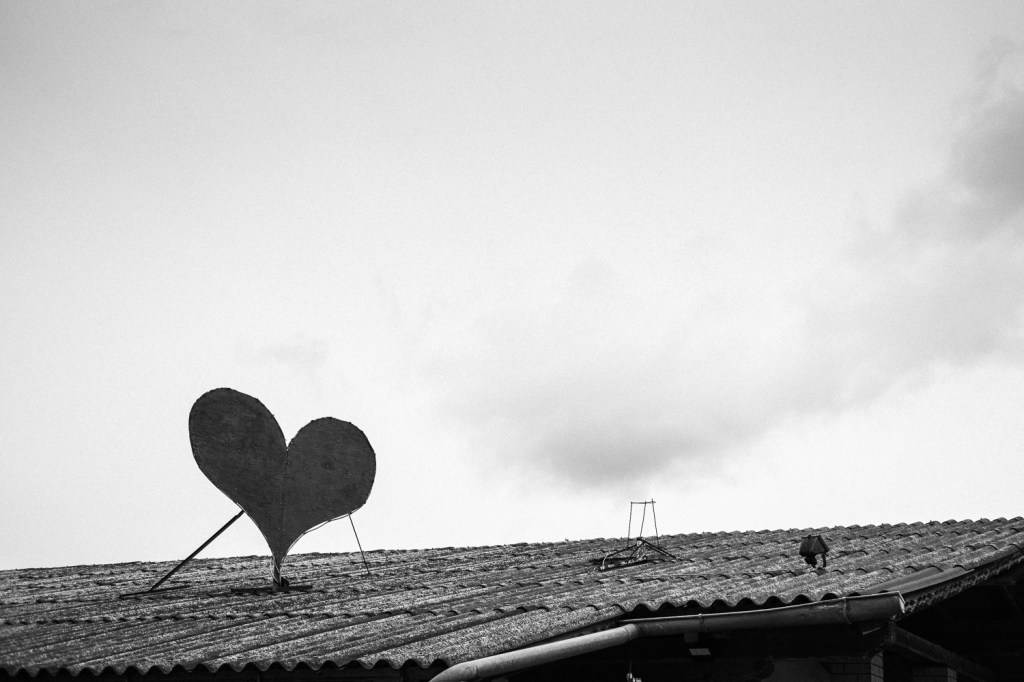
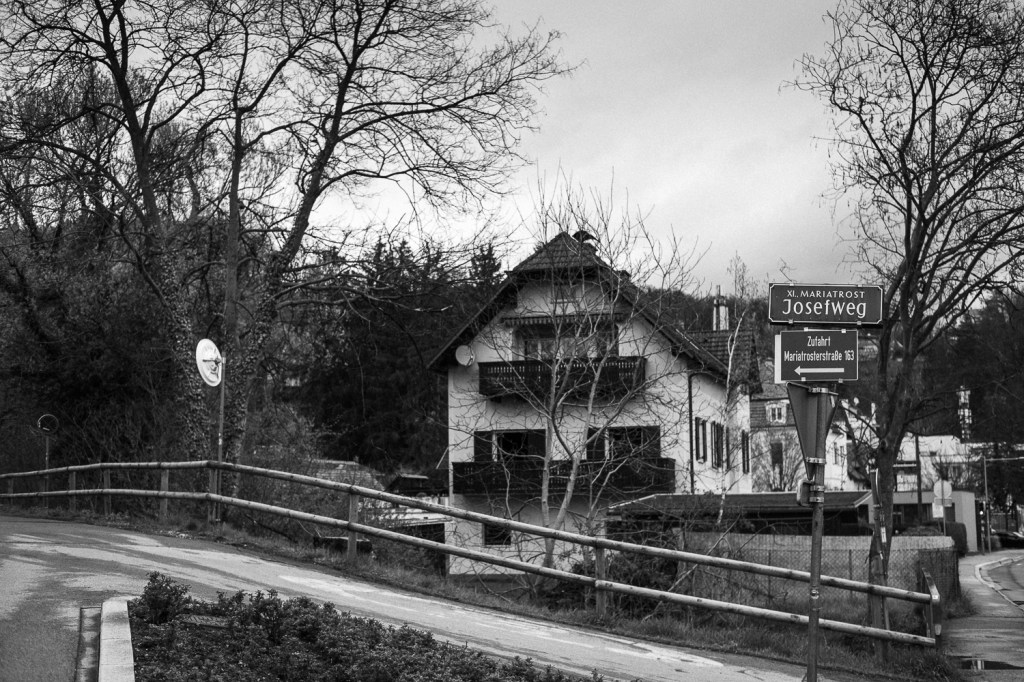
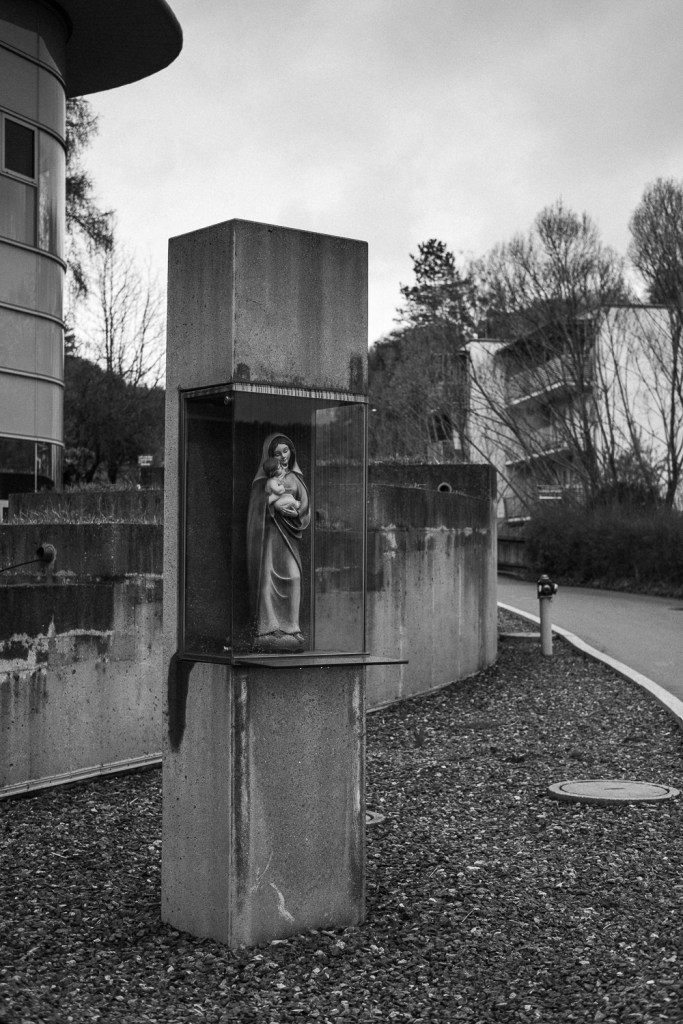
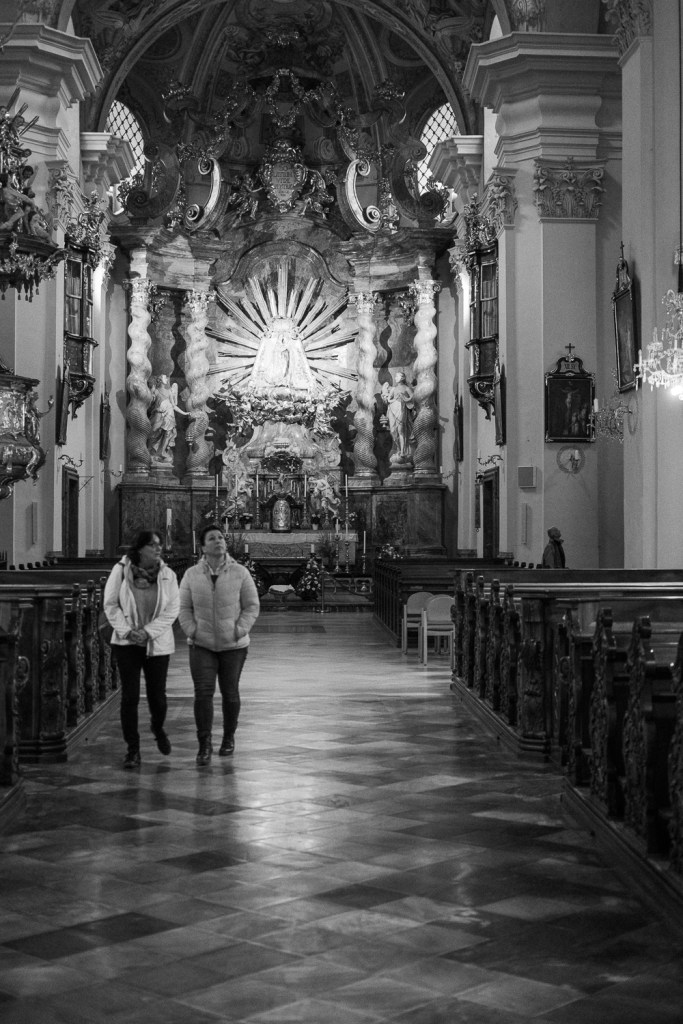
After sampling some local delicacies (by which I, of course, mean schnitzel) we set off for the Basilica on a hill at Mariatrost, about a six kilometre walk from Graz itself. The way there is mostly loosely lined with houses now, but I imagine that when the church was built, it must have made quite an impressive and welcome sight for those making the pilgrimage out there – unfortunately this was an impression I failed to really do justice to in my photographs on that overcast afternoon. Along the way, however, I had stopped to photograph various pieces of religious iconography which were more common than I had ever imagined. I also photographed a large heart atop a garden centre just as a man walked out carrying a bouquet of flowers. In the photograph he appears slightly saddened, as if the flowers might be for mourning, but shortly after I made the frame, his partner walked out and joined him. «Se non è vero, è ben trovato.»
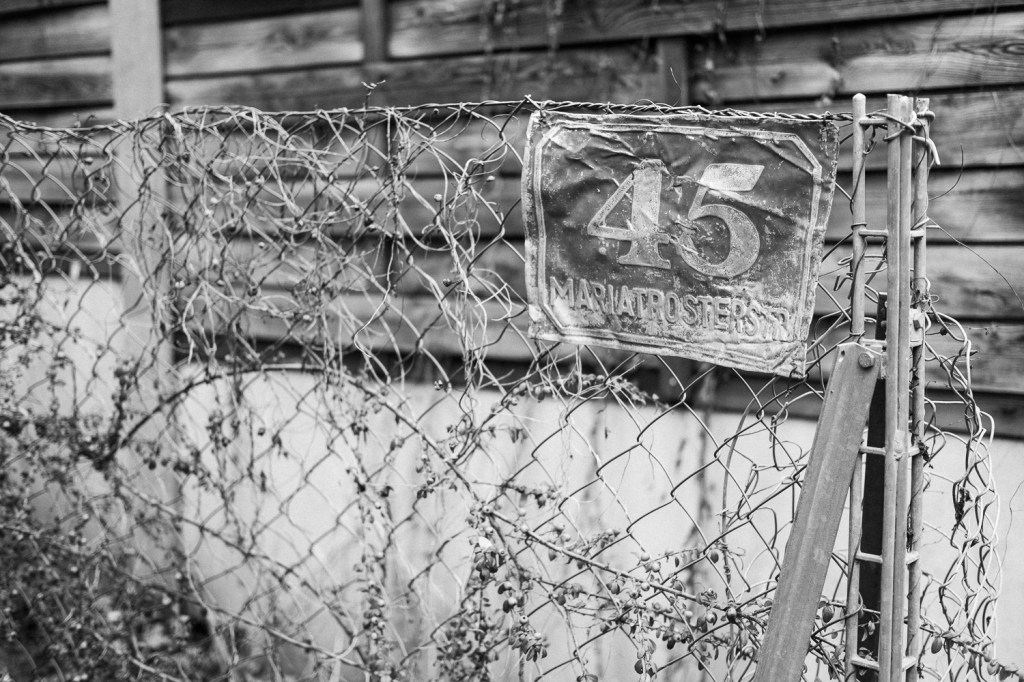



By the time we had wandered back into Graz, my friend’s partner had arrived from a trip back to Spain, although if memory serves (again, a somewhat sizeable ‘if’ at this juncture) we may have stopped en route to sample more local delicacies (by which I, of course, mean hot dogs.)
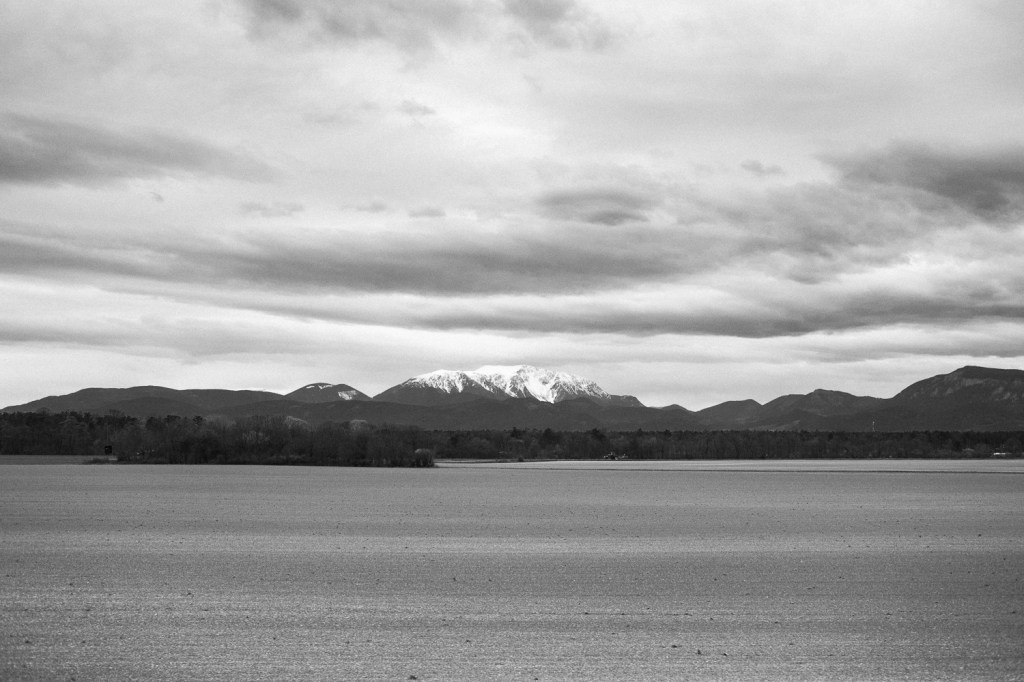
The following day we (my friend, her partner, her brother and myself) headed North by car to explore some other nearby towns, passing snow-capped minor mountains along the way to our first stop, Leoben, the second largest municipality in Styria … although it turns out this isn’t a hotly-contested title with Leoben’s population being under 25,000. This and the frigid, intermittently inclement weather meant we had soon exhausted what the town had to offer (us on that day) and would move on to our next destination in our ravenous search for more sights … and probably some food.
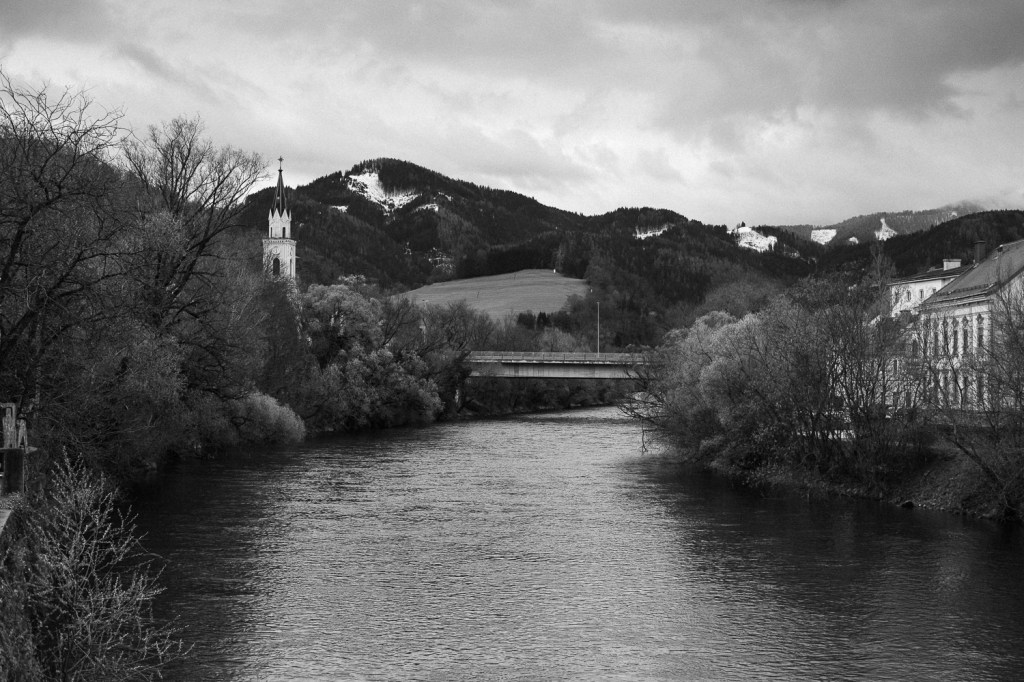
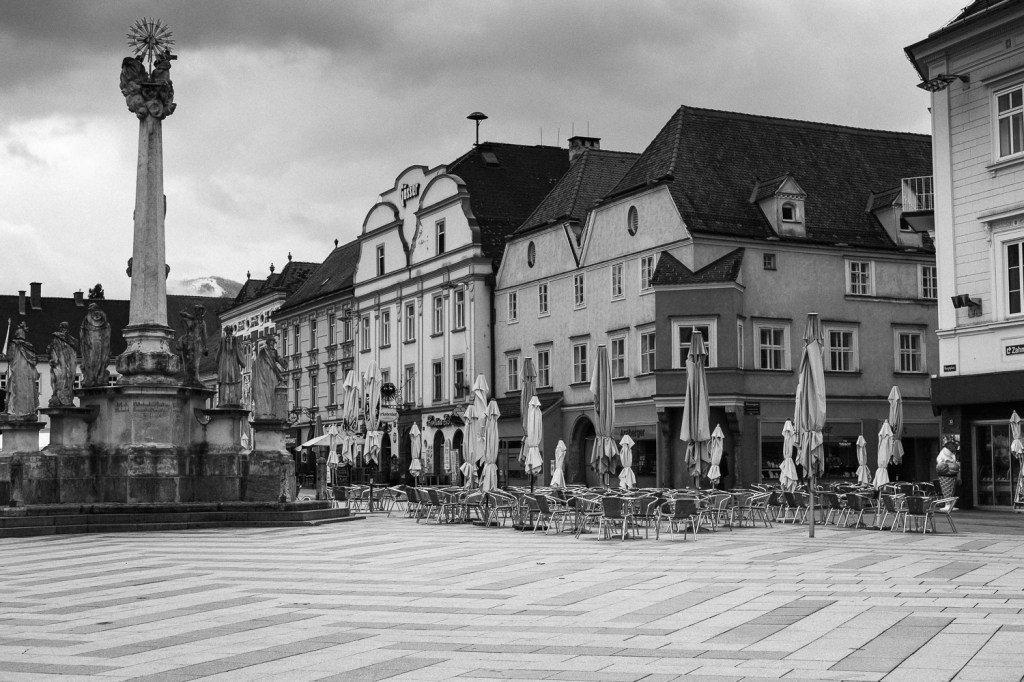
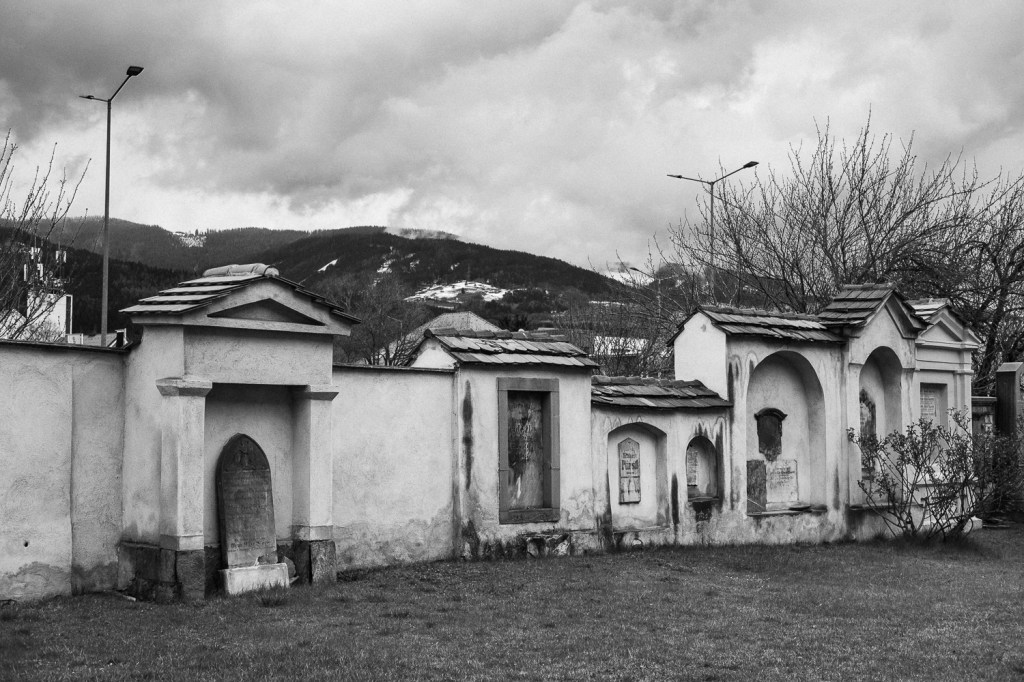
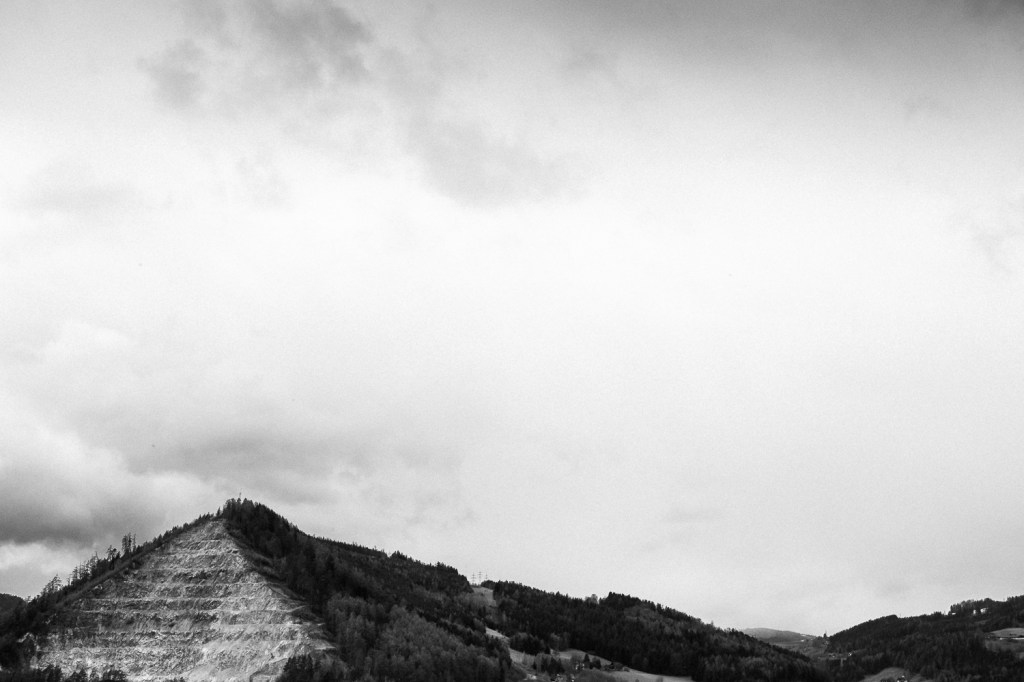
Leaving Leoben, what followed was Frohnleiten which, in our entirely unqualified judgement managed to better tread the fine line between being small and being quaint … it also probably helped that it stopped raining for a while, and we managed to get some nice, warm food … none of which was either schnitzel or hot dog. Nor did it come from the amusingly-named Schraudinger’s Kebab shop, where the product simultaneously is and is not meat.
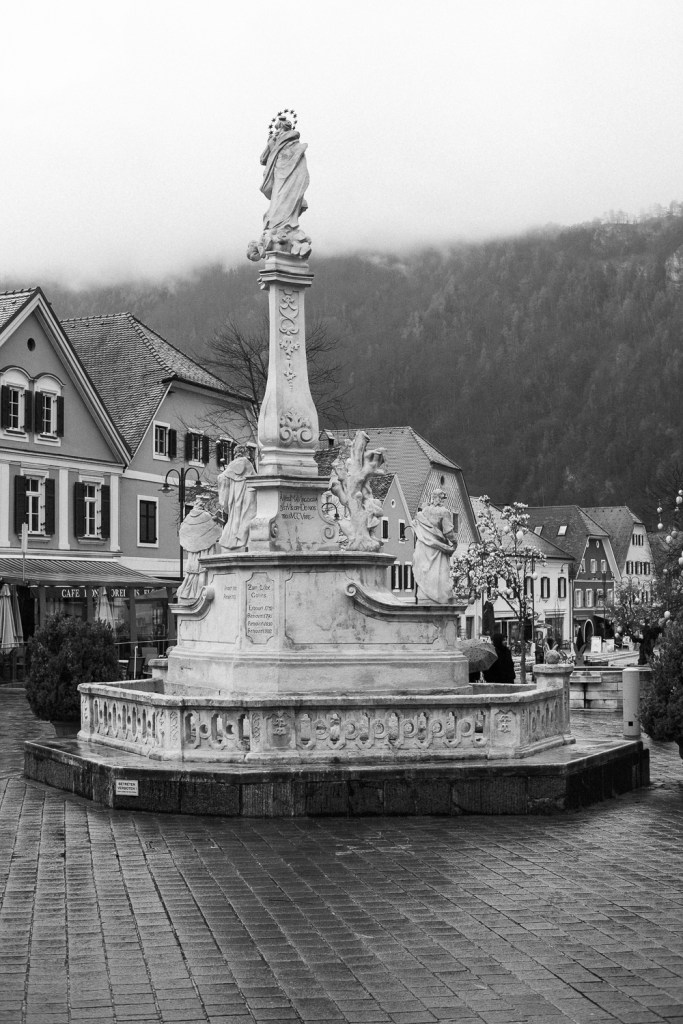
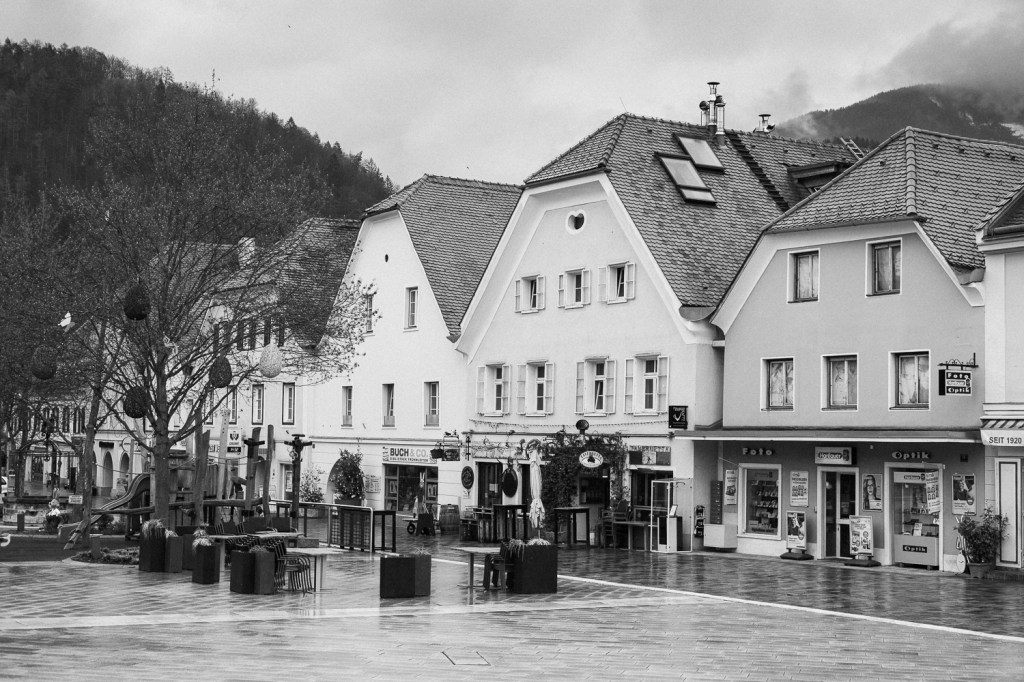
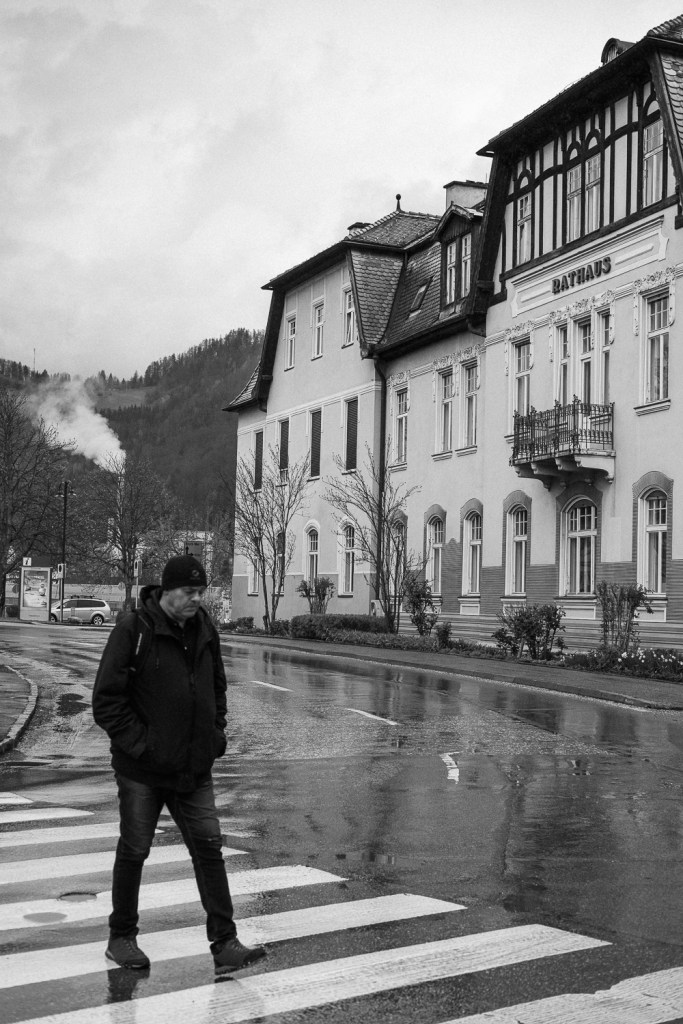
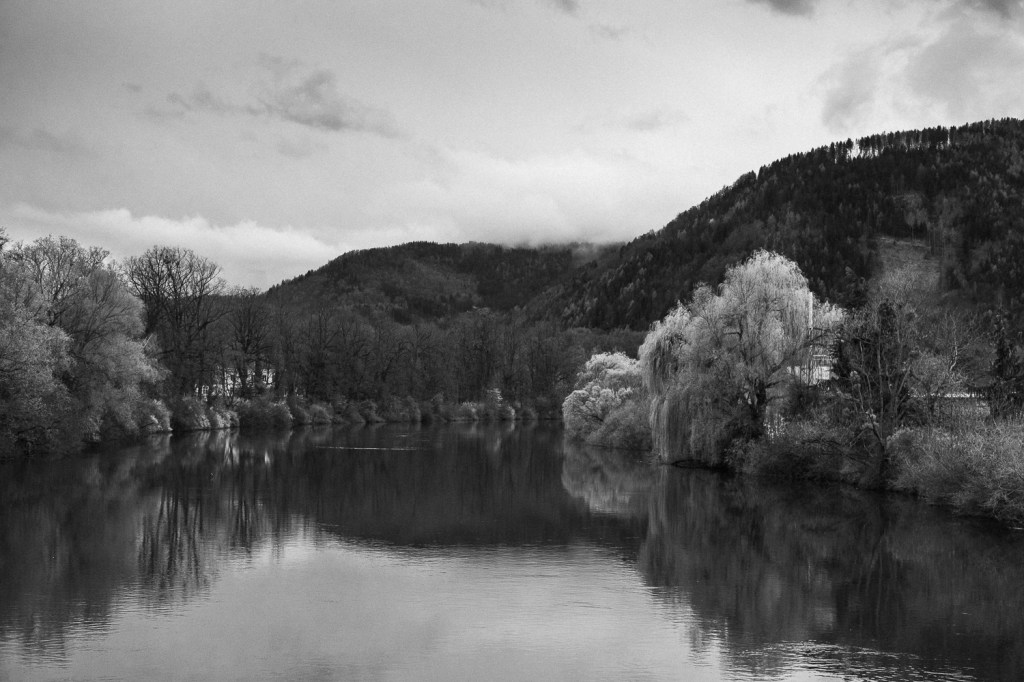
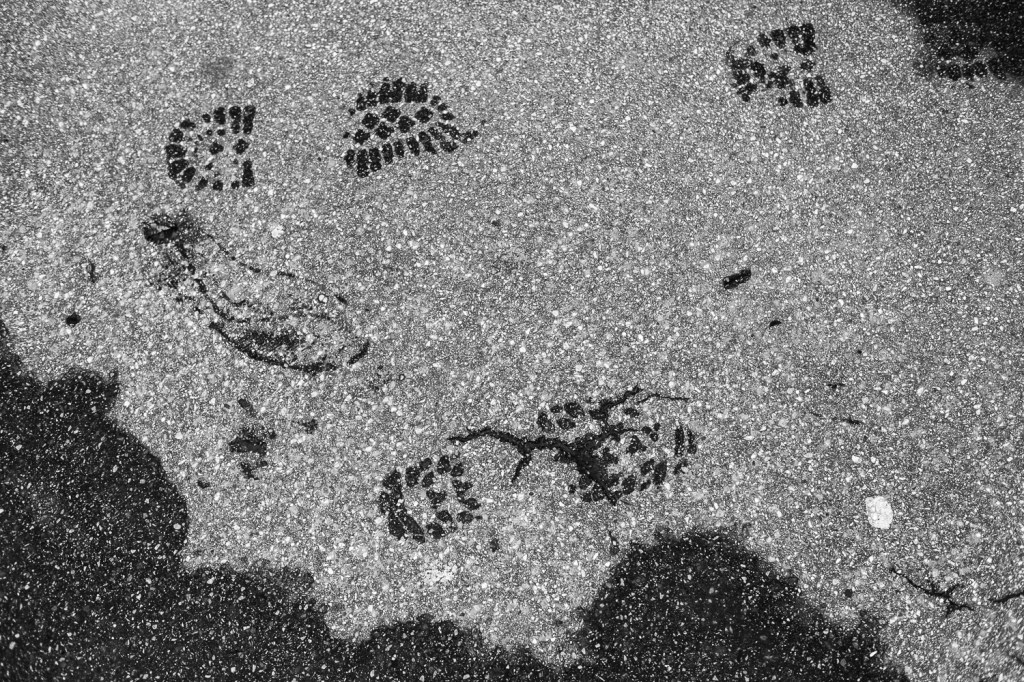
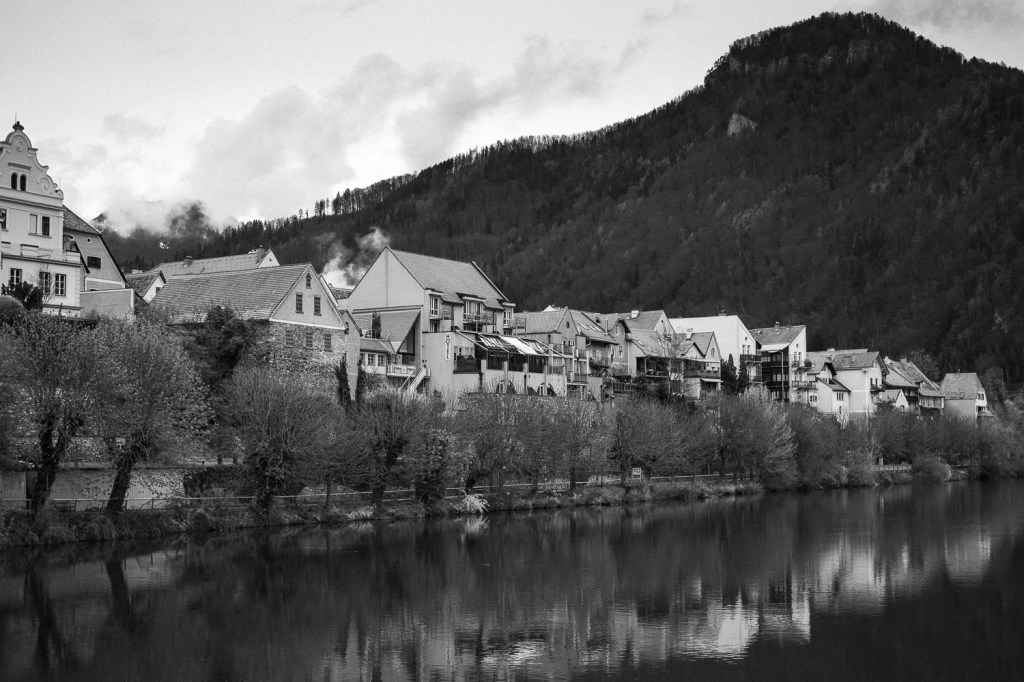
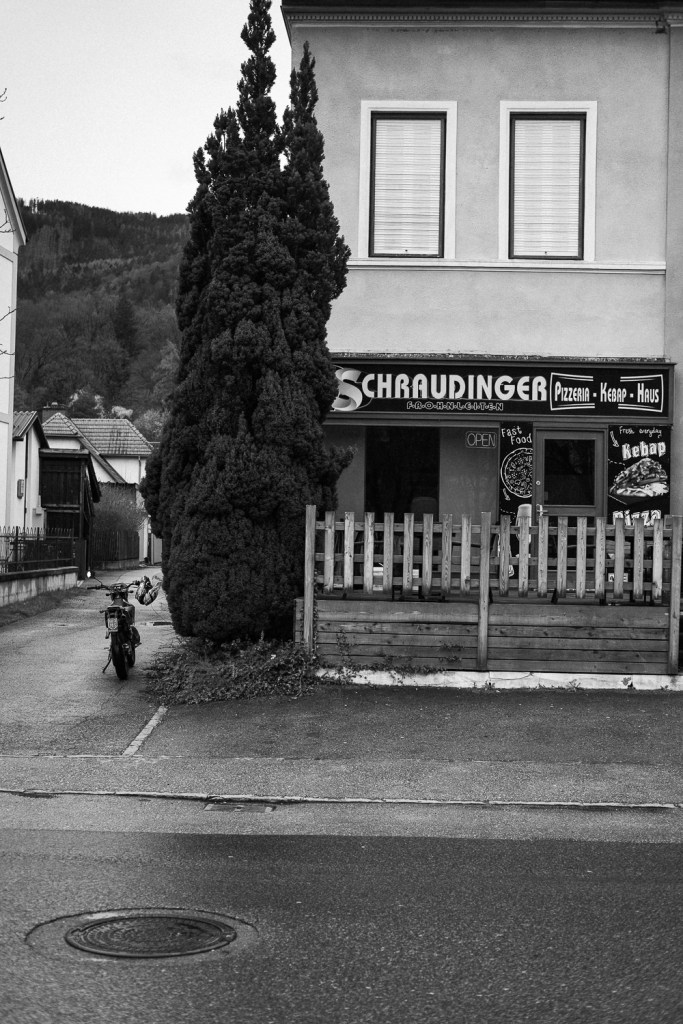
You may be wondering what any of this has to do with what I did last summer given that a) April is objectively not a summer month anywhere on the planet and b) the photographs show evidence of a lot of rain and a bit of snow. You might not have been wondering that, given that I’ve so thoroughly dyed the grass the introduction feels like a distant memory. This was my first trip to somewhere unfamiliar (outside of the UK or Spain and not previously visited) since before Covid-19 and reminded me of the joys of seeing new places, attempting to cobble together phrases in other languages and generally speaking … travelling. I realised that here was another place I had come to know through visiting my friend. I also made a (sadly characteristically) long-overdue reply to my new friend from Estonia’s messages to say that I was in Graz visiting the person who had initially enabled us to meet … and that as soon as I got back to the comfort of my own rented flat, I’d be booking tickets to Estonia because … Thomas à Feck-It, why not?
Sleepless in Stockholm
Fast-forward a couple of months to the first few days of July and t’was the night before I was due to fly to Tartu and all through the house … I don’t know because I had gone to A&E to reassure myself about some chest pain I had been experiencing for the previous few days. I had had to wait to set off due to a summer storm which meant that it was about 8pm when I arrived. I was thoroughly well attended to and given a blood test, an ECG and a chest X-Ray which all indicated I was in fine physical shape, meaning I was prescribed some strong Ibuprofen … which did actually stop the pain once I had wandered to the 24-Hour pharmacy and then back home for about 1am. I hadn’t really eaten so make that 1:30am after a quick snack and brushing my teeth … which I would be doing again about an hour and a half later because I had booked a taxi to the airport at 4am but dislike rude awakenings so much that I prefer to sleep even less so as to at least drink my coffee and shower like a civilised human being.
There definitely shouldn’t have been any need to actually arrive at the airport two hours ahead of the 6am departure, but it turns out that being very early does have its uses if one is also forgetful enough to attempt to travel without one’s passport that one might, or might not need for travelling between three Schengen Zone countries as a non-Schengen citizen. In any case, I put my money where my mouth is as a Podemos supporter and did my bit to help taxi drivers by returning home and back to the airport all in time for 5am, meaning I only had an hour left in departures before the Red Eye to Stockholm, on which I got more sleep than I had at home that night.
By now it’s almost certainly clear that Valencia to Tartu isn’t a direct trip. There aren’t direct flights to Tallinn either but as they say: when life gives you a ten-hour layover in Stockholm, take the train into town and wander around for a bit, I guess.
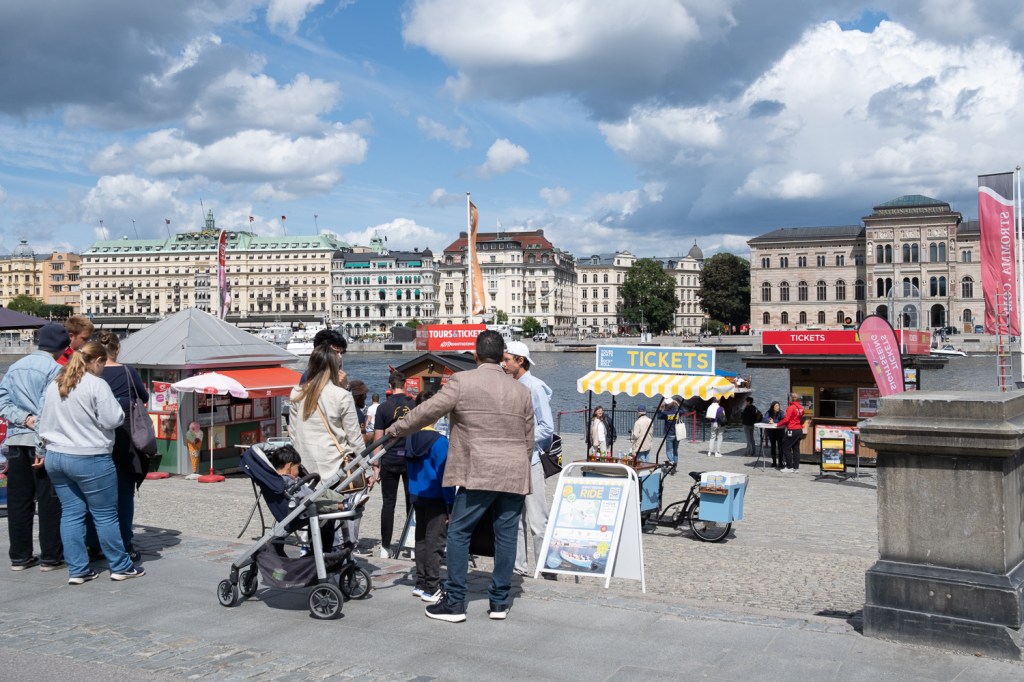
From the train station, I walked across the first of many bridges to the old town for my first of many coffees that day in a place I identified as being relatively affordable for Stockholm Old Town, and where I was told that my pronunciation of «Hej!» was spot on. If you’re going to speak only one word of a language, it’s vitally important to absolutely nail that one word. George W Bush.
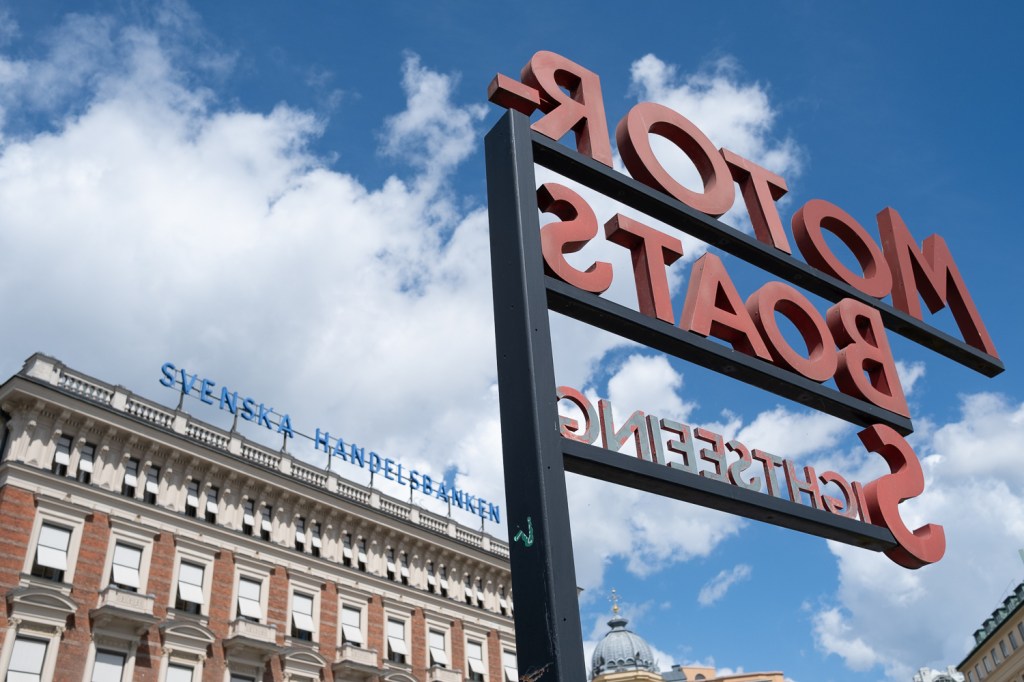
I wanted to spend most of the day outside, exploring what I could of Stockholm, though. I also made what I could in the way of pictures, not wishing to fall foul of the ‘pictures or it didn’t happen’ rule. Some of these pictures involve people eating. Others of them are of a sign pertaining to Motor Boats, which I found amusing enough to risk my boating arm standing on a wall adjacent to the water to get a better angle of the sign. From this vantage point, I was also able to observe that the mast had termites.

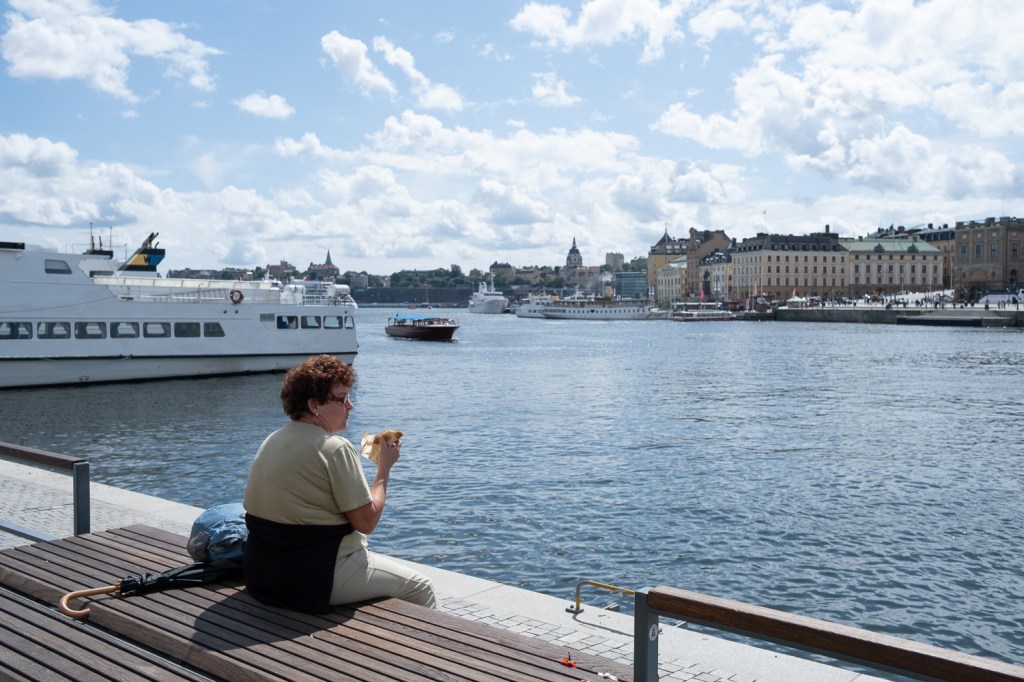

At a different, more mobile and more … outdoor coffee stand I got to chat to a lady from Venezuela in a language in which I can confidently claim to nail the pronunciation of more than one word, namely Spanish, for a little while before crossing another bridge to a more park-like island with good views back across to the old town, and an amusingly-named boat Björn III which is presumably used for water safari tours.
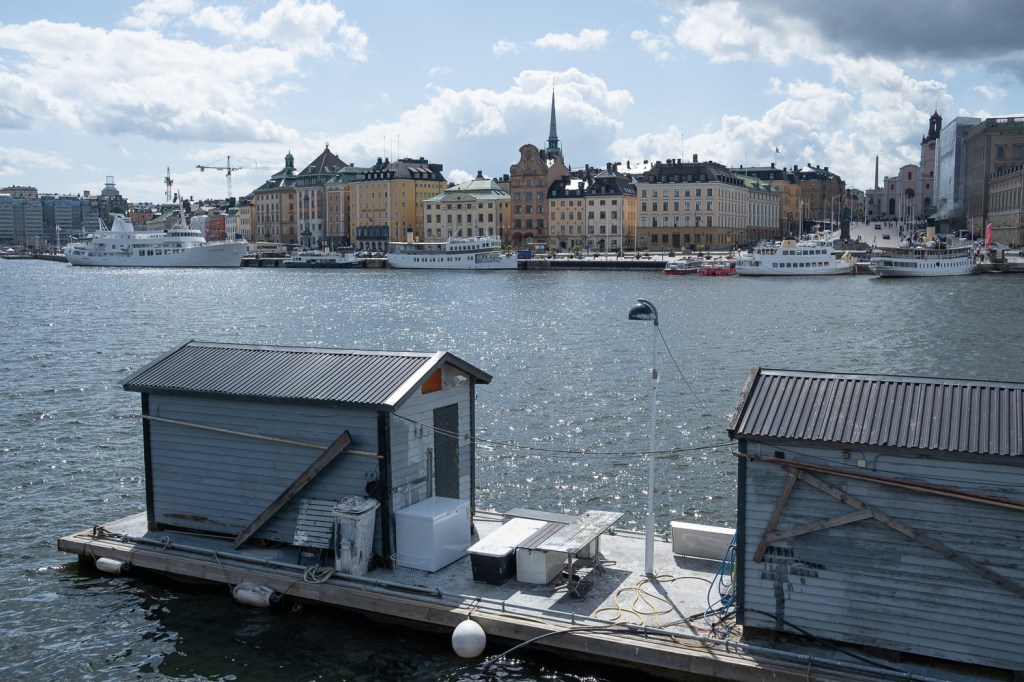
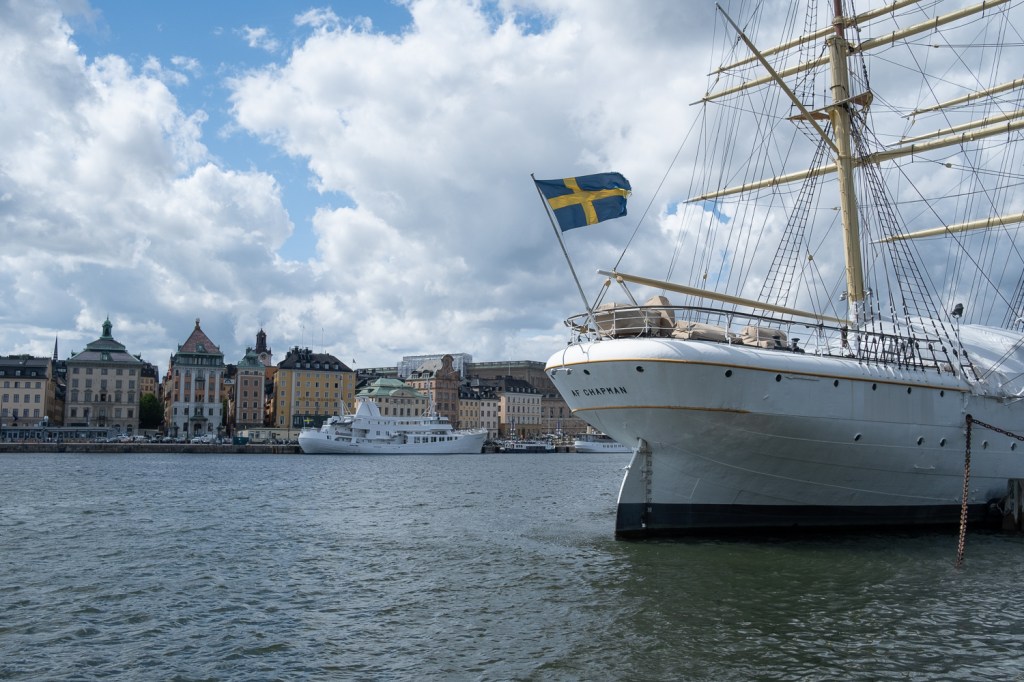

Given my lack of sleep, time constraints and a backpack which was, like Herbie, Fully Loaded, I felt satisfied with how much of Stockholm I had managed to see, and headed back to the train station and then the airport, again unnecessarily adhering to the airlines’ advice of arriving two hours ahead of scheduled departure time.
Tallinn Airport Speedrunning
Scheduled in this case would become the operative word, as my onward flight to Tallinn became disconcertingly delayed with my bus to Tartu set to leave 50 minutes after arrival.
It’s the little things that give away that the carefree days of youth have drifted away and one isn’t twenty anymore. Little things like two day hangovers and thinking «I should what accommodation there is in Tallinn in case I do miss my bus» instead of «I guess I might be sleeping on a bench in the airport, oh well, shit happens.»
45 of my 50 minutes were gone by the time the plan took off, and indeed when the wheels touched down in Tallinn. By the time the plane came to a stop, 46. As the rear door opened, 47 and a half, and as I disembarked the aircraft using the rear steps, close to 49. I hit the ground running, and emerged from the double-doors at the front of the airport a clear victor in the Tallinn Airport Handicap Sprint but distinctly unclear as to whether I had missed my bus, or whether it was a few minutes late. A handful of minutes passed, and a handful of other passengers from my flight also arrived as I caught my breath and realised that despite it being close to midnight, the sky was still ablaze from the sunset. And then the bus headlights came around the corner. On Sleepless Roads The Sleepless Go and with that, I arrived in Tartu at 2am.
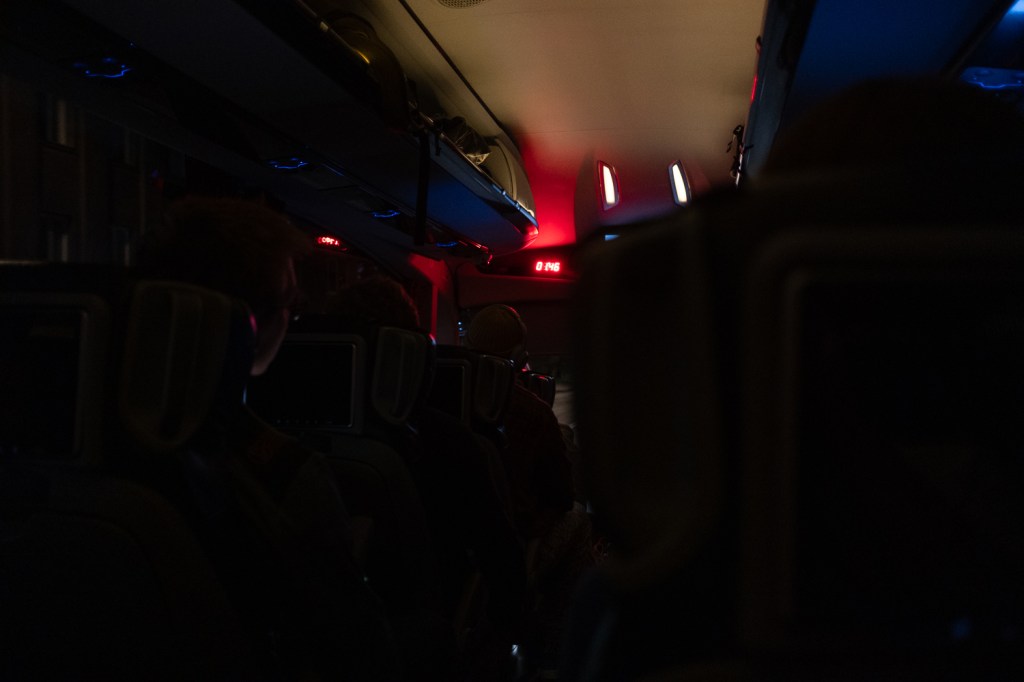
My friend picked me up at Tartu bus station and took me back to her flat, where I’m pretty sure I had a midnight snack before she presented me with a sleep mask because daylight would be returning in earnest at around 4am, and the sun was already on its way back up by the time I got my head down at around three.
I had been given free reign to sleep in by my host, but as someone who semi-regularly experiences extended periods of insomnia, I’ve found the phrase «you can’t miss what you never had» can also be applied to sleep hours. Also, although I didn’t know it at this stage, there would have ultimately been little point in clinging to whatever semblance of a sleeping pattern my body may have had at that point in the trip.
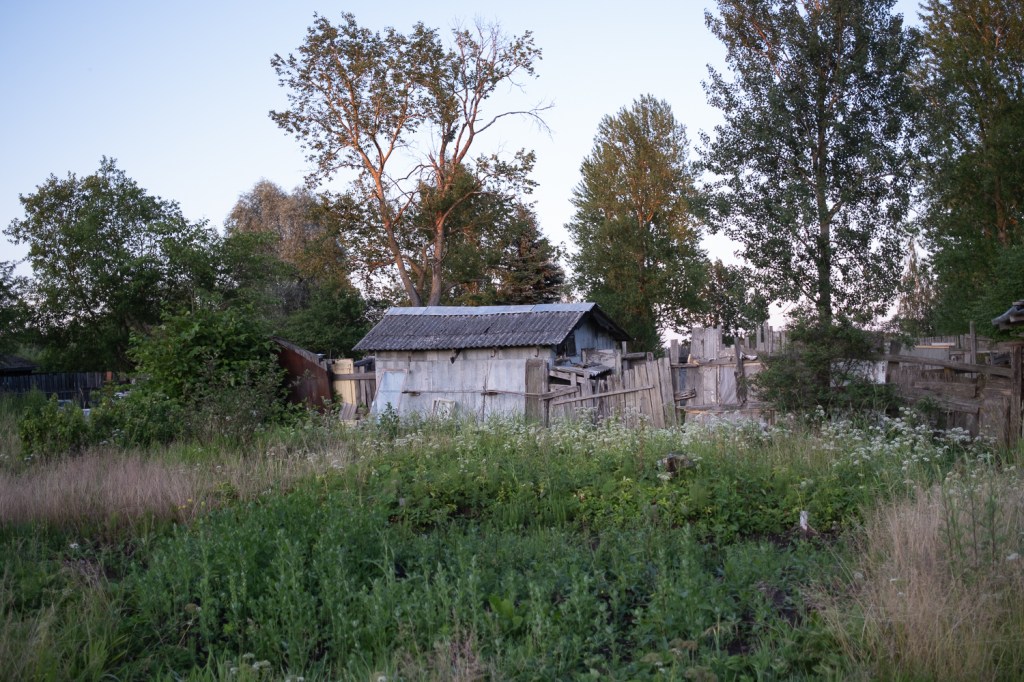
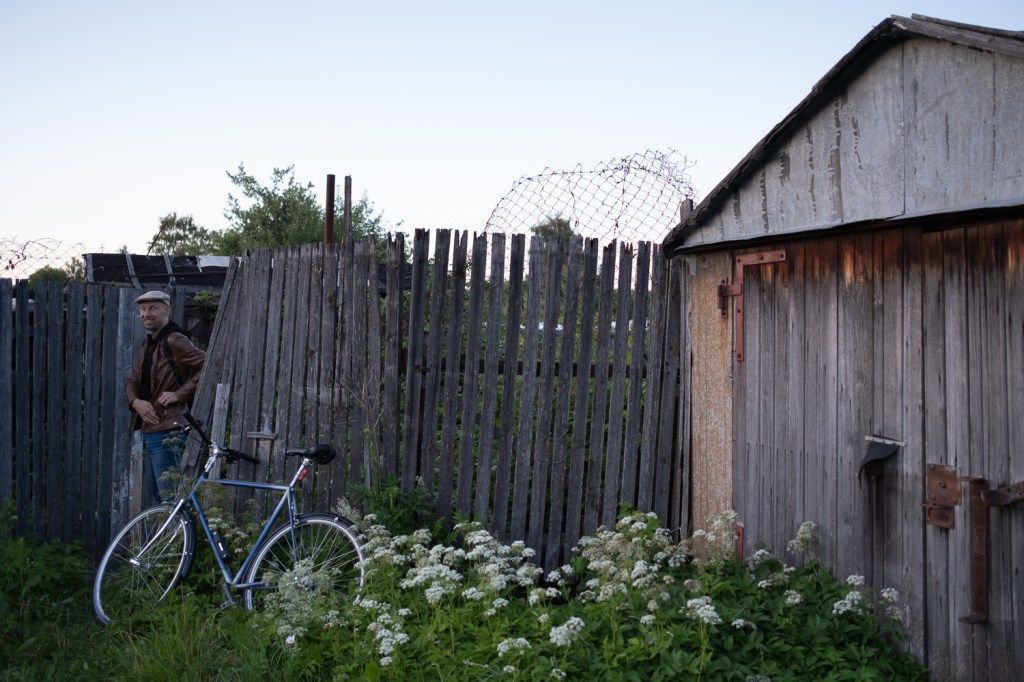
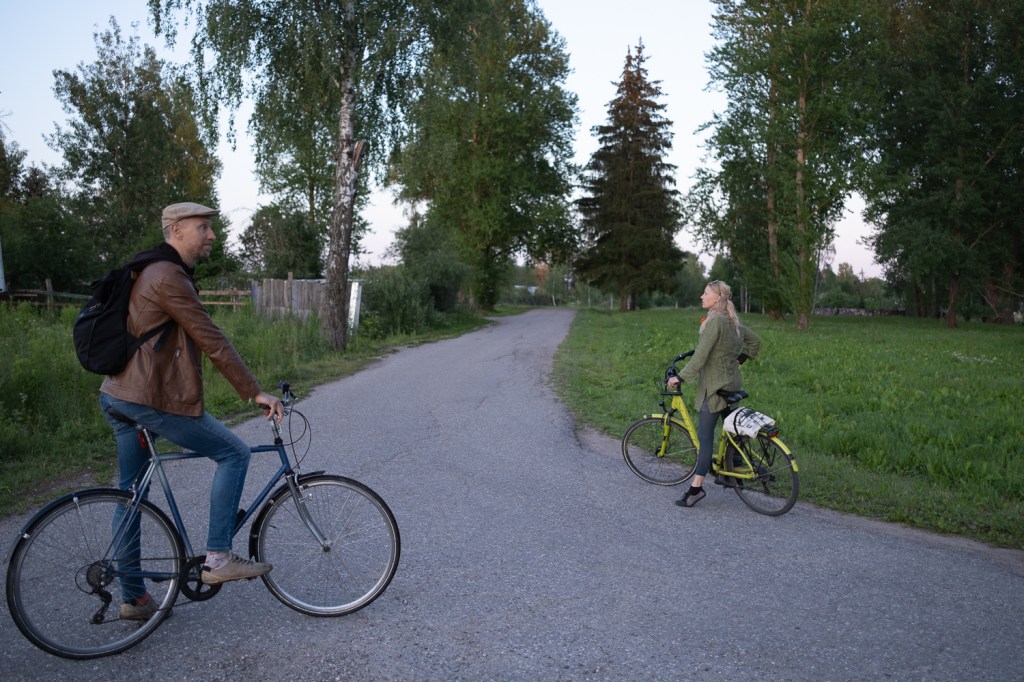
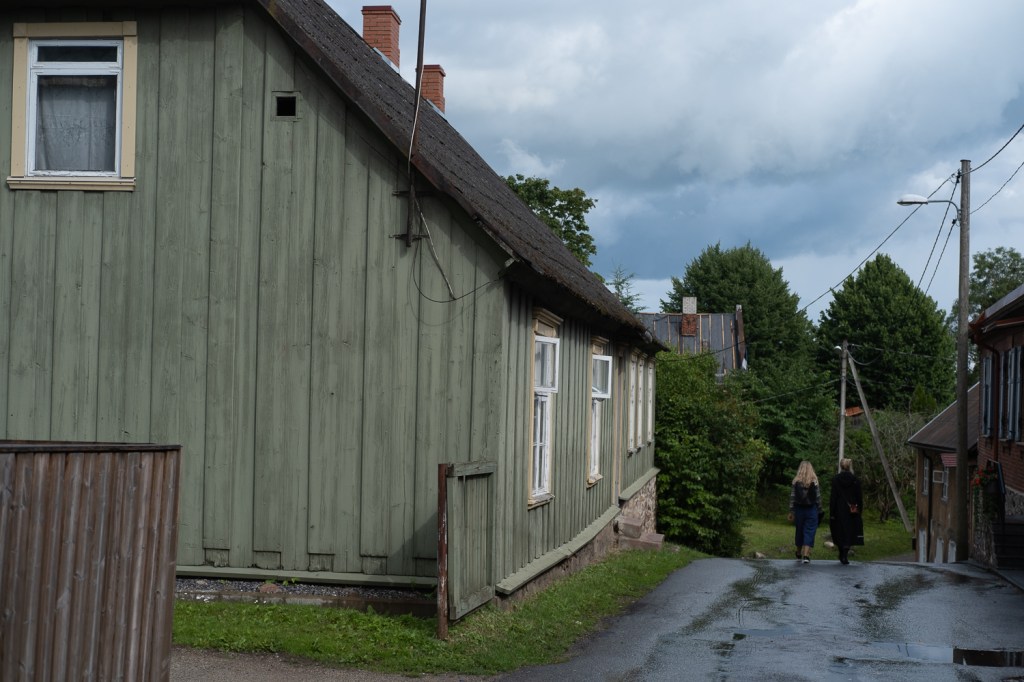
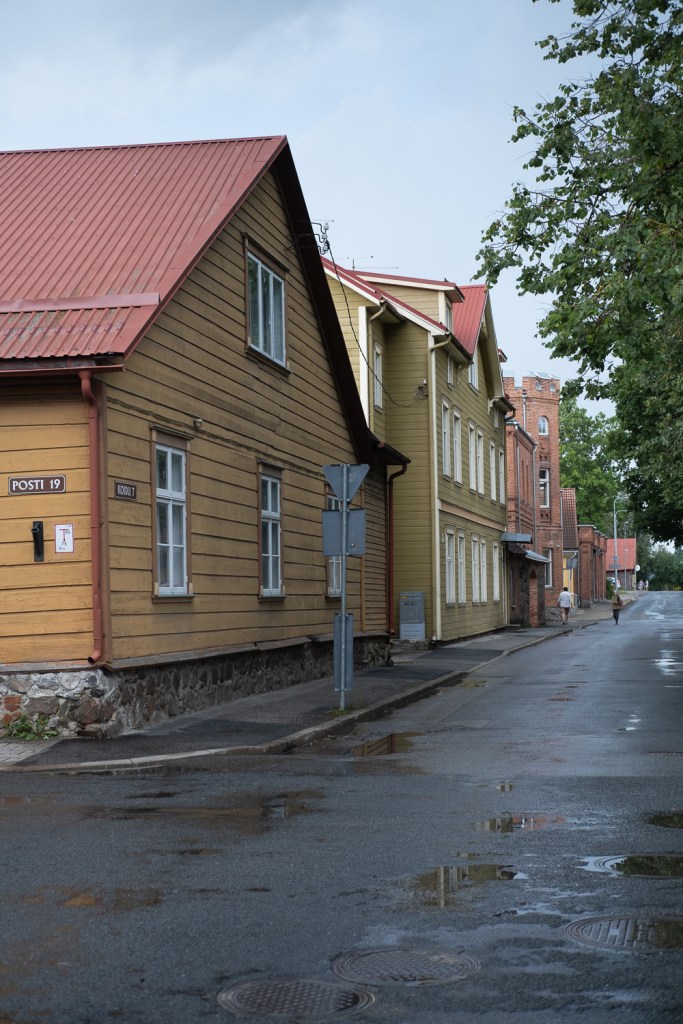
Following a few hours sleep, and a couple more hours of working from home from home, I was introduced to what would be my trusty steed for the week, my friend’s son’s mountain bike, and we set off to tour Tartu. Setting off from my friend’s house we freewheeled through the lovely, leafy suburb of Vaksali and its, what for me were highly novel, wooden houses, and on into a large park that eventually led us to the river and Tartu’s artificial beach. From there we came through Supilinn, featuring more wooden houses albeit less in the way of gardens, and on into the centre of town where one finds the majority of Tartu’s stone buildings.
As someone who also enjoys spending his free time cycling, I’ve often thought that combining the two activities would be ideal. I’ve even gone that extra step and tried at a few times and found that it doesn’t really work. In order to make photographs I have to stop and break my cycling rhythm (although I have also make photographs while cycling) and in order to maintain a decent cycling rhythm and sense of kilometric progress, it’s generally best that I don’t stop too many times or for too long in order to photograph things. Ultimately, the two activities end up being somewhat at odds with one another – at least in my experience of trying to take two things too seriously at the same time. On the plus side, I get to ruin two nice things that I might otherwise enjoy at once … sort of like killing two birds with one stone if you enjoy throwing stones but also ornithology.
All of this to say that while I did have my camera with me, I didn’t manage to make many pictures of these lovely wooden houses in their delightfully green surroundings because the camera was mostly safely stowed within my backpack and the bike wheels mostly kept on turning. This essentially left me with a sensation that I needed to compensate by photographing every interesting wooden house for the remainder of the tip.

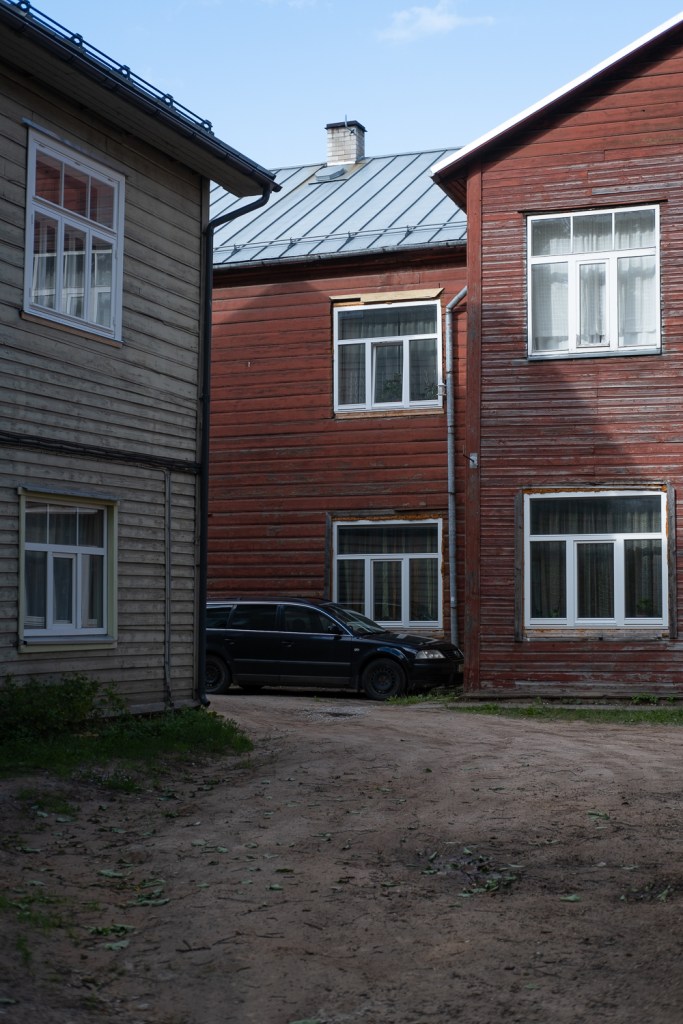
That second picture is definitely from up near my friend’s house so as I reconstruct my memories from these photographs (cue flashbacks of Roland Barthes texts … come to think of it, my friend was reading Barthes during the time I was there … I suppose no matter what time of day it is, somebody somewhere in the world is reading Roland Barthes … possibly, don’t quote me on this, marvellous) it would seem we must have gone back there at some point after lunch in the centre of town. Lunch which, while we’re on a rambling but vaguely French theme, was a crepe.
What I can’t really remember is why (another week has passed since I wrote the majority of what you’ve read up until this point which can’t have helped this aide memoire [this isn’t what an aide memoire is … I just wanted to say something else that was French {and use more parentheses until someone finally takes away my privileges <or they invent a fifth type>}]) but it might have been to pick up my friend’s partner who definitely did join us for the evening part of our two-wheeled tour of Tartu, during which we ventured to the other side of the river and up out of the central valley, past the upside-down house, towards the Estonian National Museum which is located on what was an airstrip (Spanish mayors nationwide [all of them reading this extremely niche English language blog] will be wondering why this was not, in a city of Tartu’s size, turned into an airport but worry not there is one elsewhere) at the outer edge of some former Soviet-era military land.
After spending a little bit of time there looking out across the adjoining parkland that previously belonged to an old Manor House pertaining to one of Estonia’s other former foreign occupiers, we headed back towards town before taking a series of detours. The first of these led us to a particularly decadent wooden house bathed in the warm light of Estonia’s long summer golden hour(s) which was picturesque enough that I stopped our little convoy to … well, make a few pictures.
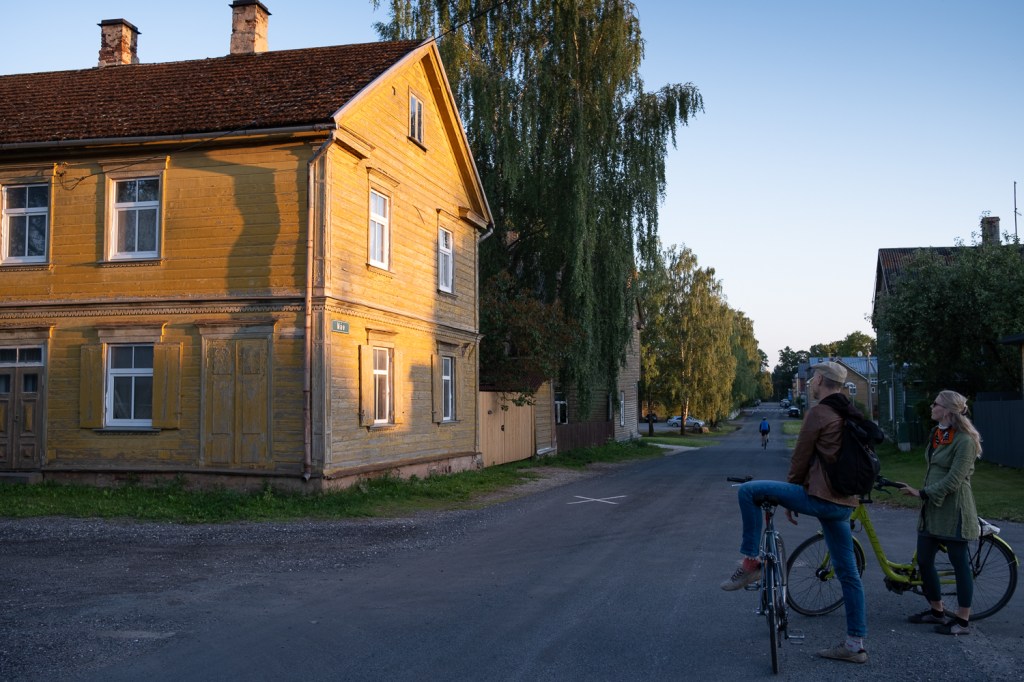
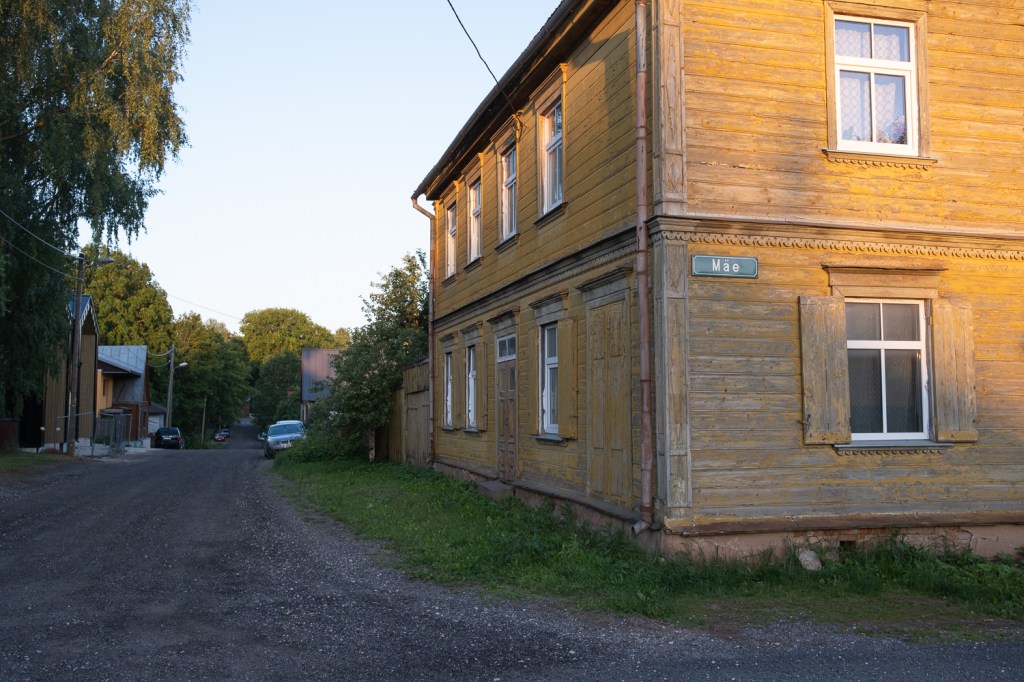
From there we took the road less … surfaced and continued exploring, passing into an area that had, until recently, been home to a series of anarchist allotments that had set up organically. Unfortunately, these had now been cleared and it seemed some of the land had already been allocated for more housing developments on that edge of the city.
As we left this area, we could already see a glimpse of what it might be like in a few years time in some of the new-build houses on the edge of Annelinn, a part of the city built between the late-60s and early-70s characterised by the Soviet blockhaus architecture of that period. This was, apparently, not an area of the city generally shown to tourists but it was one that I really enjoyed seeing, and one which actually had quite an impact on me. I vividly remember thinking to myself how much nicer this Soviet-era blockhaus development was than where I lived in Valencia. Ultimately a large part of Valencia, and most Spanish cities post-1940 is made up of similar blocks of flats, of similarly questionable aesthetic value, also built during a dictatorship but with considerably more density and generally separated only by (often wide and traffic-heavy) roads rather than green space, foot and cycle paths as they were in Annelinn.
Graz initially, Tartu generally and Annelinn specifically gave me a lot of clarity on the things I had come to dislike about living in Spanish cities. From where I lived in Valencia, it was about a 45-minute walk to the Mediterranean Sea. Unfortunately, for about 40 of those minutes about the only thing one would see would be a seemingly unending succession of concrete buildings, one after another, block after block. In Annelinn there was a decent separation between the blocks of houses, and this separation hadn’t been used as a place to put a road. It had been used for areas to hang washing, or for play parks, or simply areas of grass. There weren’t multi-lane roads running through the area, but there was a long, wide foot and cycle path bordered by more green space. It seemed a much nicer way of building than the ACAB (that definitely stands for All Concrete, All Buildings – don’t @ me) method chosen by postwar Spanish urban planners. (The higher population density achieved by Spain’s ACAB [definitely not a commentary on their fuerzas de seguridad del estado, honest] method does make its cities more compact than would otherwise the case, compact enough to traverse on foot more quickly than less dense cities such as Tartu.)
Apparently this is now just a blog about Urban Planning since I didn’t actually make any pictures during this cycle path to Damascus trip through Annelinn in the advancing twilight. As we left the area and cycled (still on a very nice cycle path) past the Anne canal to the river and the centre of the city, it was getting to be about as dark as it really gets in Estonia in the summer, a dark blue dusk under which we arrived back home to conclude my first full day.
The next morning I left my friend and her partner to their work-from-home duties and took myself, from memory and with only one very slight deviation down a parallel road, back to the Estonian National Museum. As well as the urban planning, I was also very much enjoying the weather in Estonia in summer as a welcome respite from the oppressive heat of the season (not helped by the vast amounts of concrete) in Spain. It was generally sunny and warm, with short showers coming and going throughout the day, but not so hot as to be uncomfortable in jeans … or shoes … or clothes generally. It felt nice that maintaining the basic, necessary standard of public decency didn’t feel like a personal inconvenience to suffer through while outside. That said, I was then inside for a couple of hours learning a little about the different stages of Estonian history, and the part that Tartu has had to play in its cultural identity, and making my first Estonian pun after a mere 36 hours in the country. Nice.
No photographs of or in the museum but I did again feel the urge to photograph some more wooden things (houses, mostly) on the way back down the hill to town, where I was meeting my friend for lunch. I also wanted to source some postcards as … I still send those to people. Unfortunately, I seemed to have a rather different impression of Tartu than the one the postcards seemed intent on conveying, being as they were mostly of the city centre and its stone buildings. My friend suggested this was because these buildings were generally intended to give an air of grandeur and show everyone that Estonia also had stone. I eventually found some with an aerial view of the city which led to me learning that part of the reason for all of the green space I had been enjoying on my exploration of the city was because large areas of the city had been raised to the ground through bombing campaigns, leaving some considerable gaps. This put a slightly different perspective on my observations of the city thus far.


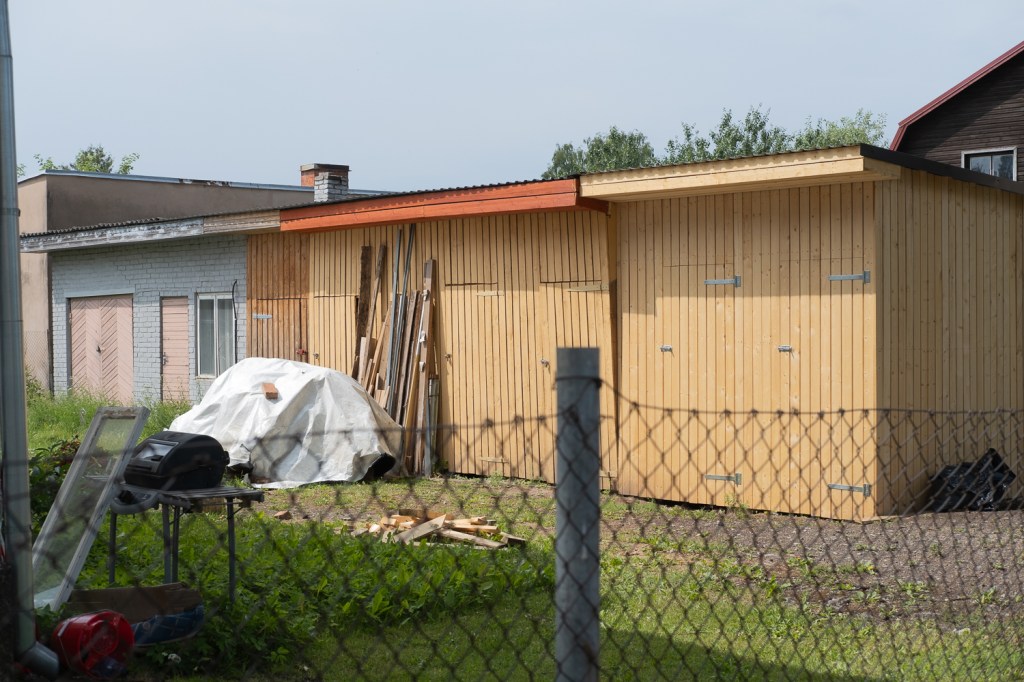
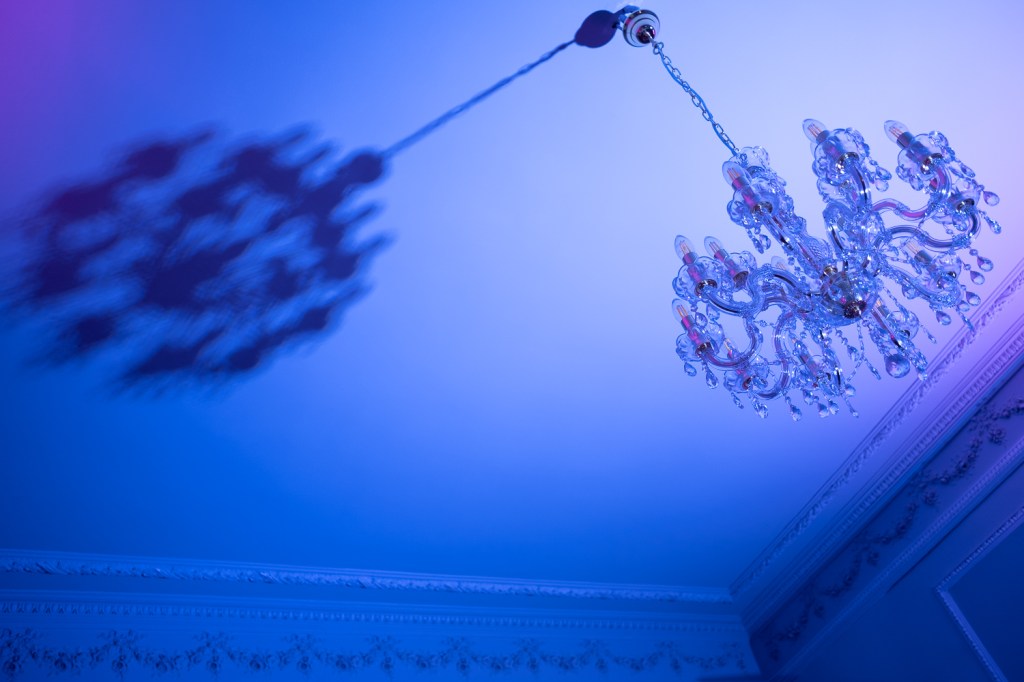
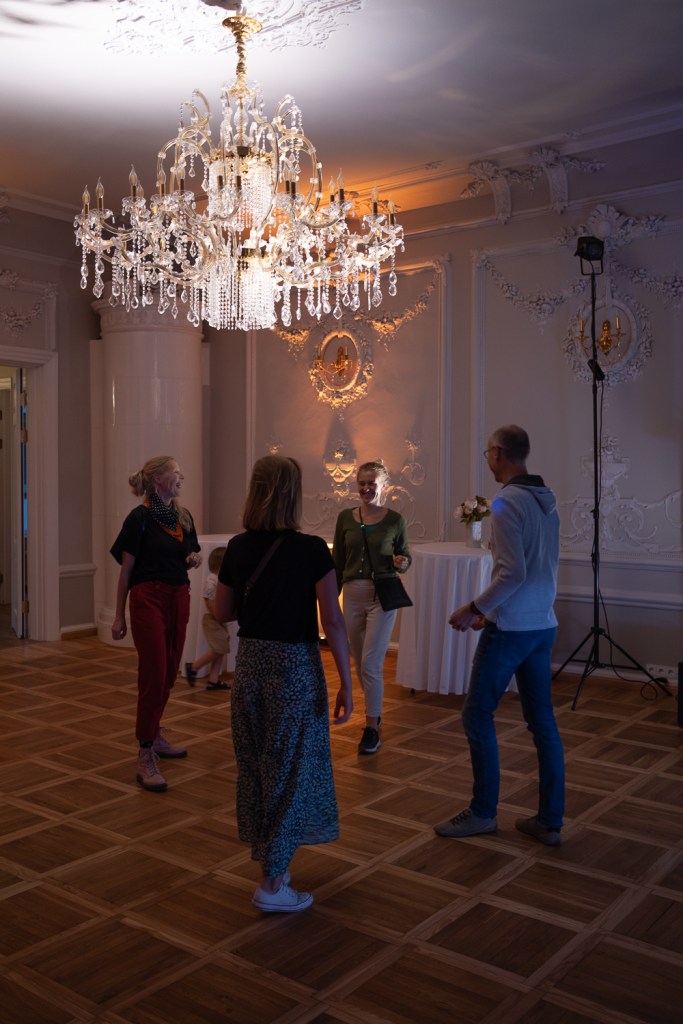
From lunch throughout the afternoon, I was able to observe a different Tartu phenomenon my friend was keen to show me, namely that if you wander around town for more than about five minutes, you’ll bump into one or more friends, and we duly came across a small succession of hers, and eventually made our way to an open house event at a newly-renovated old manor house (of the kind that formerly belonged to some of Tartu and Estonia’s overseas occupiers) which was celebrating its reopening as a place for events and functions. After marvelling at the ostentatiousness of the remodelling for quite literally some time, people began to dance amid the disco ball, LED colour fades and chandeliers. (I did not, for unfortunately I was born without the genetic component of human DNA responsible for rhythm and thus took up my customary position at the edge and back of the room.)

After further use of my sleep mask (much like the bad guy in that late-stage Pierce Brosnan [I’ve worded this as if he was some kind of unfortunate affliction but, given how the films deteriorated after Goldeneye, I stand by this] Bond film) we were heading East by North East to the village of Varnja, home of some Russian Orthodox Old Believers, and the Voronja Gallery, our main destination for that morning. It’s a really nice, fun little gallery and sculpture garden with an interesting and very varied set of artworks that we all enjoyed exploring at our own different paces.
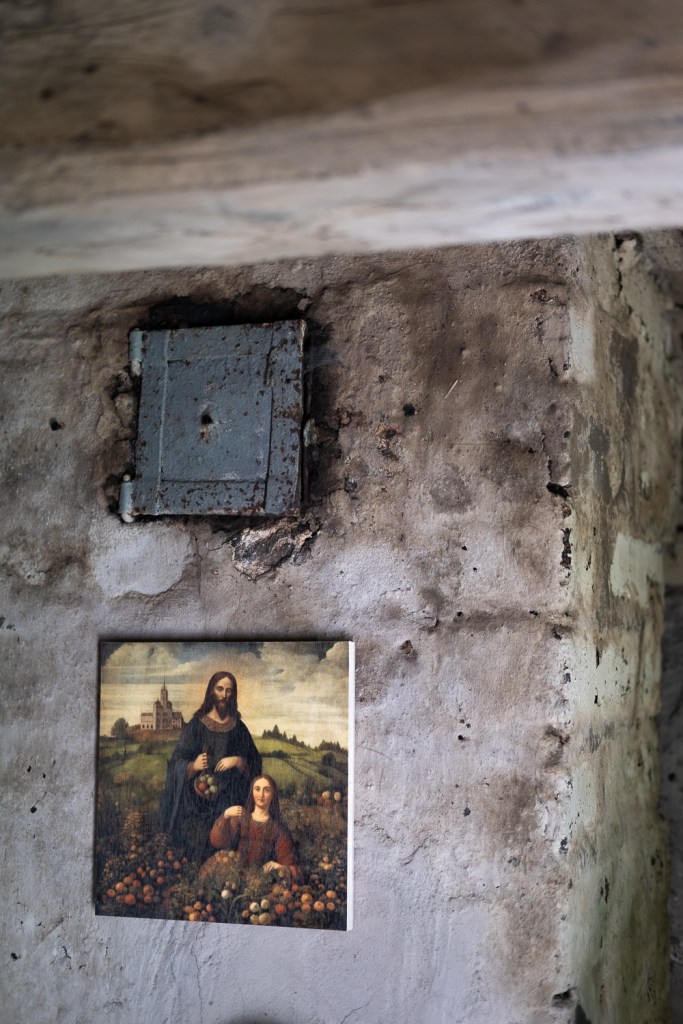
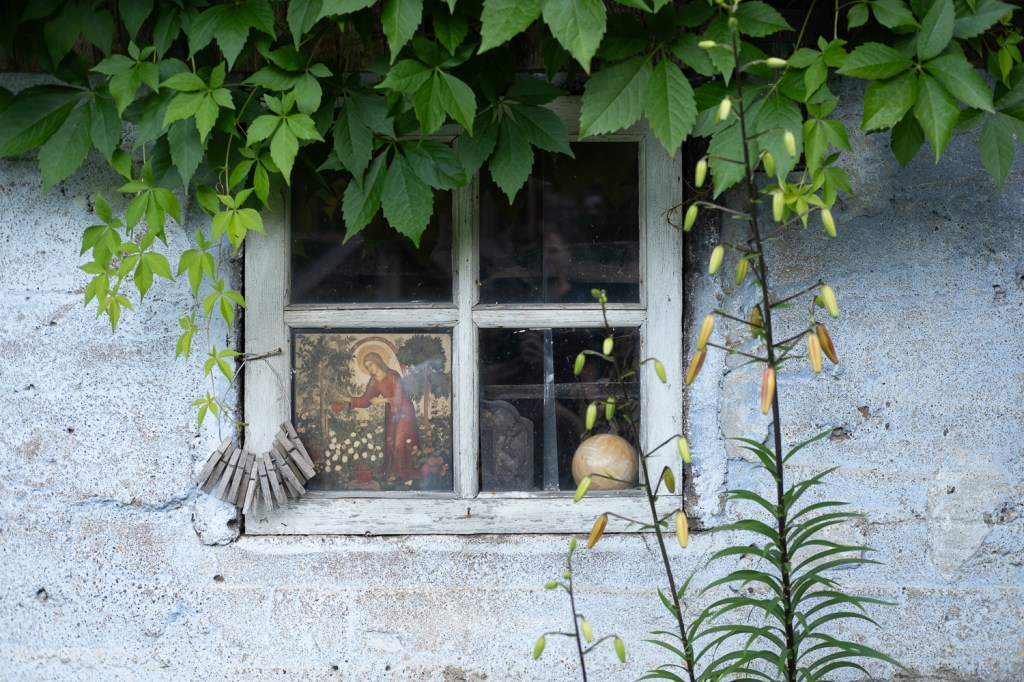
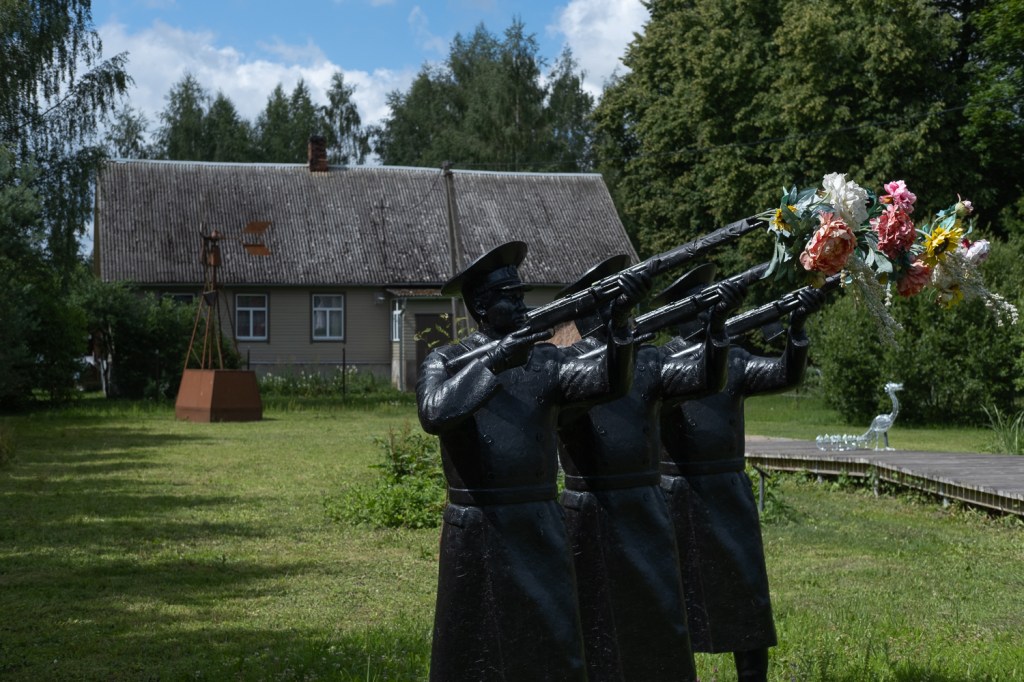
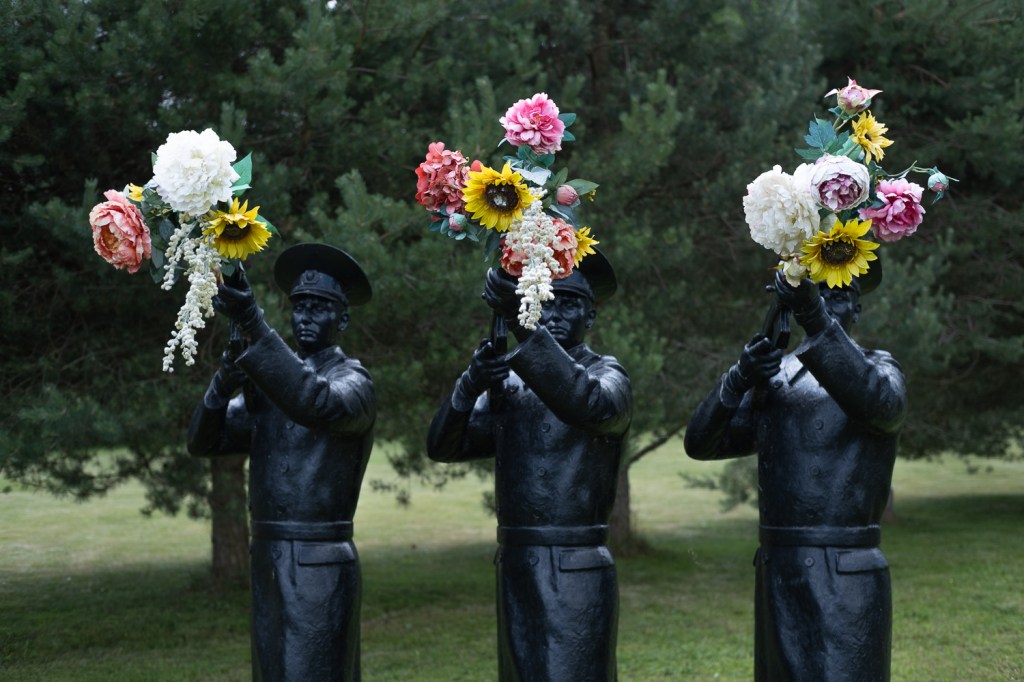
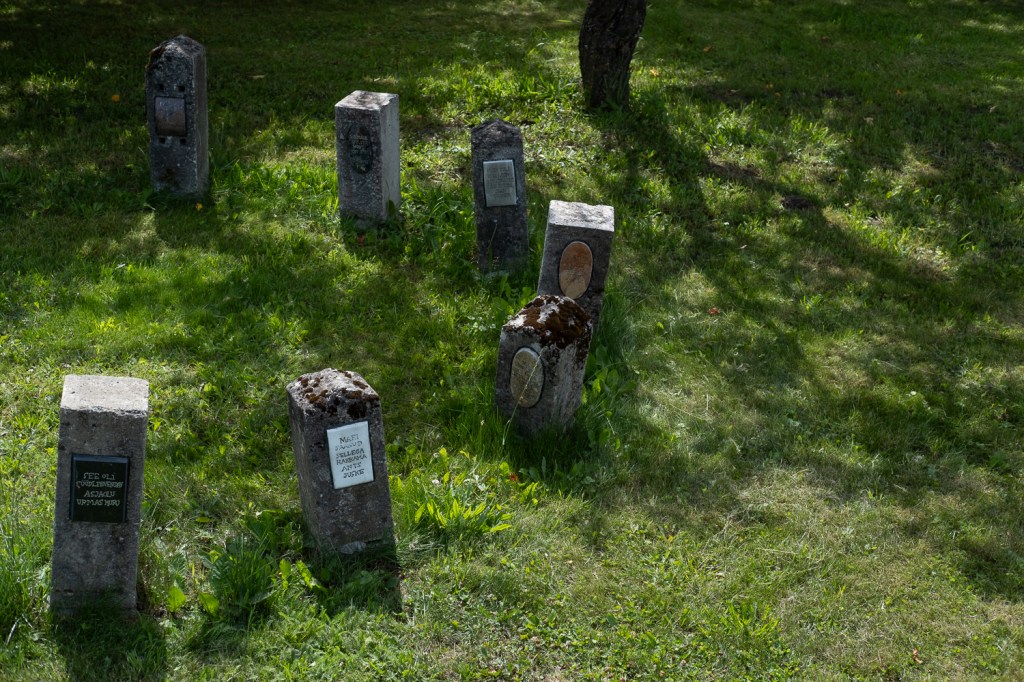
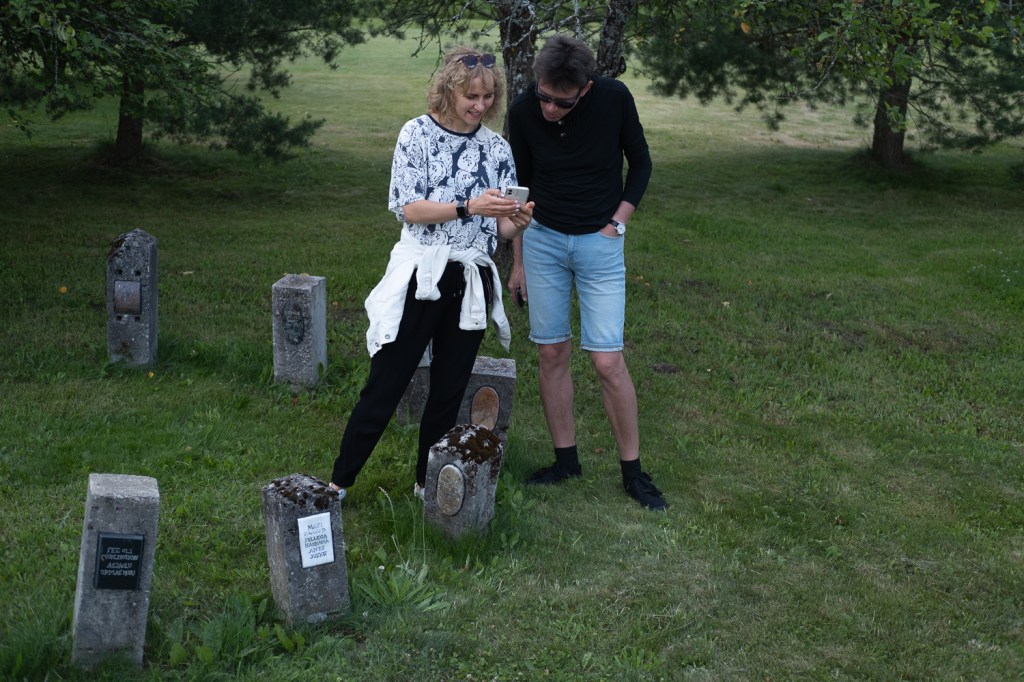
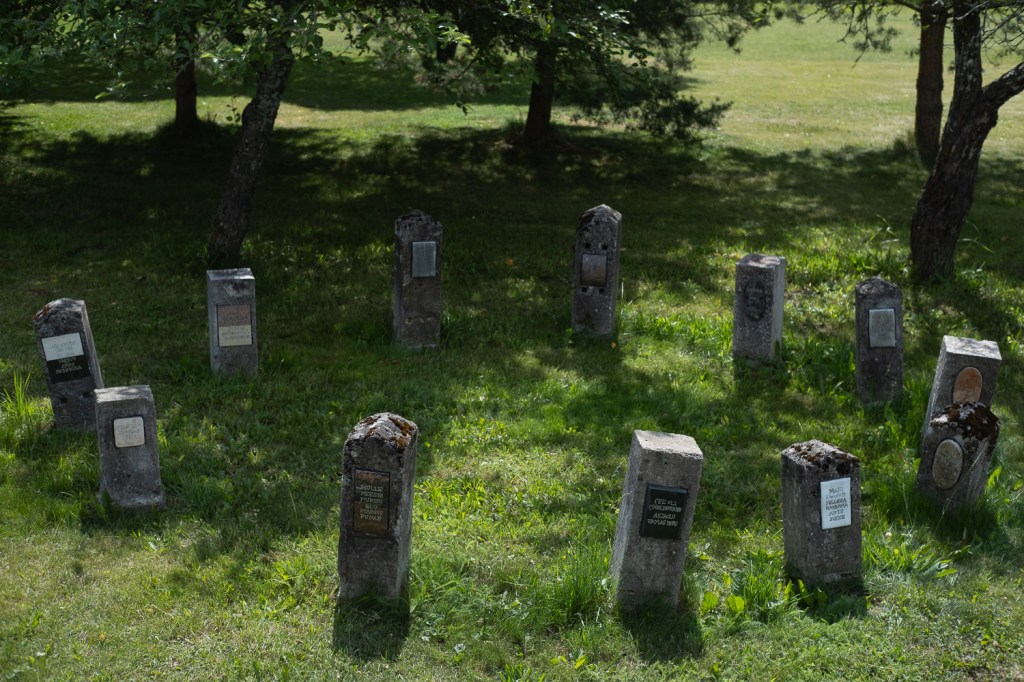
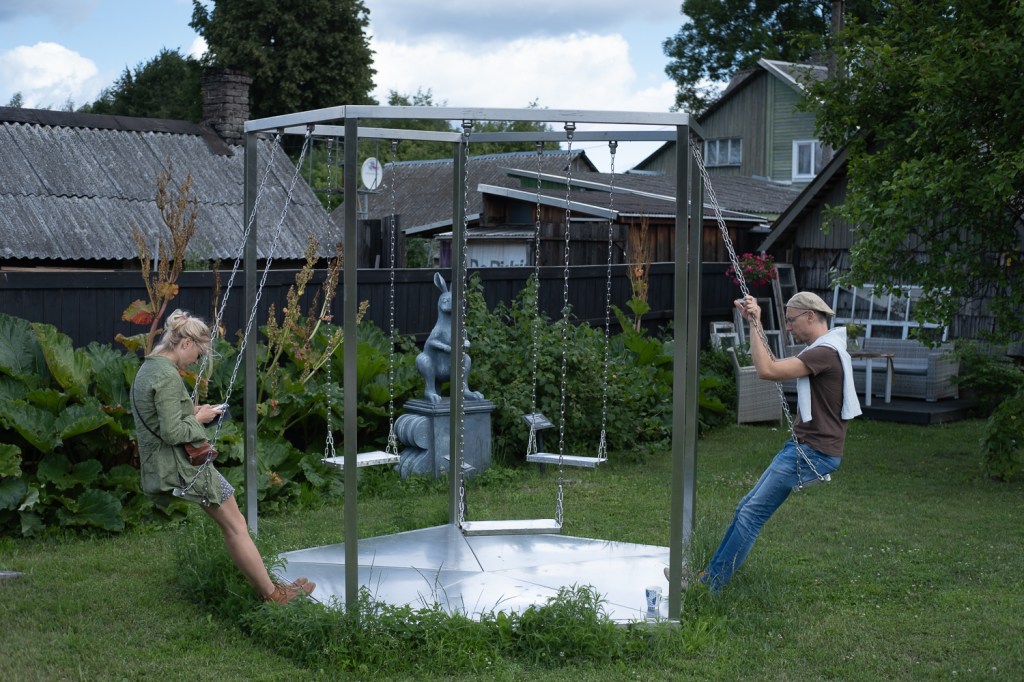
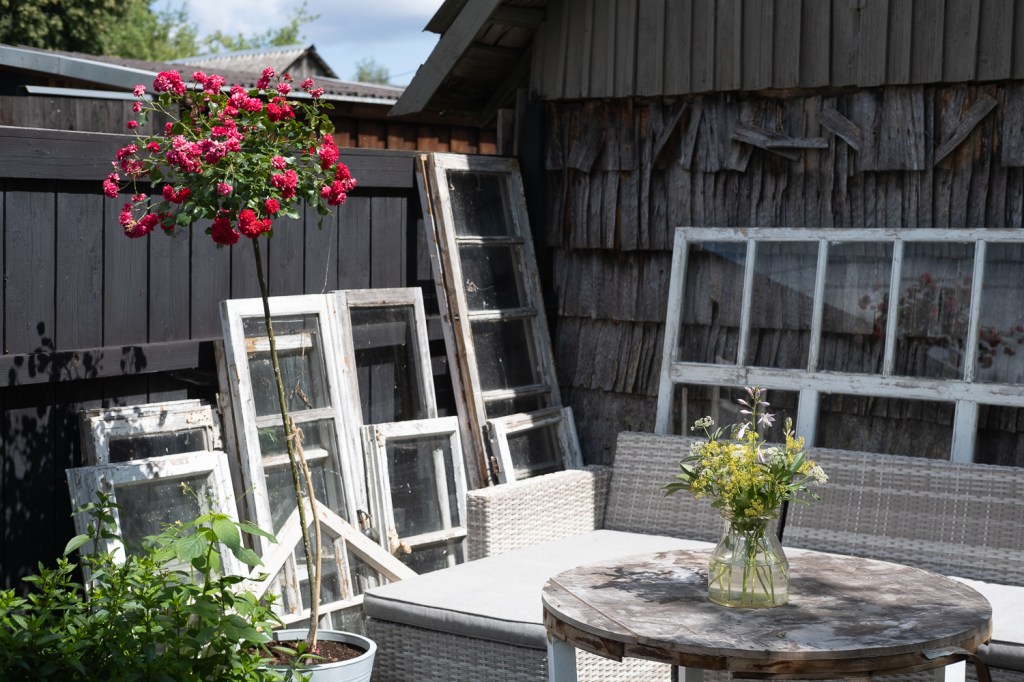
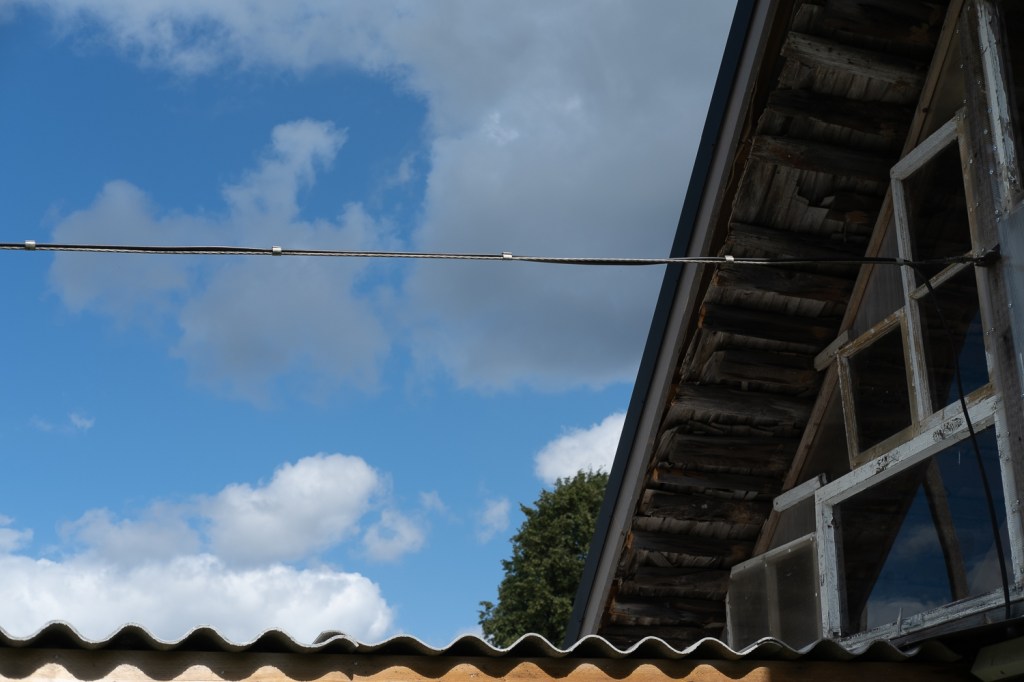
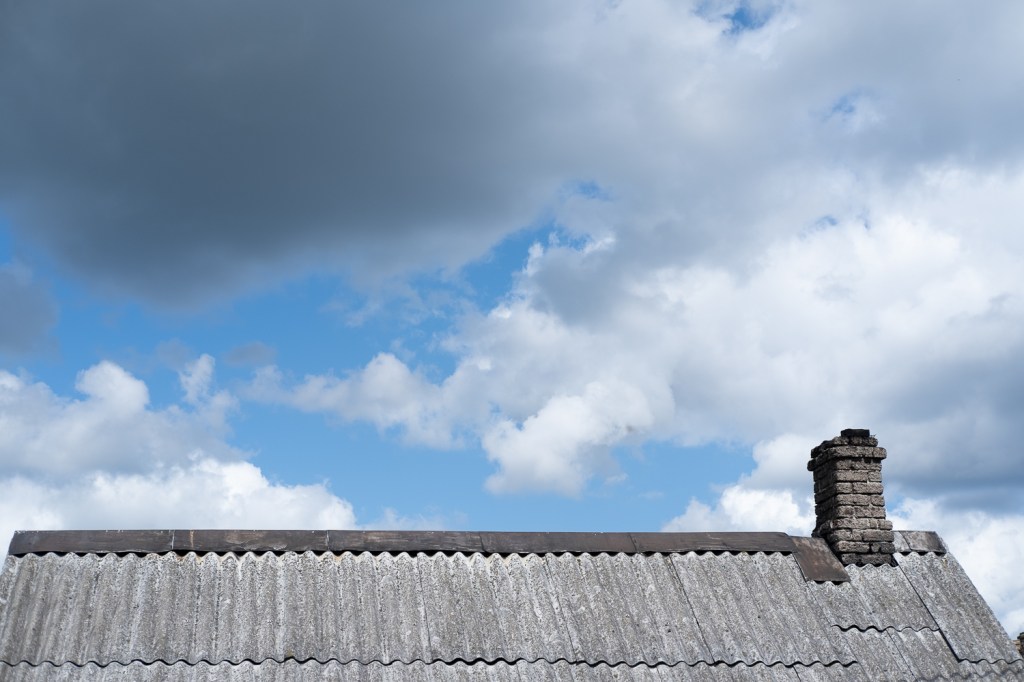
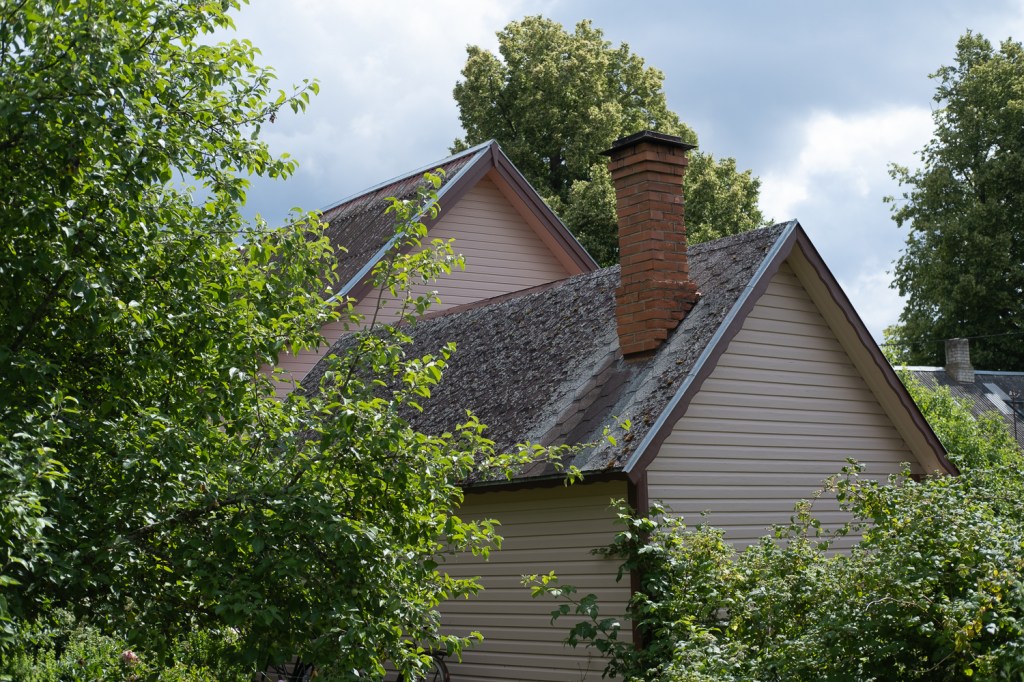
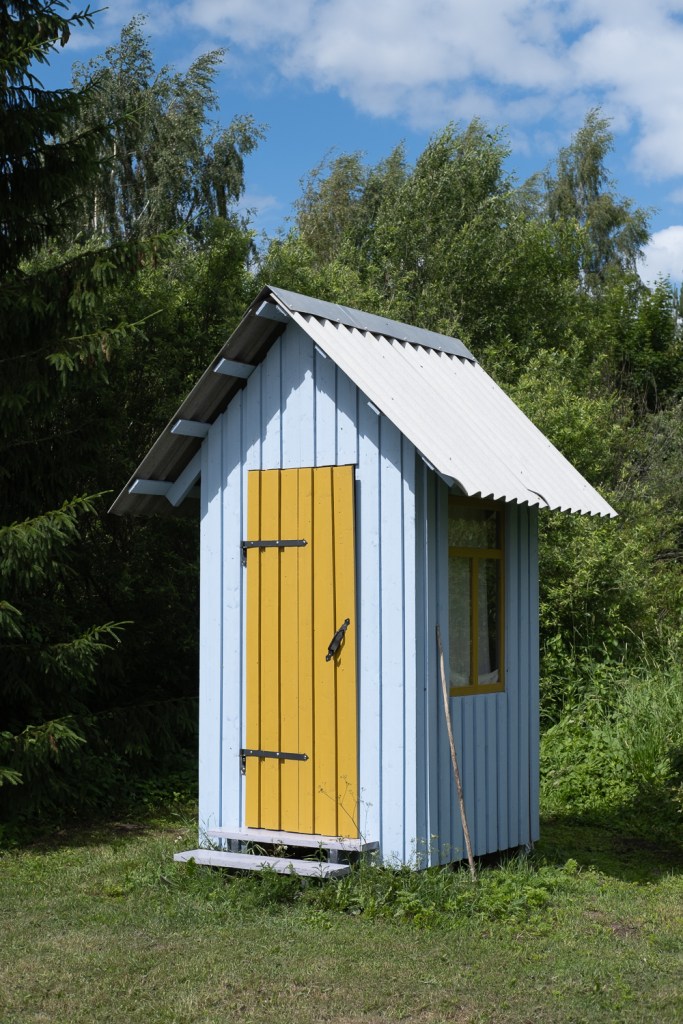
It was also my first taste of Estonian countryside and its particular vernacular architecture and furnishings.
None of these pictures, above or below, are particularly interesting photographically. They’re ultimately a particularly odd set of holiday snapshots, my own record of observations in a new setting and landscape that I personally found interesting and was attempting to make visual sense of in real time. A tighter, more concerted edit would probably make for a less eclectic, less hit-and-miss, more All Killer No Filler set of photographs, but would still only be the product of a handful of days spent exploring a small segment of a country at one particular time of year.
Is this my best work? Almost certainly not … although, really, what is best and who’s to say? Still, probably not. Are there some decent frames among the lot? I would say so.
Ultimately, though, these two sets of travel/holiday pictures accounted for the majority of my photography up to this point in the year. My life had undergone some fairly major changes during the tail end of 2022 and through the beginning of 2023, and I needed to make sense of those. I had also relented on some of the pressure I had been putting myself under to find a photographic project and achieve … something … with my photography. This had led to me mostly just using the camera when I went somewhere new or different, rather than motivating myself to go out and use the camera when I didn’t really feel a particular or honest urge to do so. Photography, in short, hadn’t been such a defining feature of my life, or something on which I was so intent on defining my life.
I’d say this approach is ultimately healthier in a lot of ways, although as we’ve seen both the quality and quantity of my photographic output have dropped off somewhat (considerably.) There’s a discussion to be had about ‘suffering for one’s art’ and such things, but I do believe that if this is an activity I do in my free time, it should be something I enjoy doing, and not something I put myself through the mill or suffer for. I did that for a while. I either got tired of it and gave up or decided to stop doing it, probably a little of both.
Anyway, if I’m overthinking things now, I definitely wasn’t when I made these frames – and I think the takeaway from the above paragraphs is that this is probably the better way of doing things … question mark.
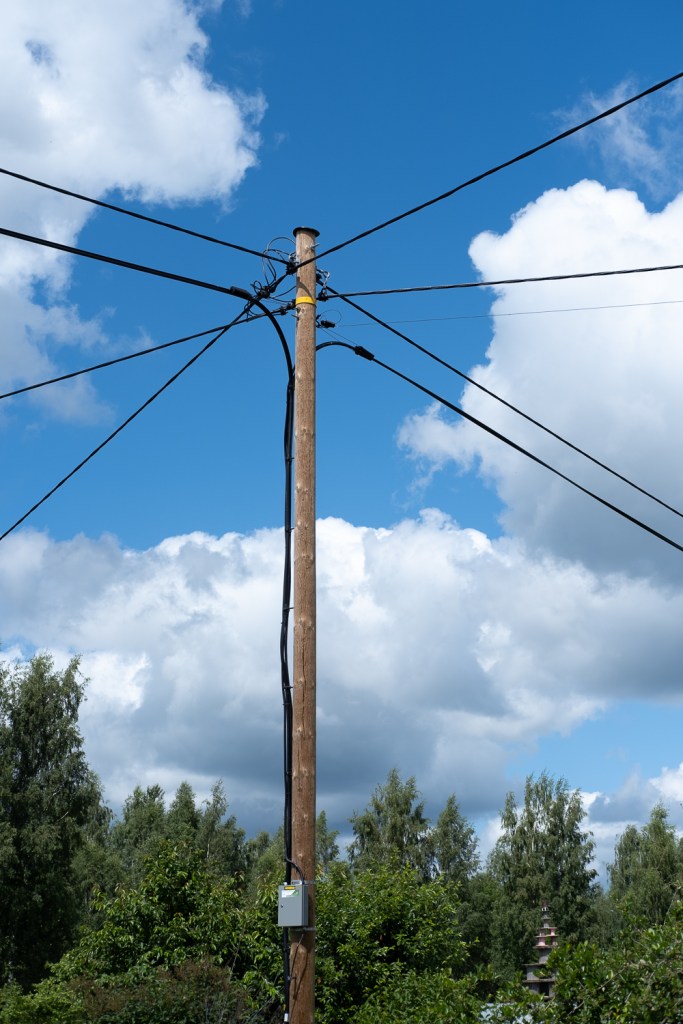
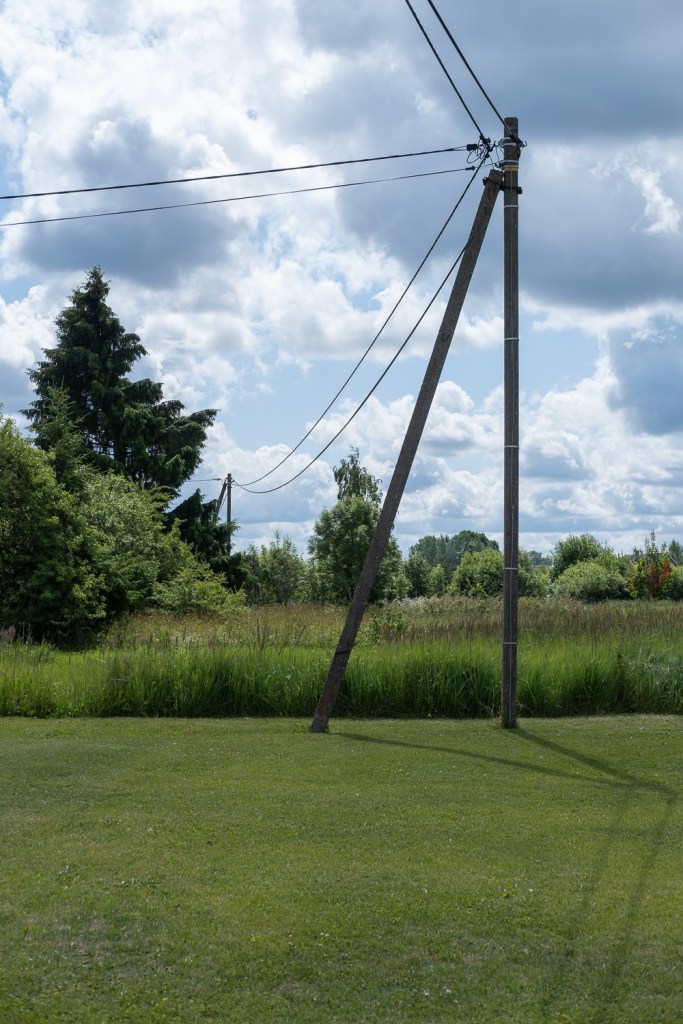
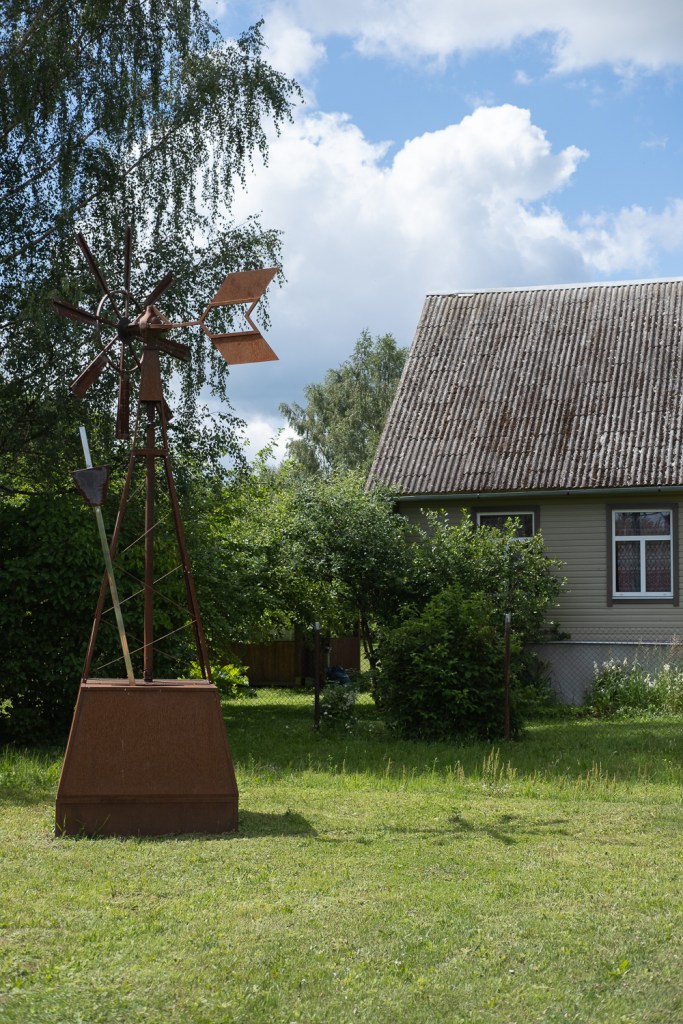
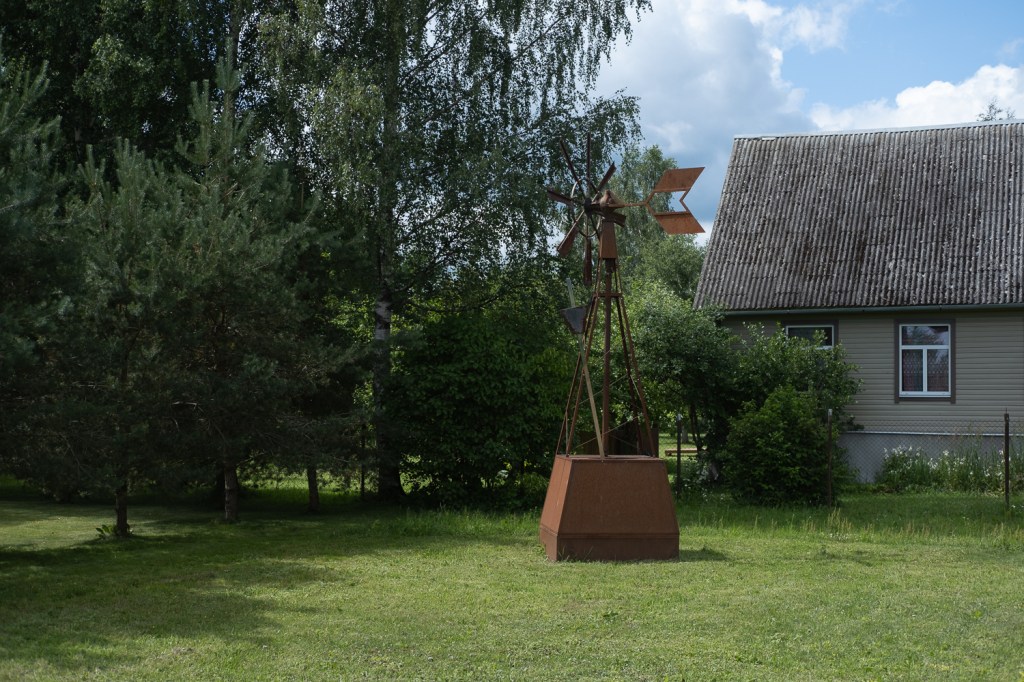
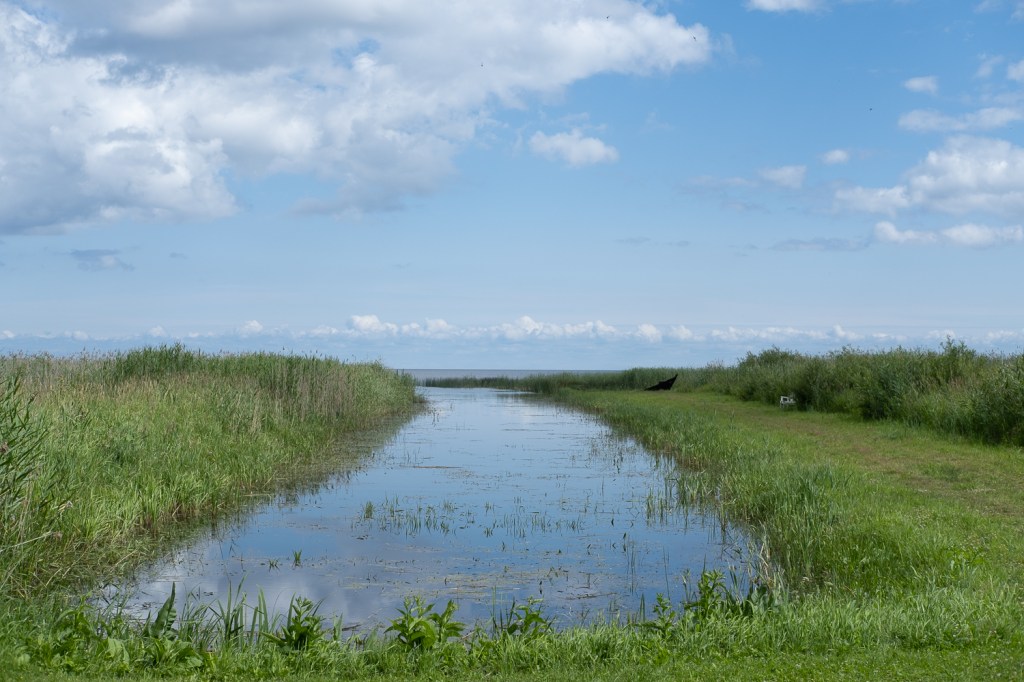
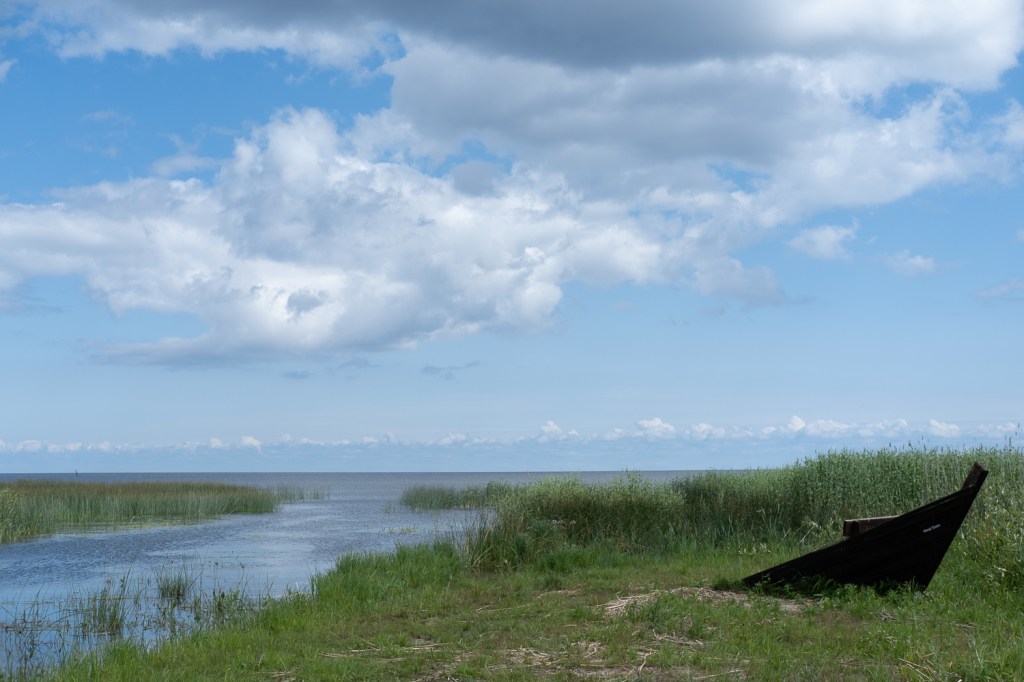
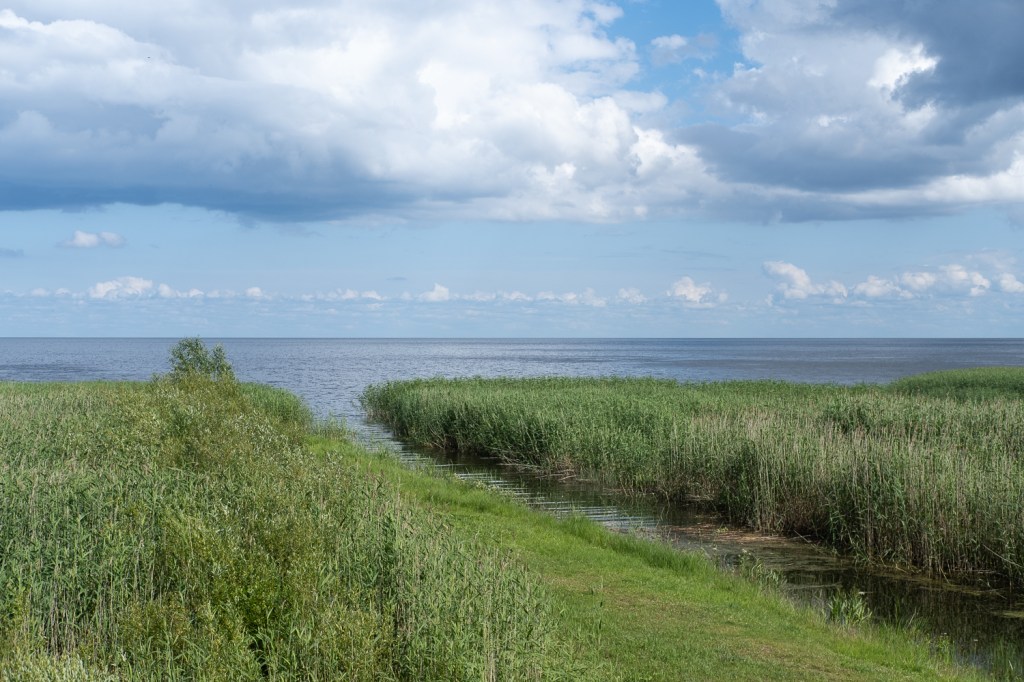
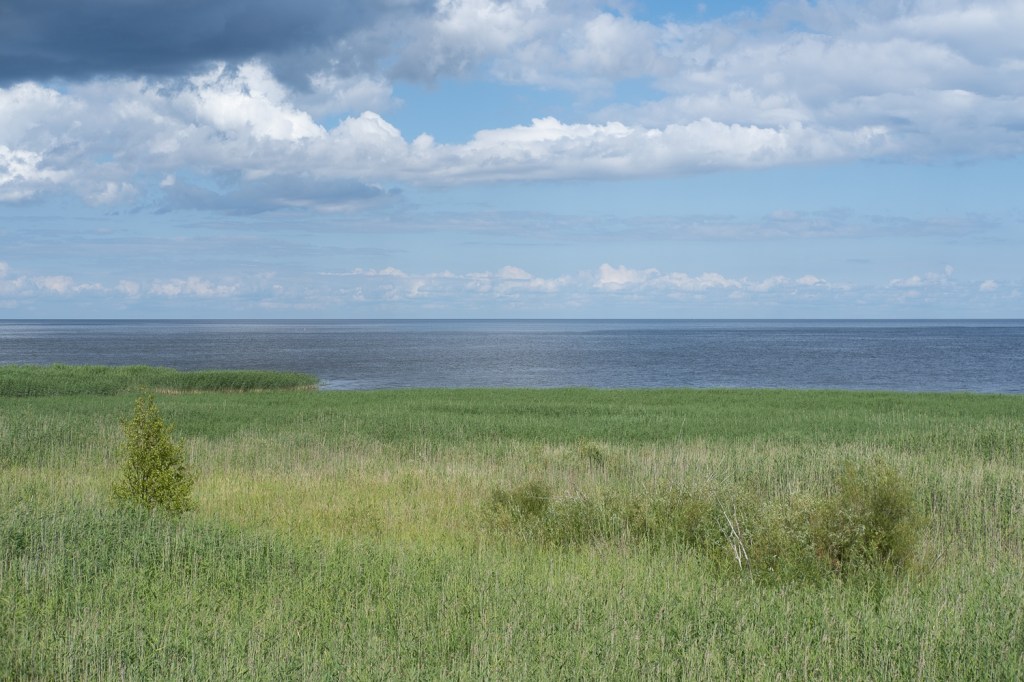
Varnja is also on the shore of Estonia’s largest lake, across which part of the country’s border with Russia runs. We wandered from Voronja to a lakeside restaurant, and also art gallery, Lendav Laev, part of which has been constructed in the form of a boat’s bow. The menu at Lendav Laev seemed, to me at least, to be fairly true to what would have been traditional Estonian summer ingredients before mass importation, consisting of fish, potato and much made of onion such as an onion tart and an onion pie.
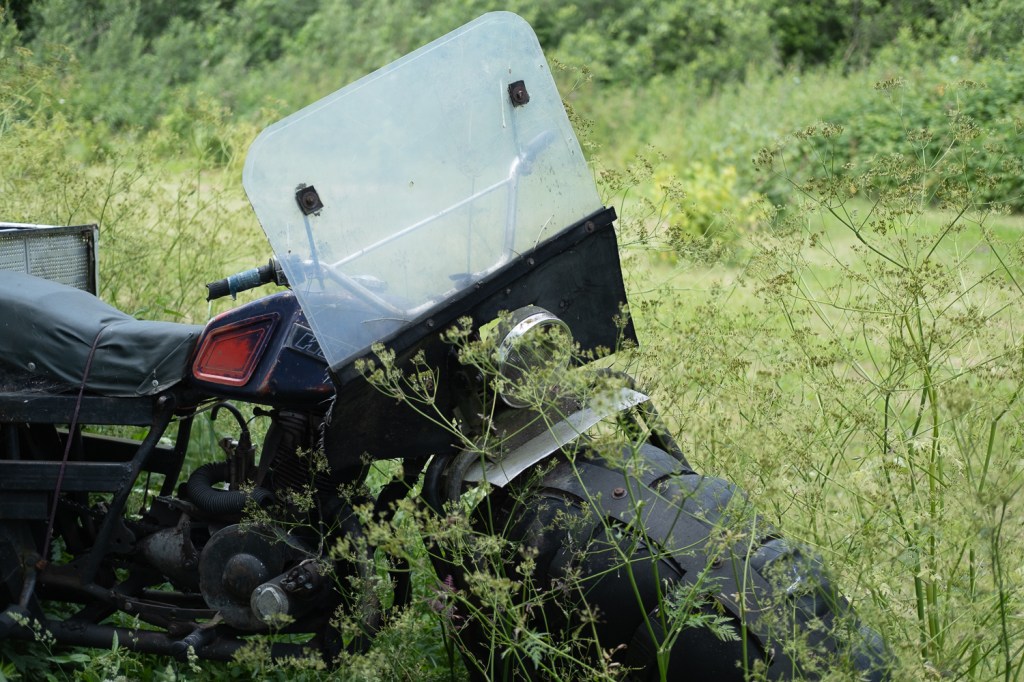
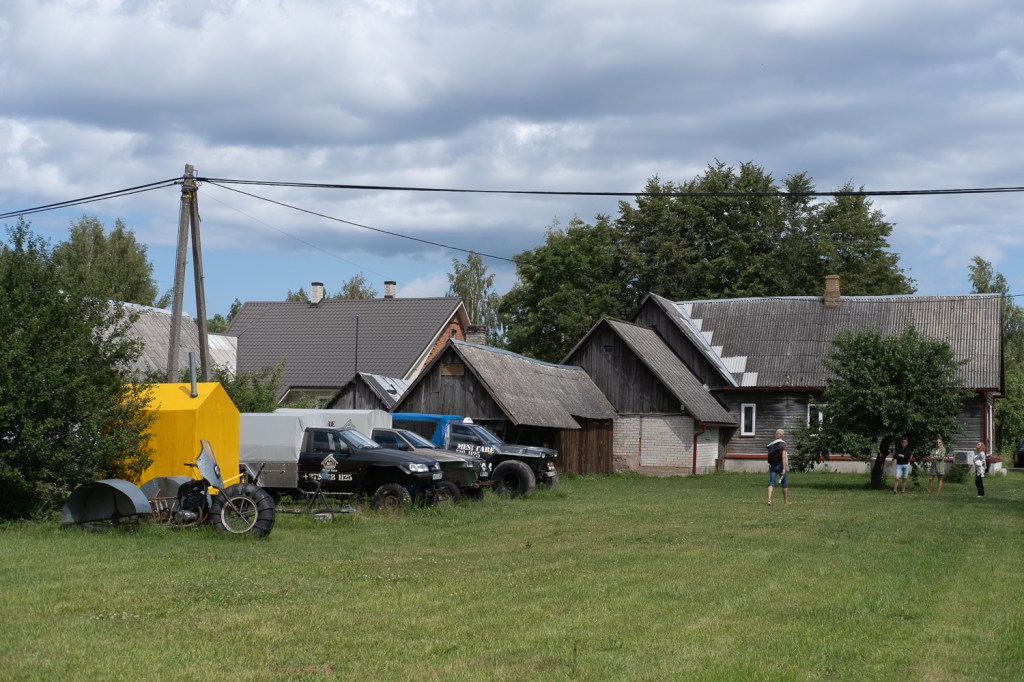
Hidden in the overgrowth to keep them away from prying eyes and, more critically, keep the rubber summer sunlight, were some old-school modified vehicles for driving on the frozen surface of the lake in winter. These had all been brilliantly, beautifully, bodged together from bits of originally very normal machines and other lengths of metal, along with some impressively strapped, studded tyres for spreading the weight evenly. There was, I must add, also a small, separate cabin for that kind of stuff.
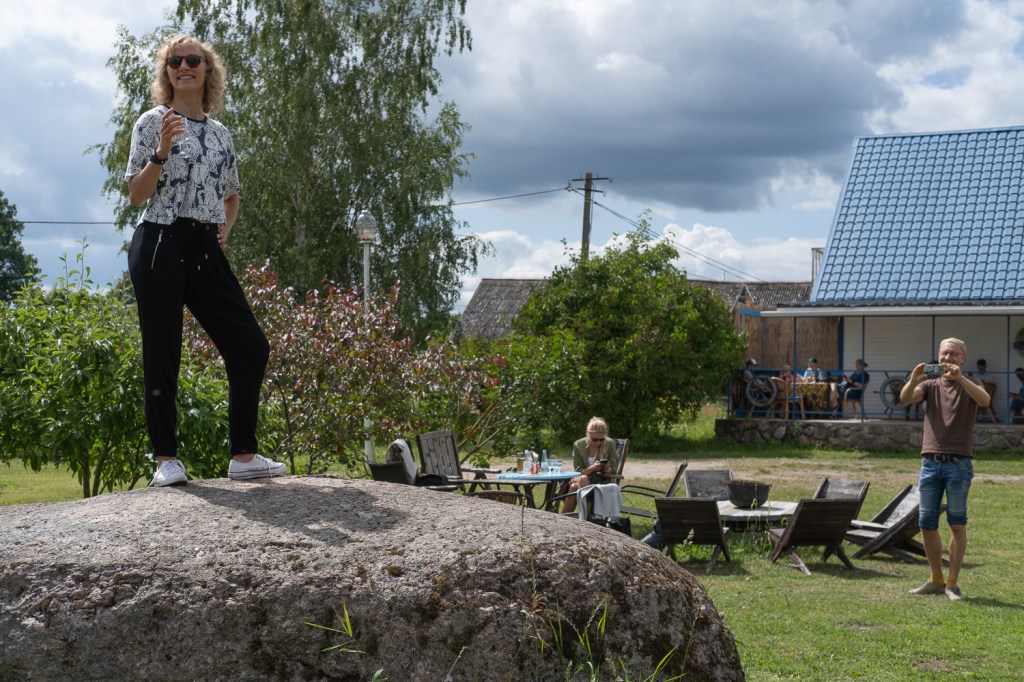
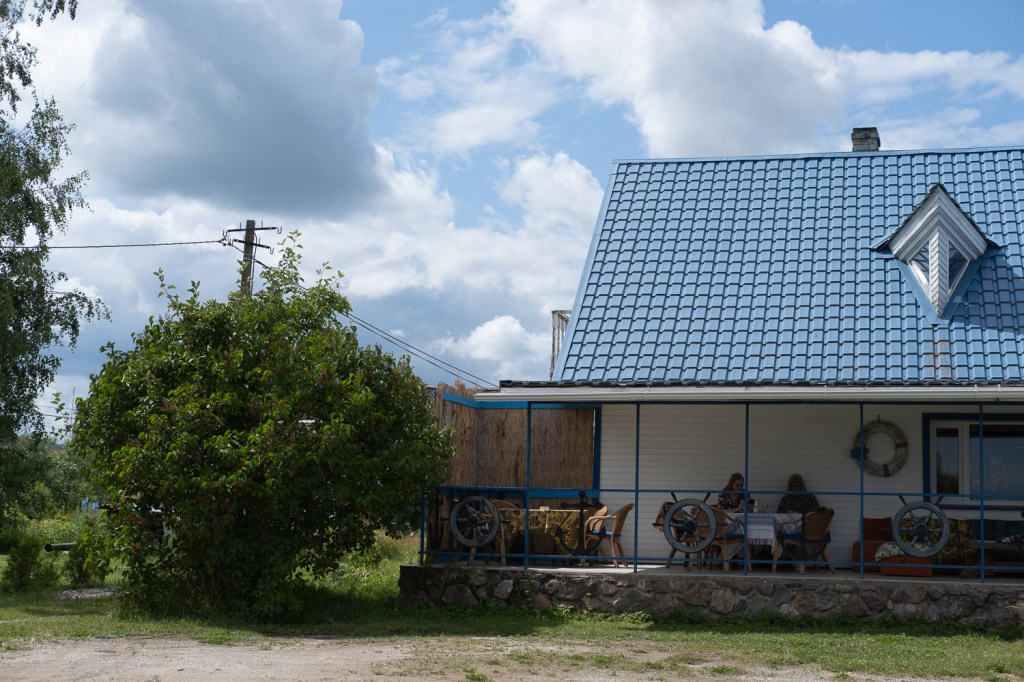
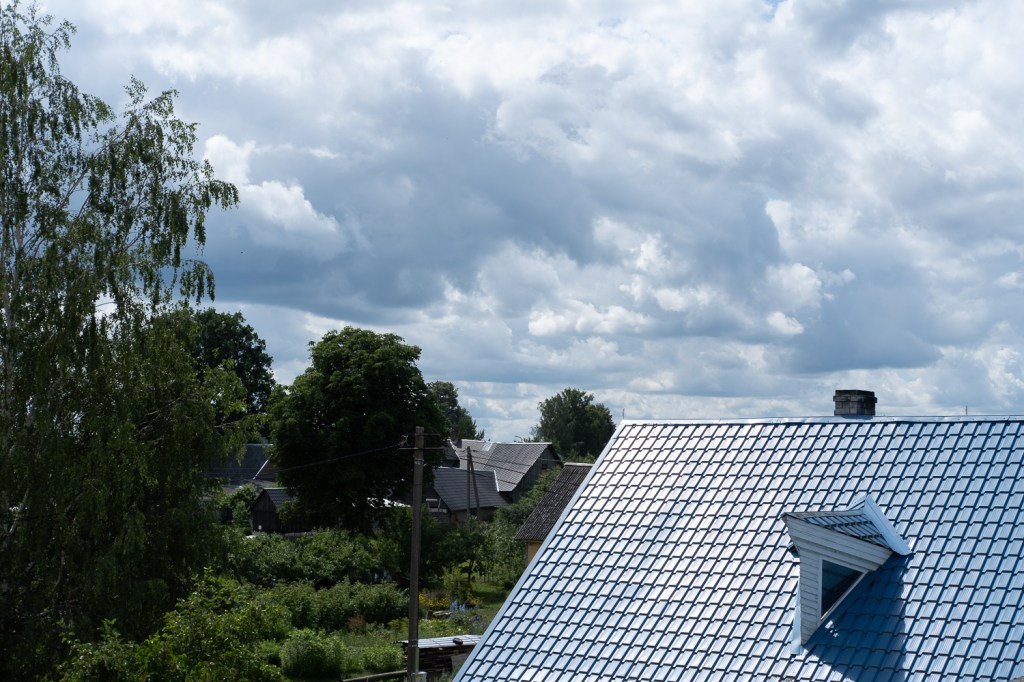
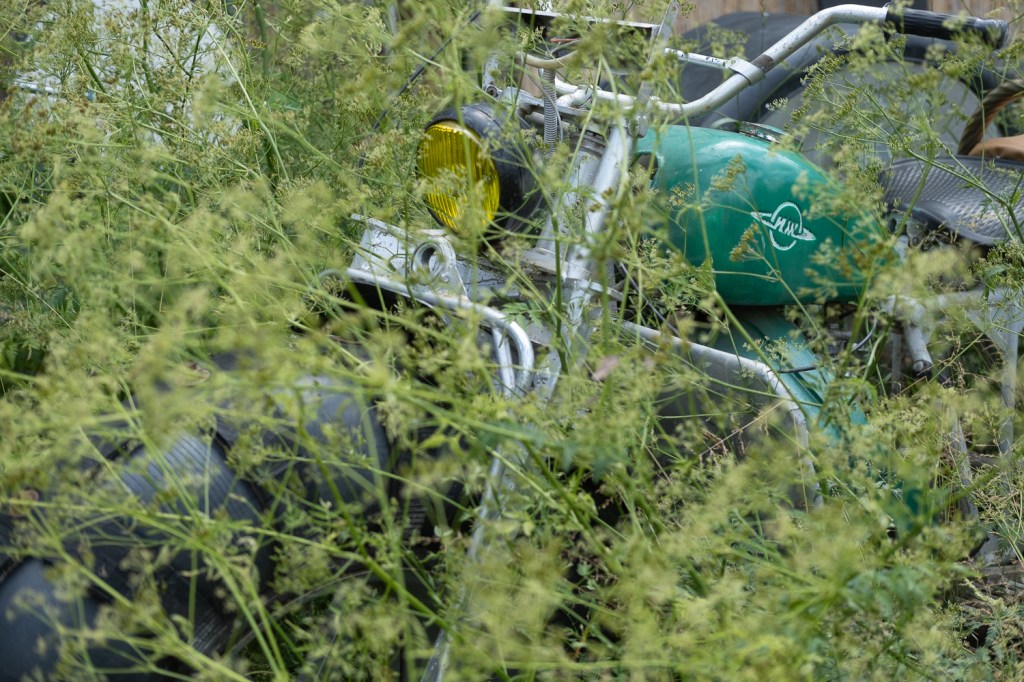
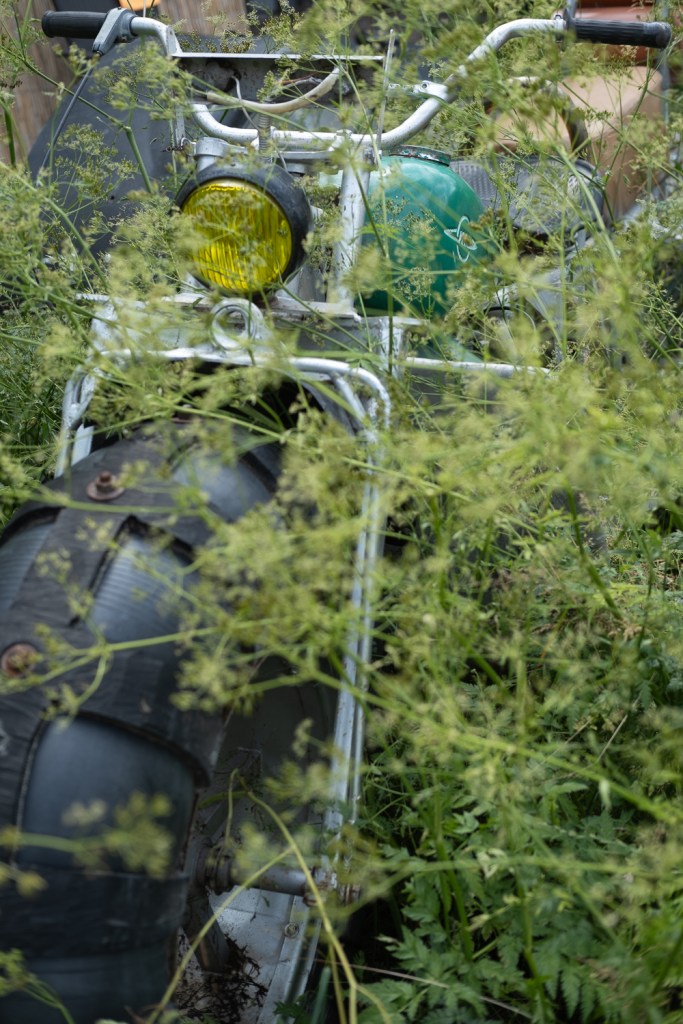
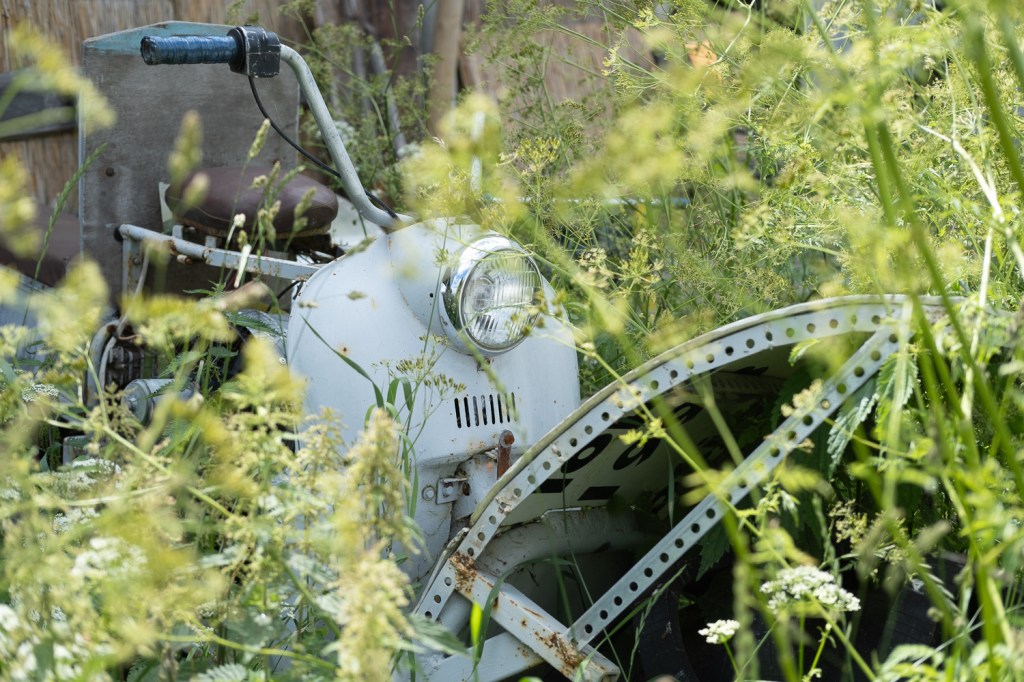
After a nice, long, leisurely lunch, we wandered back up the track, past some of the aforementioned onions, towards Varnja, which we then explored a little of on foot, including finding some more winter specials, among which was perhaps the most interesting taxi I’ve ever seen. Today was also the day to definitely make up for my earlier failure to photograph wooden buildings surrounded by green space, and I went to … village with the idea.
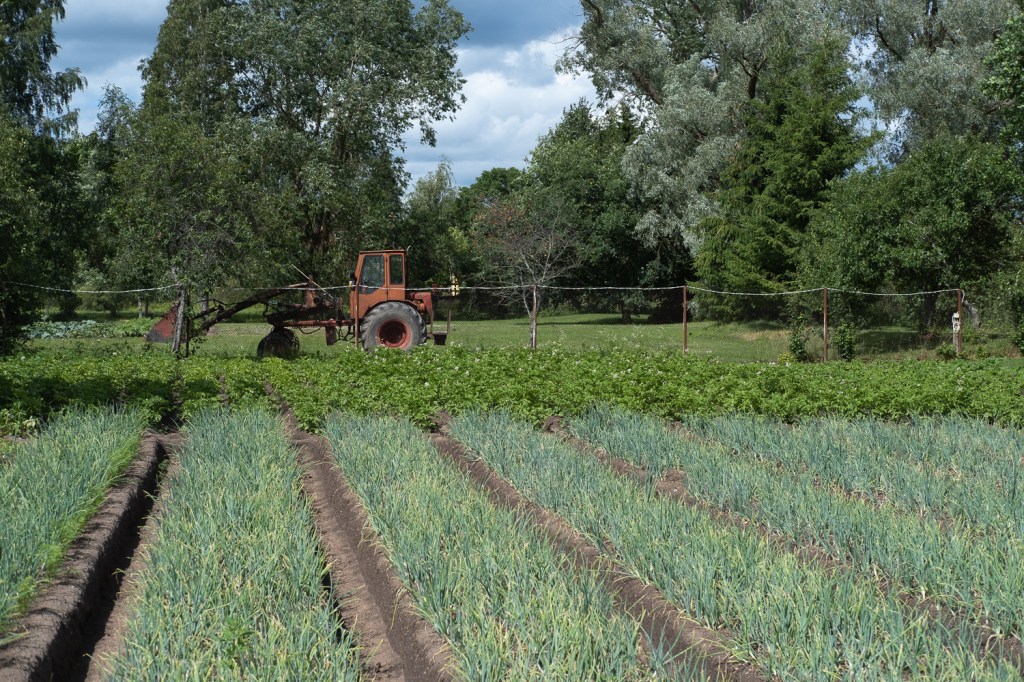

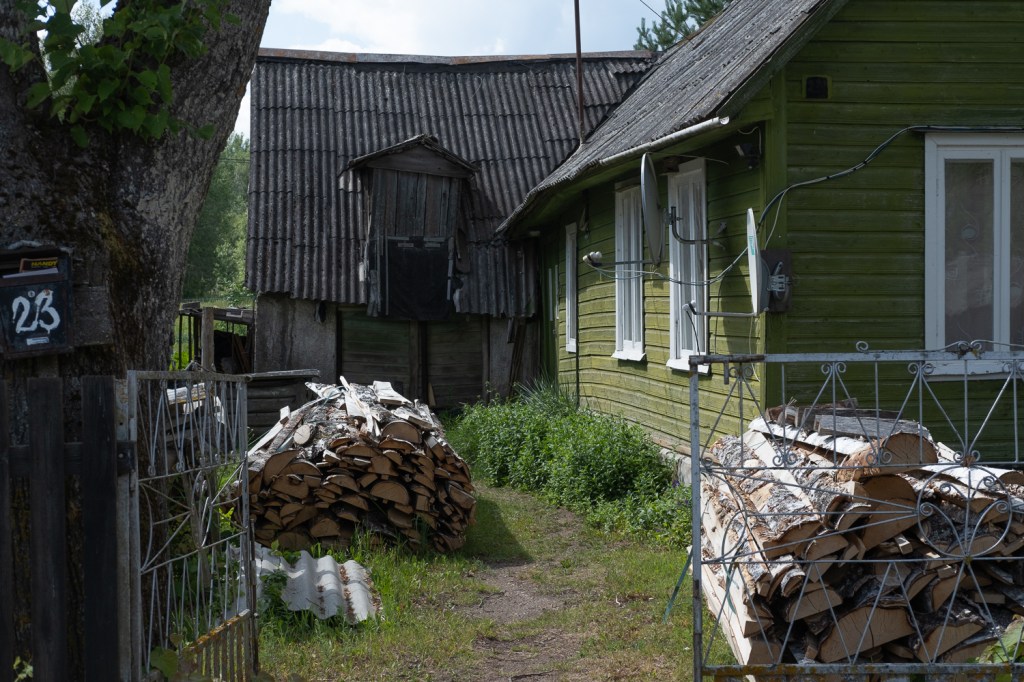
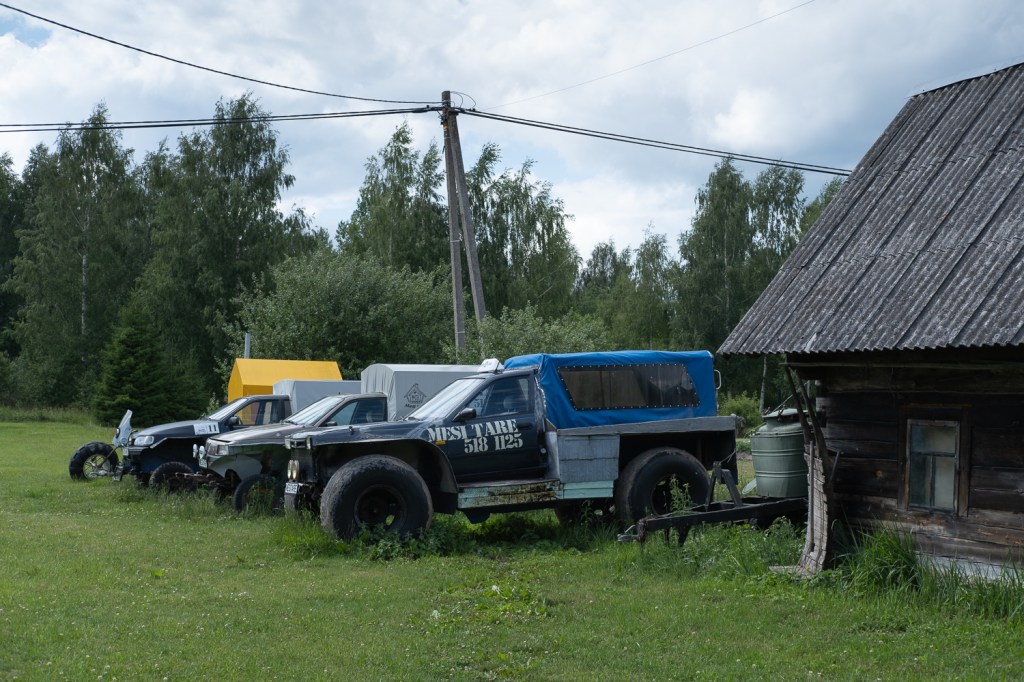


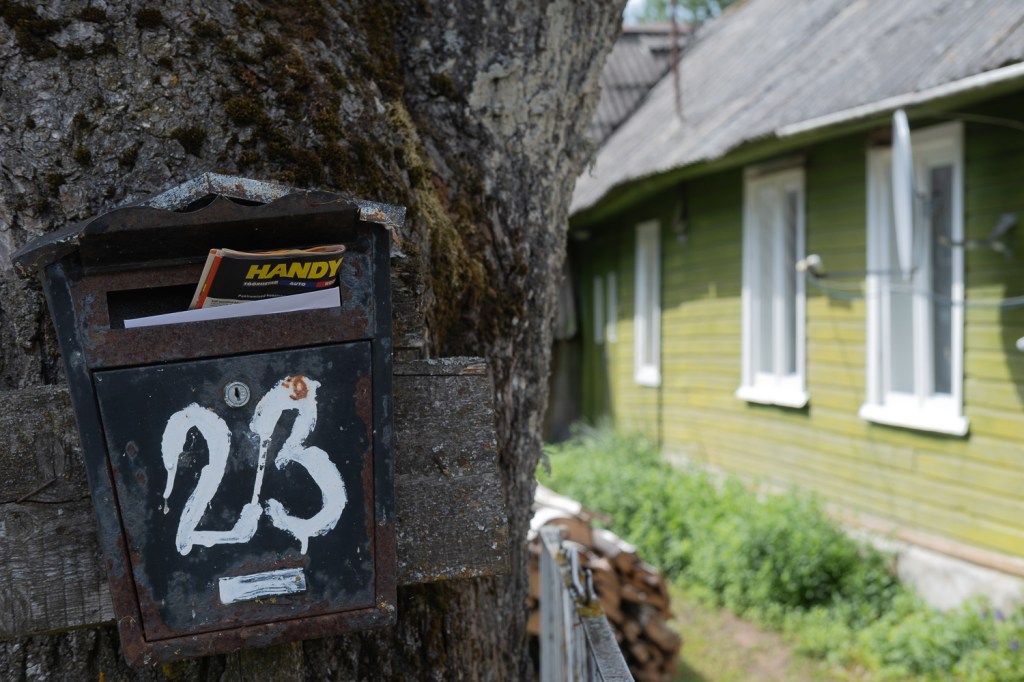
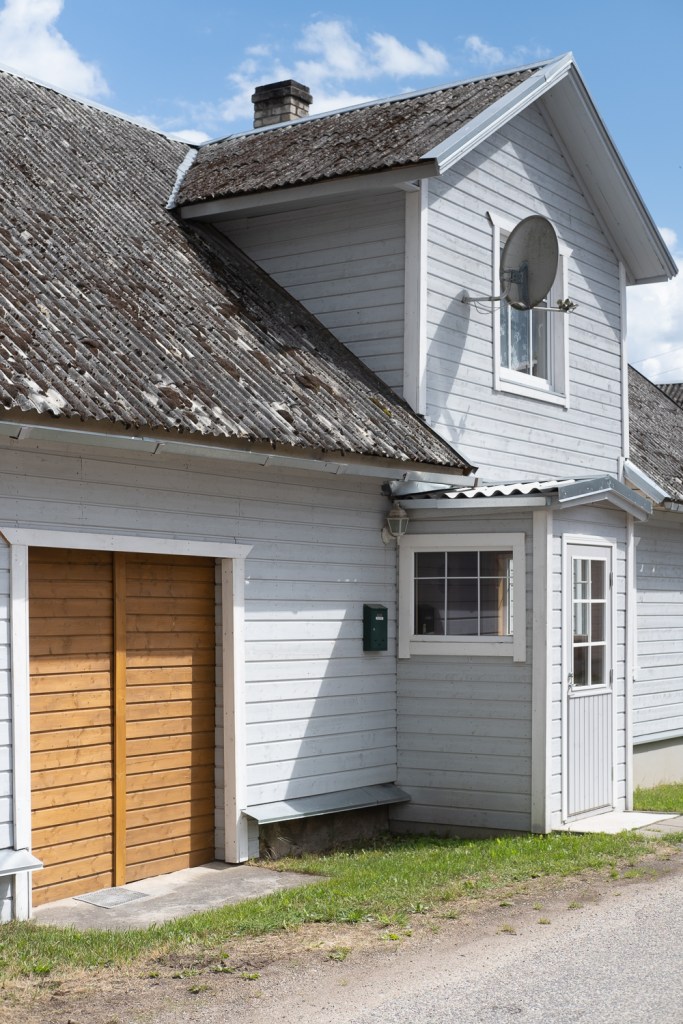
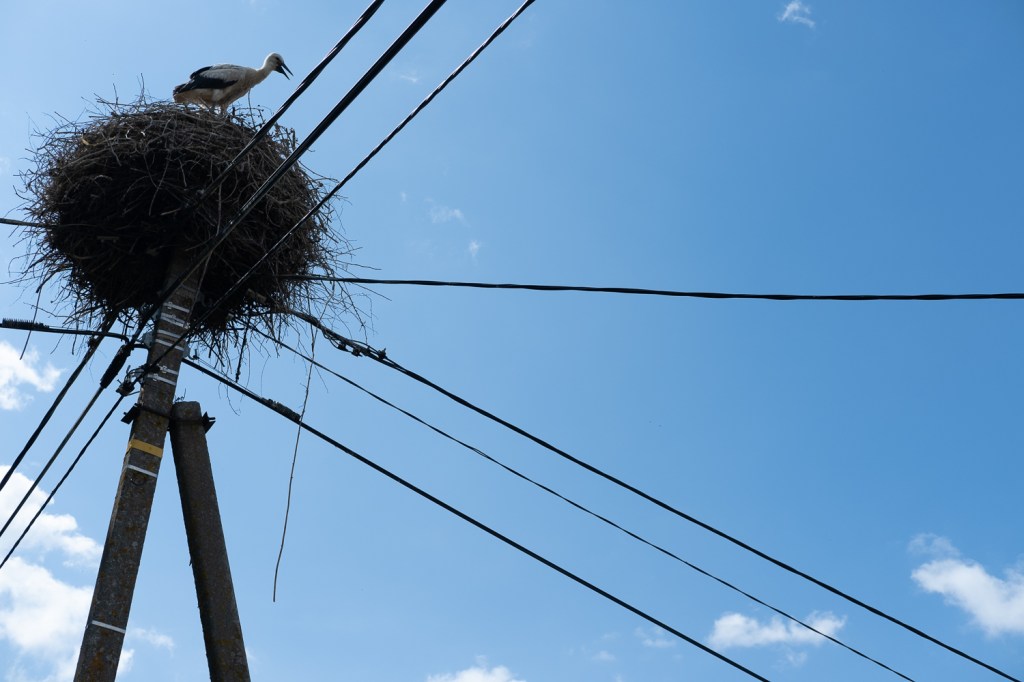
Having remedied my earlier error, I then went and felt like I had made another one as I turned down the front seat in the car believing myself to be above photographing through the windscreen before finding myself wanting to photograph a great many things out of the side window, including small chapels in sick light, storks taking flight from telegraph poles, and of course, many things made from wood because … Estonia.
We did then stop at the Old Believers museum, which was closed, but helpfully put some information, and really rather good Black and White photographs, on the outside of the building. Great. There were also more allotments, more storks and more things made from wood to photograph. Superb.
Once again using motorised transport, I necessitated of my friend’s partner one further stop to properly photograph a house whose owners had made a fence using skis. Crazy, but nice.
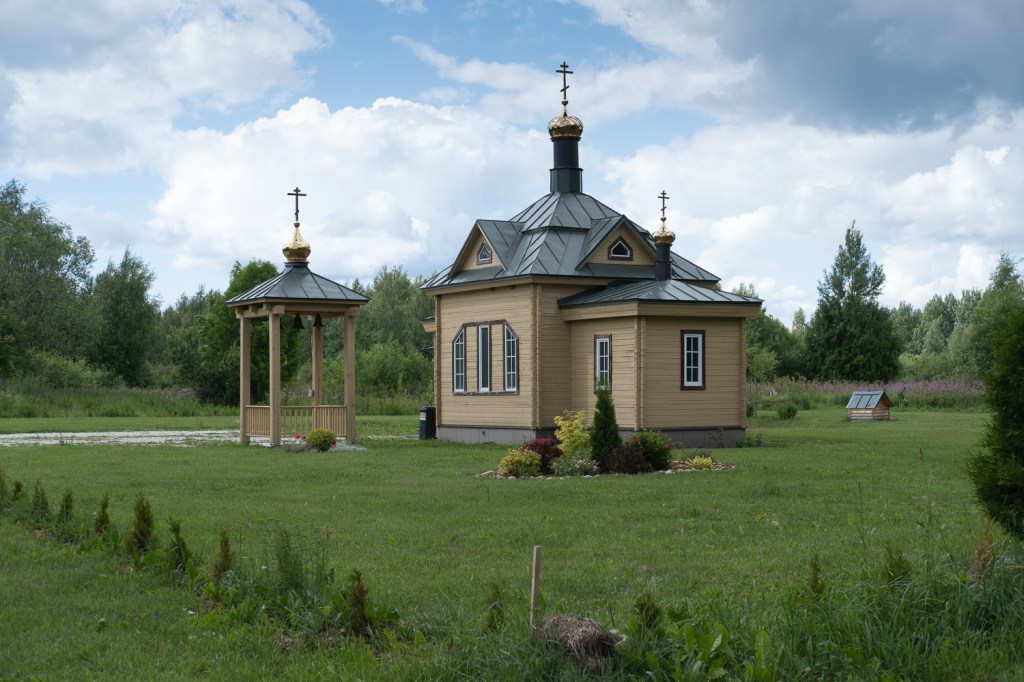
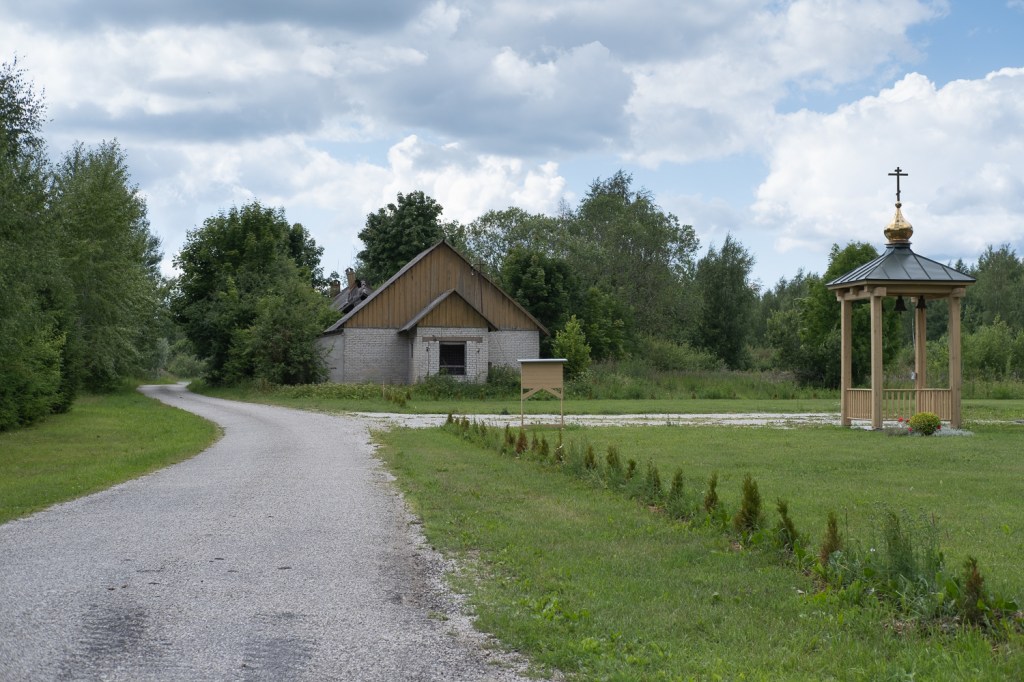
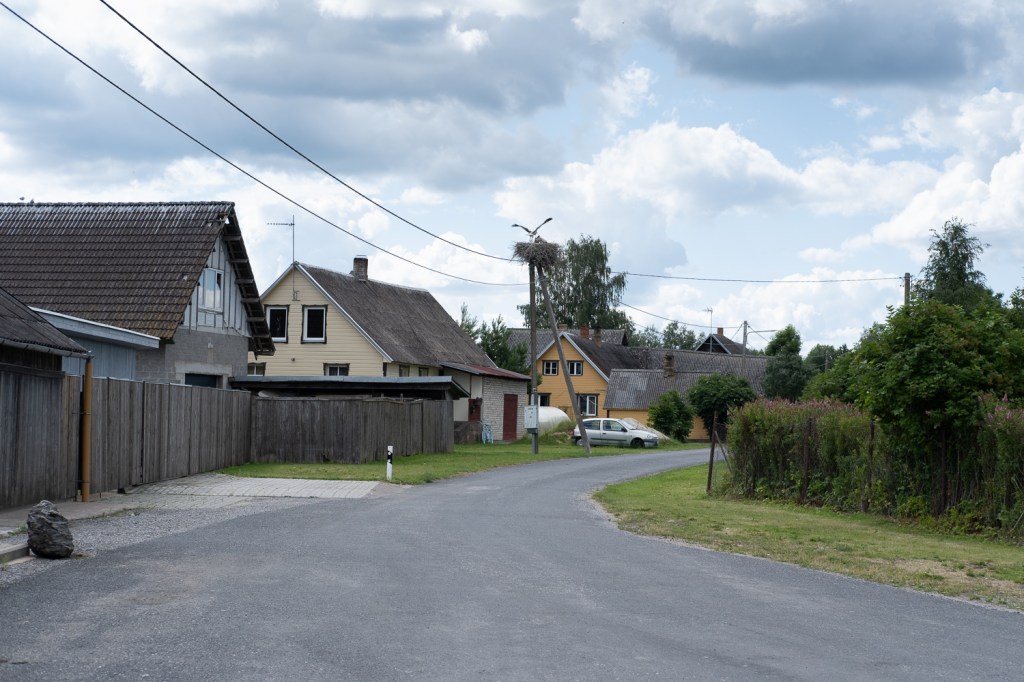
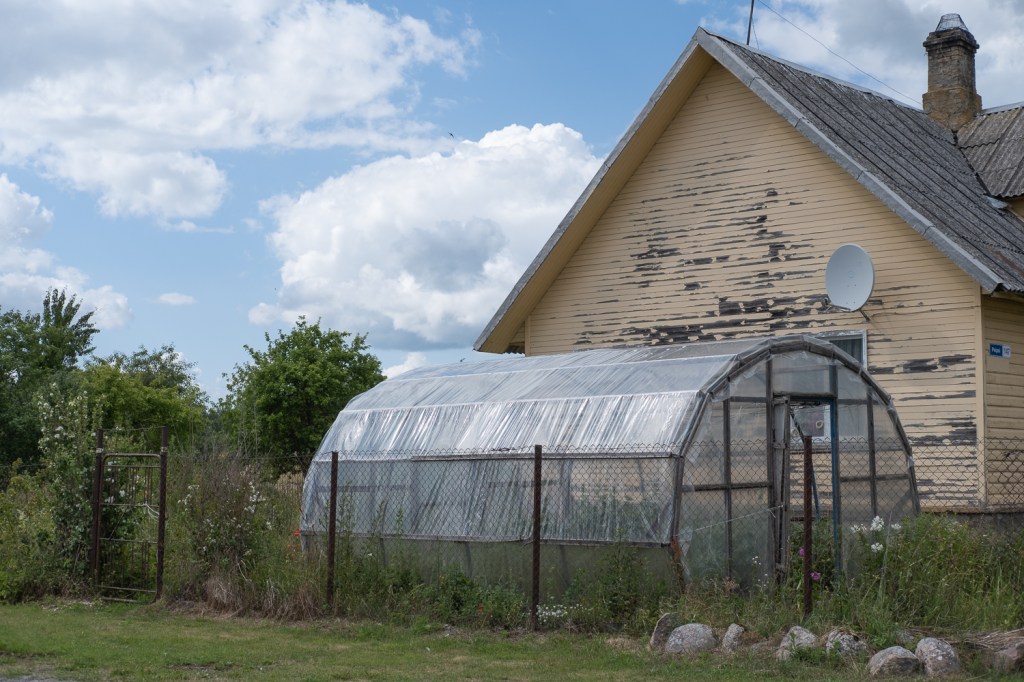
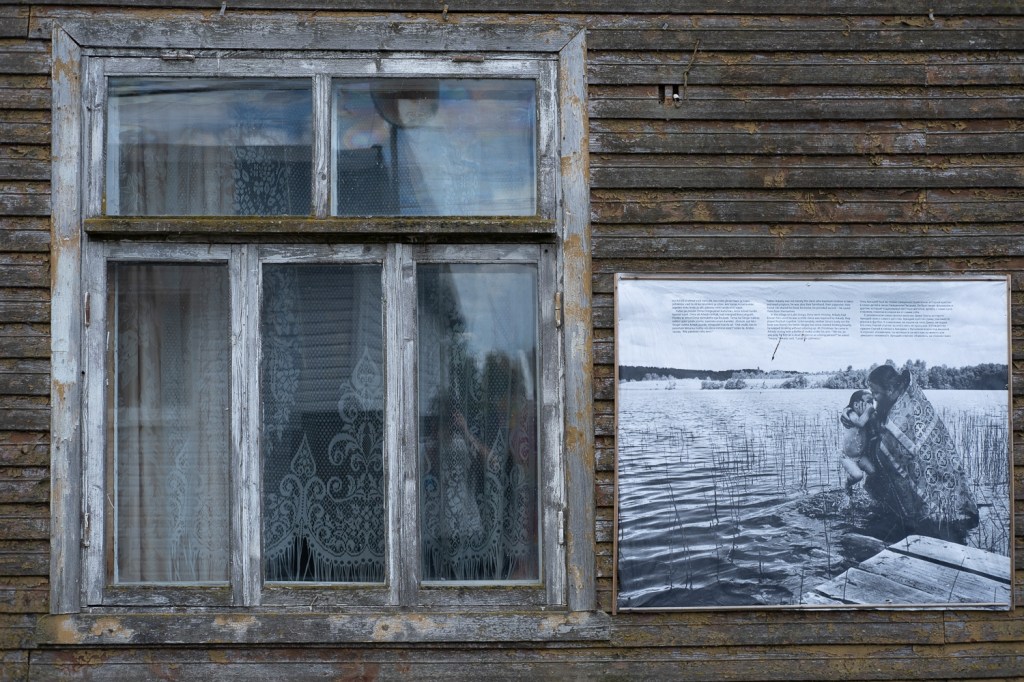
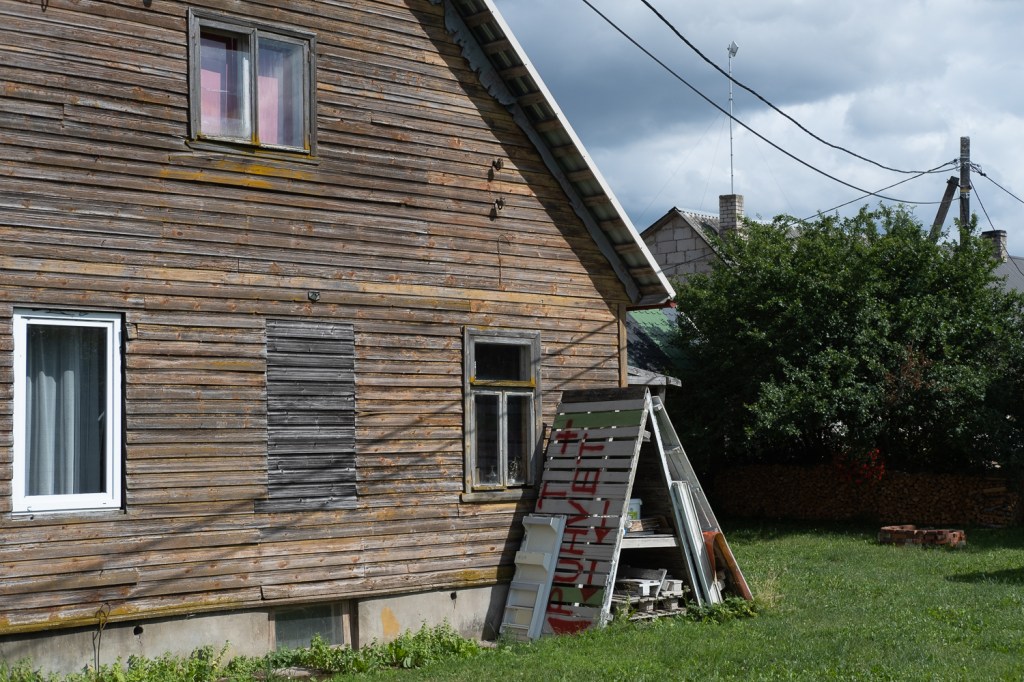


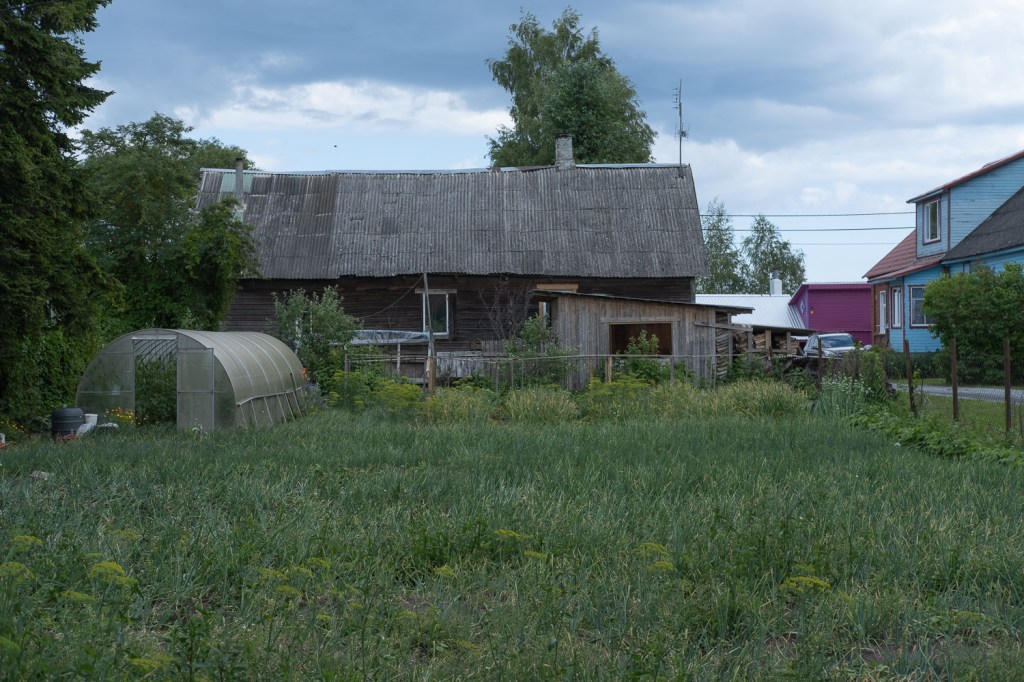
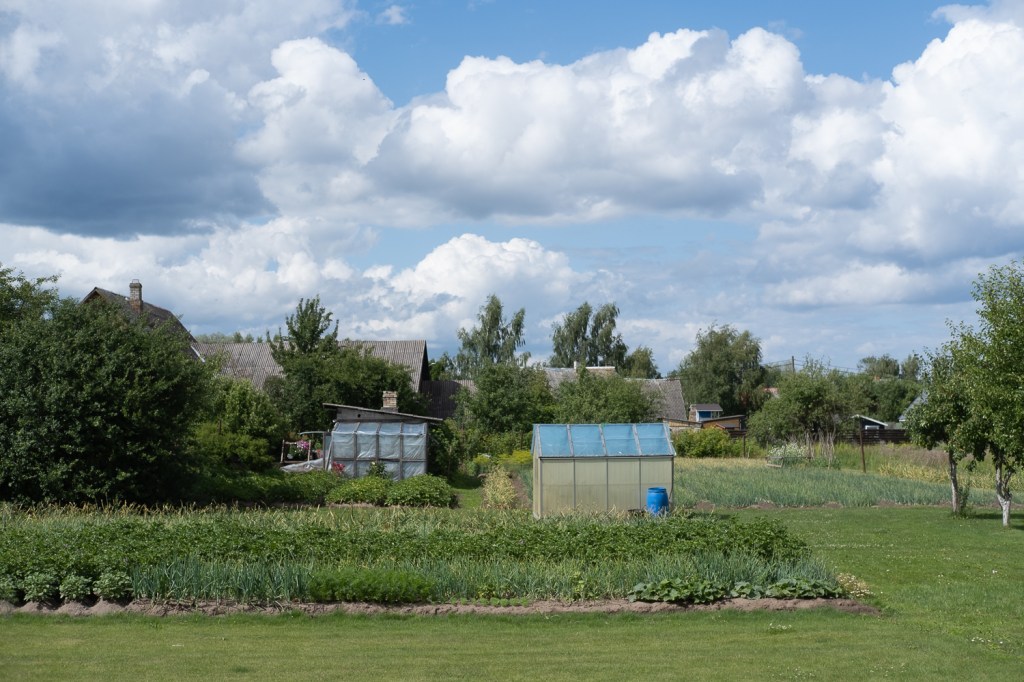

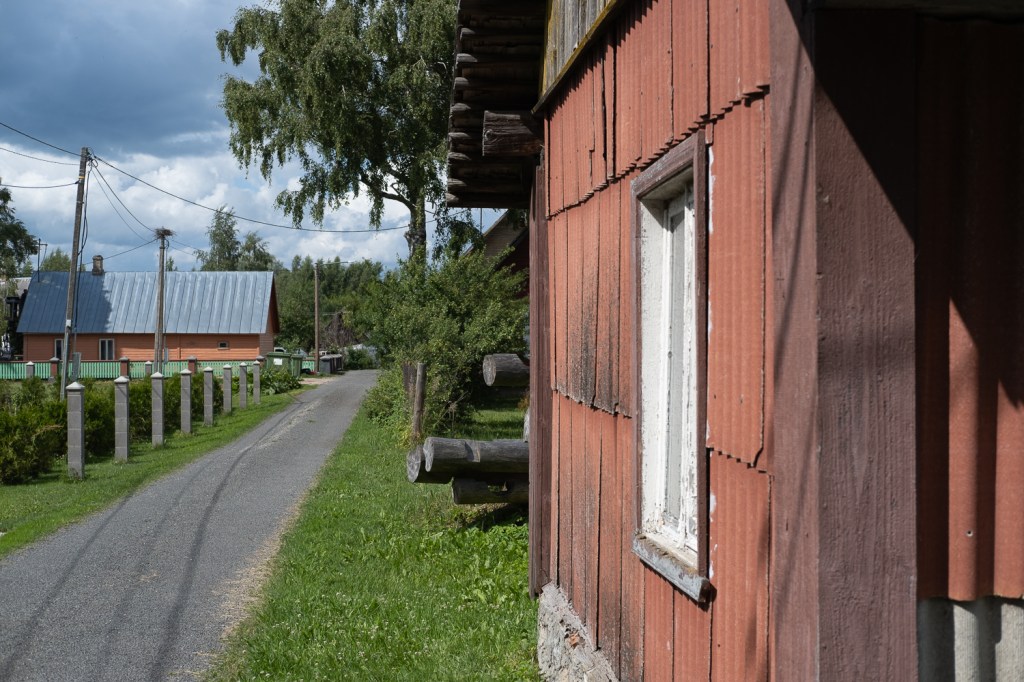
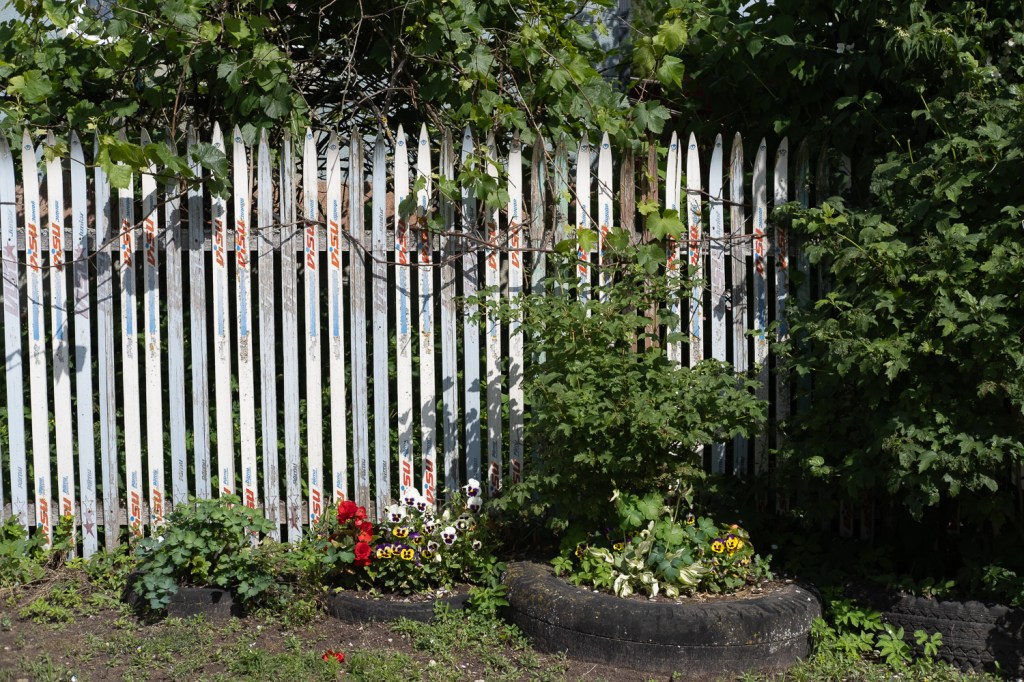
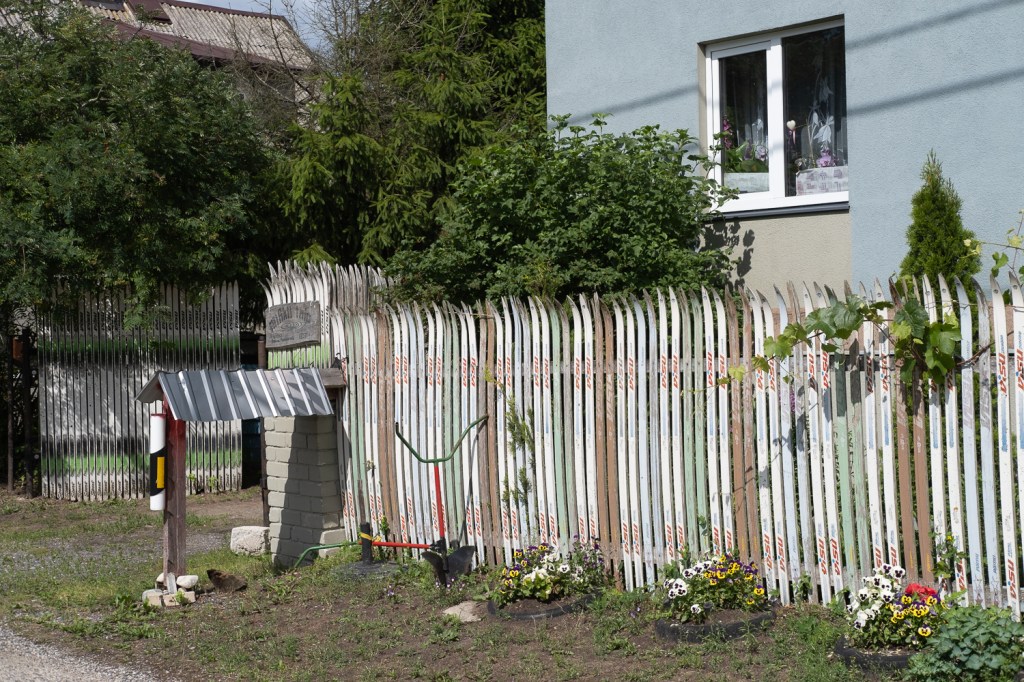
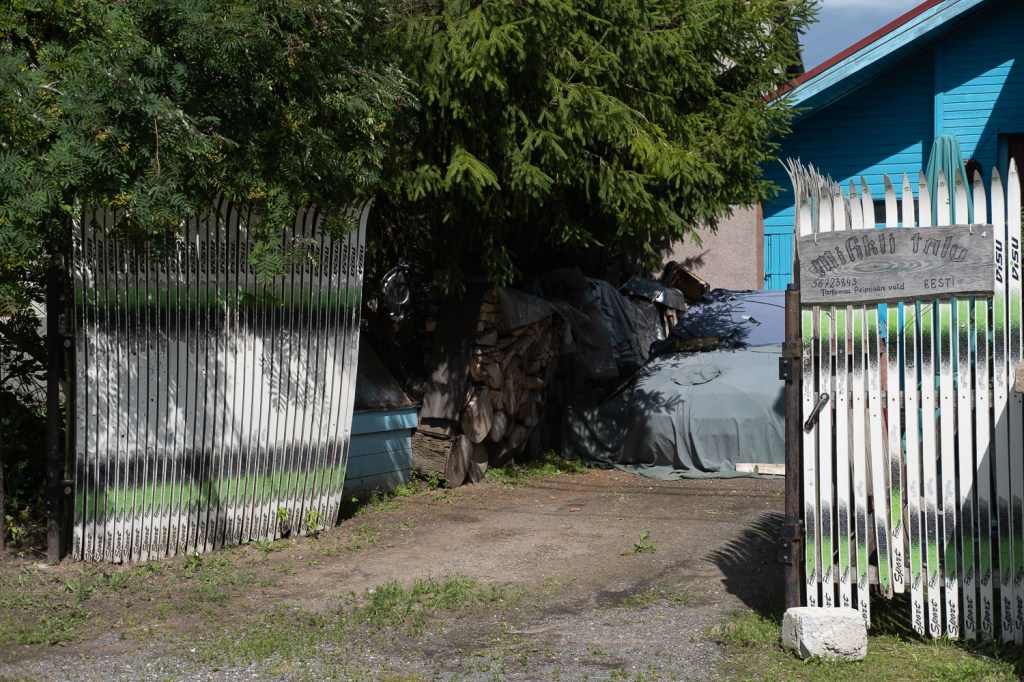
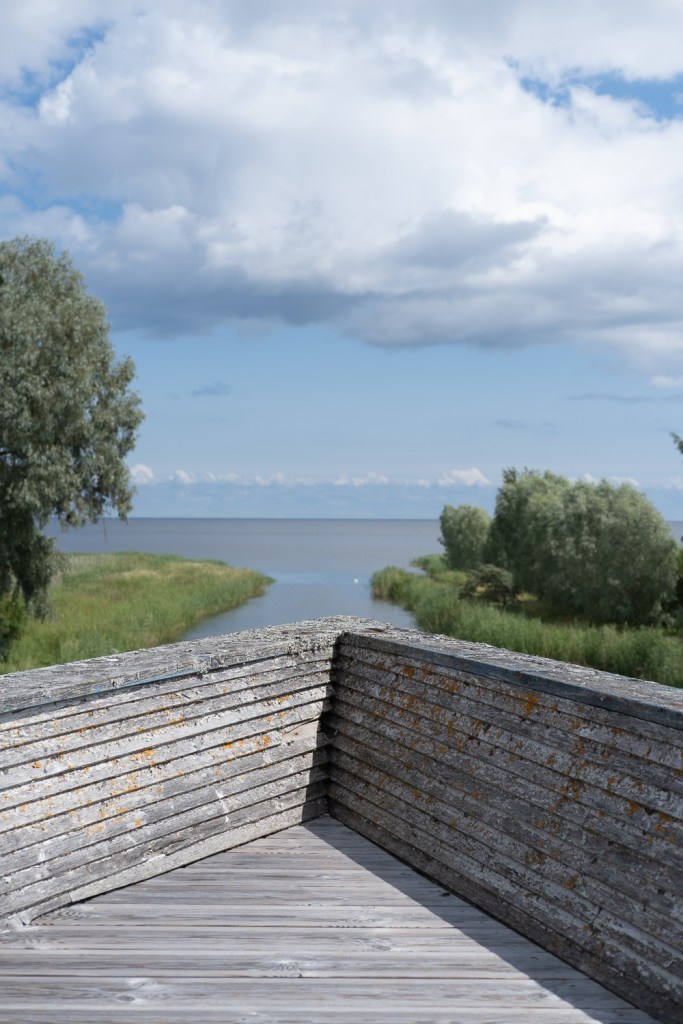
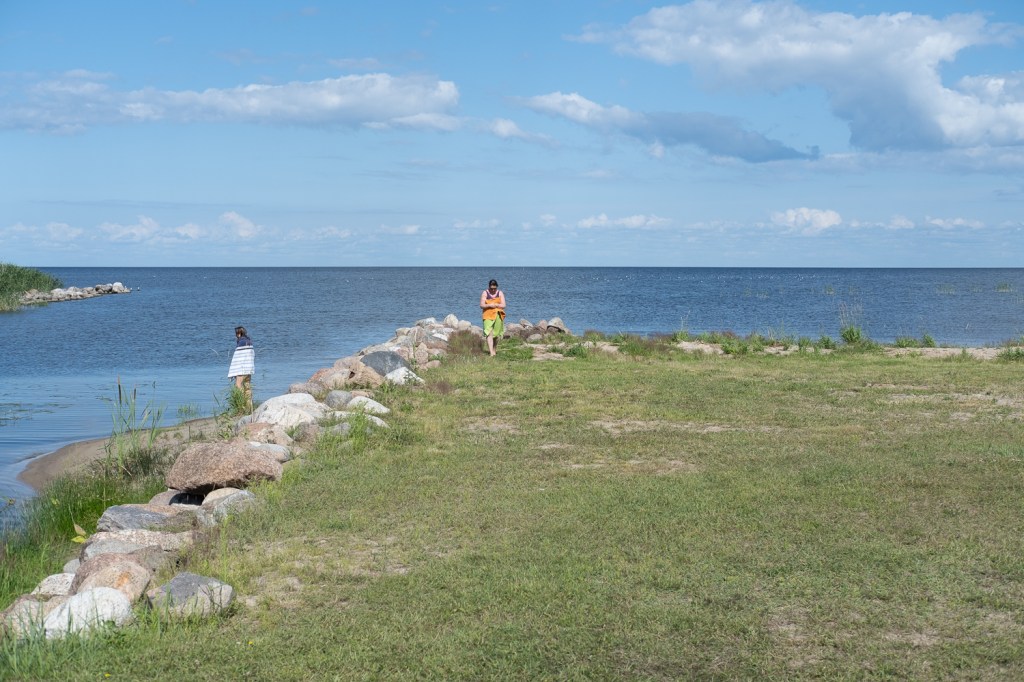
No further stops were necessitated by my urges to photograph novel roadside objects between there and our arrival at a large (wooden, obvs.) viewing platform constructed to overlook the lake from a height, an opportunity not available naturally in a country of really rather limited elevation changes. These limited elevation changes also became evident when my friend’s partner and I later went for a swim in the lake which also possessed a depth that is, unsurprisingly when you stop and think about it, not that great as those elevation changes don’t get more extreme underwater. Being as we were in the Baltics, I was also expecting the water to be colder than it was, but the ultimately shallow water and relatively warm summer weather meant it was perfectly pleasant.
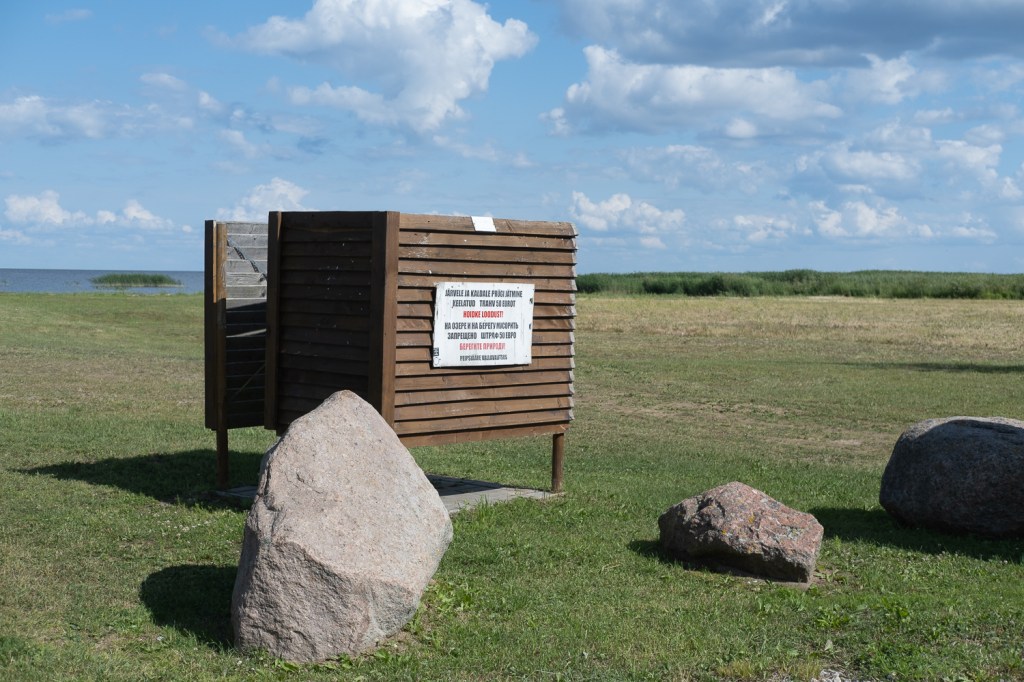
One of our number did need to get back to Tartu in more swift time, though, so we called it an afternoon and got changed in a cubicle made from, you guessed it, which still featured some kind of warning (based on part of the text being red and ending in an exclamation mark) in Russian … and Estonian, which I also can’t read but can occasionally guess at with surprising accuracy when it’s spoken.
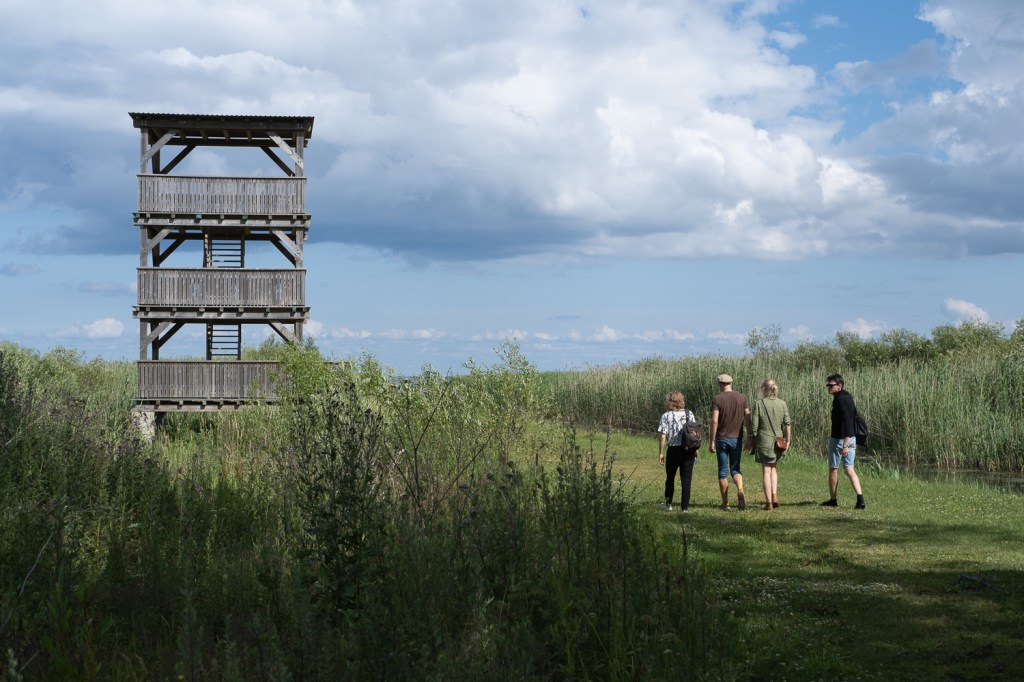
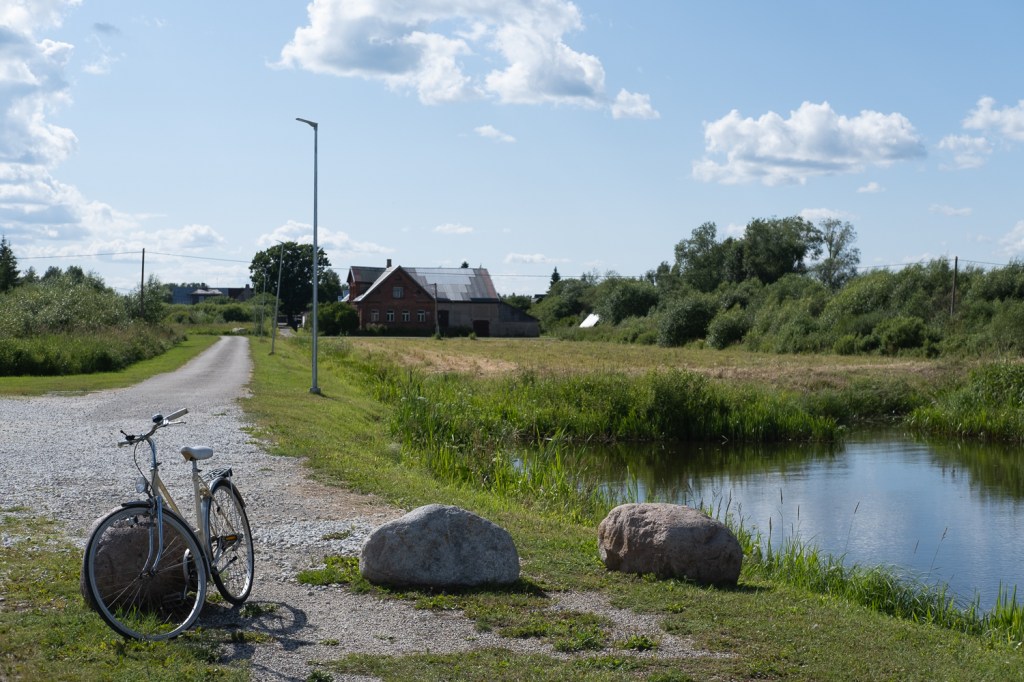
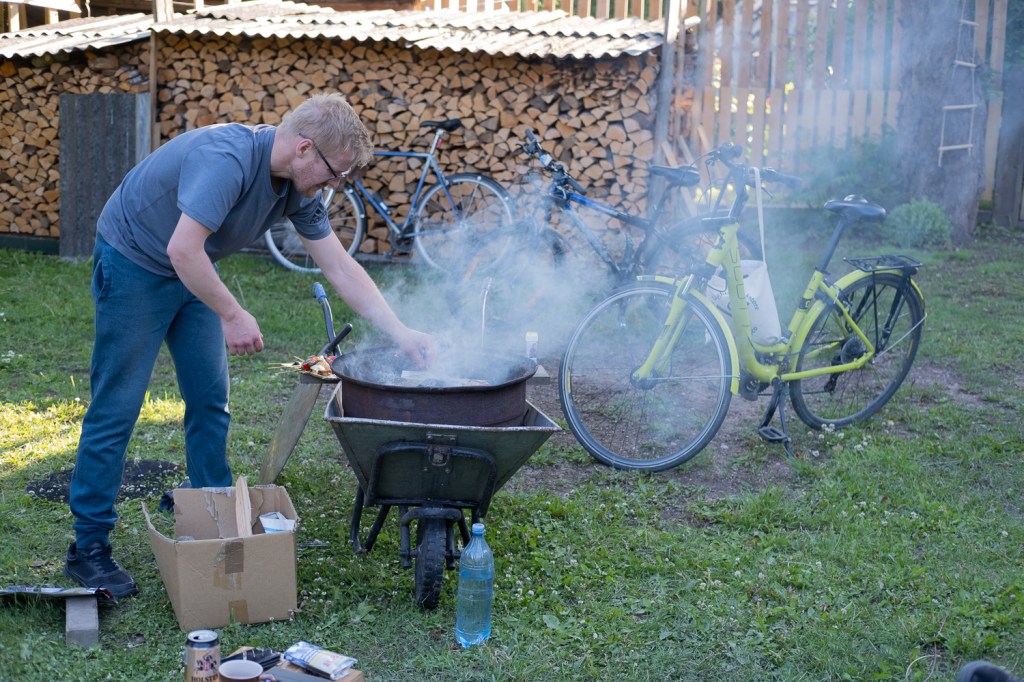
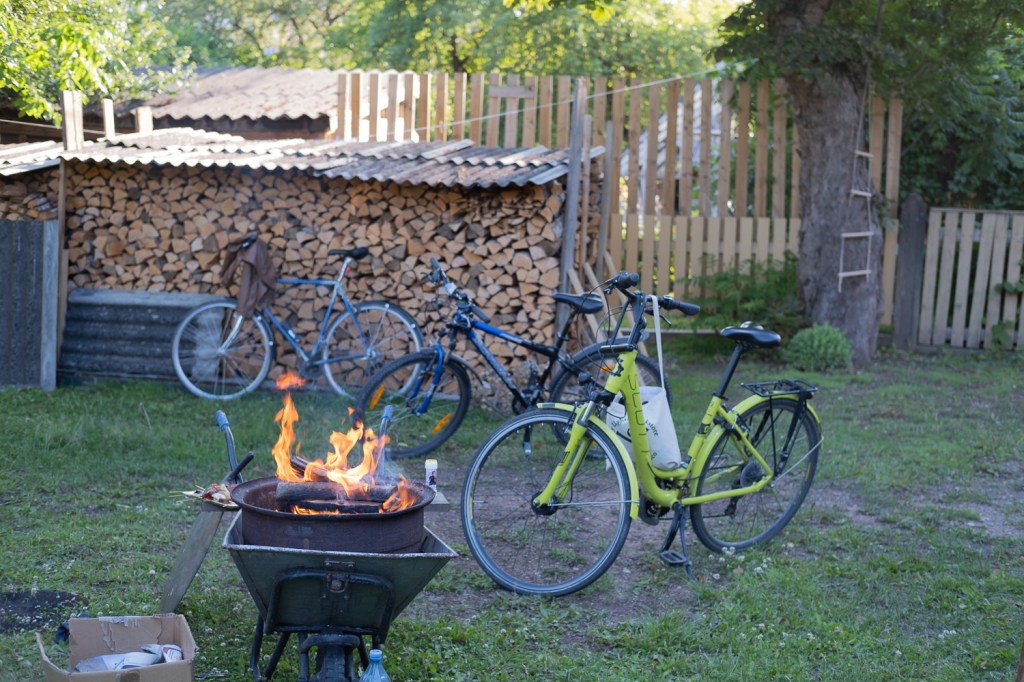
After dropping off our various companions for the day trip, we then dropped off the car and switched back to our bikes before a trip to the supermarket to pick up some supplies for a barbecue out at another friend of my friend’s new(-ish to them) house in the suburbs, in an area that might be called Variku or Ränilinn … or be somewhere between the two … basically, I think I’ve found it on Google Earth by tracing what I think was our bike path from the supermarket. In any case, I really enjoyed this cycle path, and particularly enjoyed riding most of it no-handed both on the way there, and on the way back, when I made a really good bike riding selfie on my phone which I won’t be sharing here because it would somehow debase the sanctity of this urban pla… photography blog. A man must have a code. I did also enjoy the barbecue, in which some potatoes were cooked in what is apparently Estonian style, namely in foil on the embers, and spent much of the evening within an in-depth analysis of the present and recent past of the UK Labour Party with a Turkish man, a French lady and some Estonians.
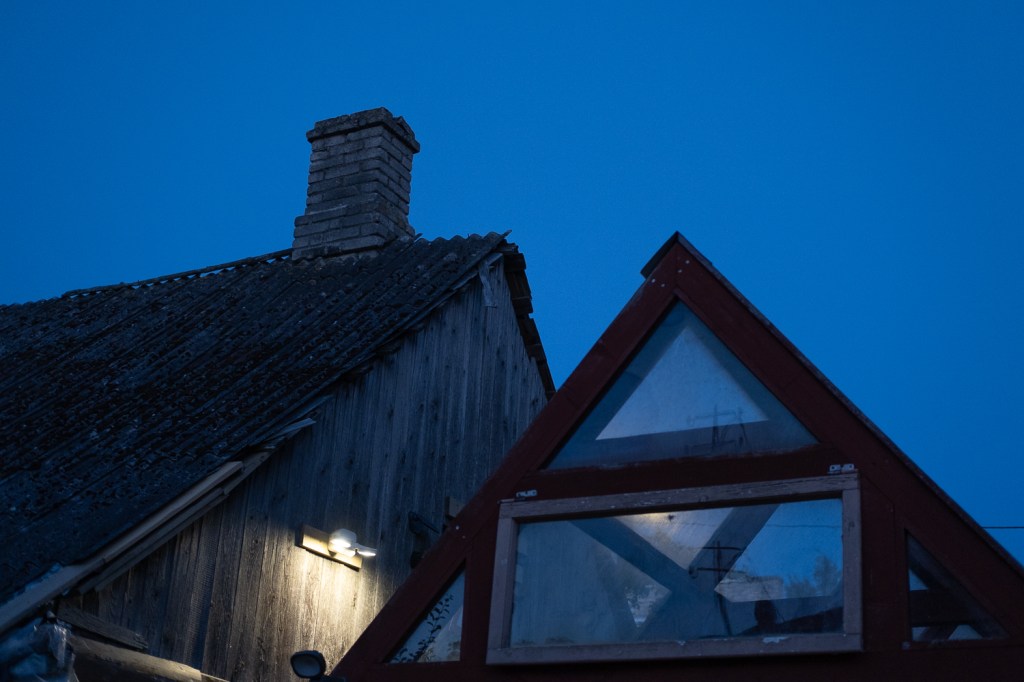
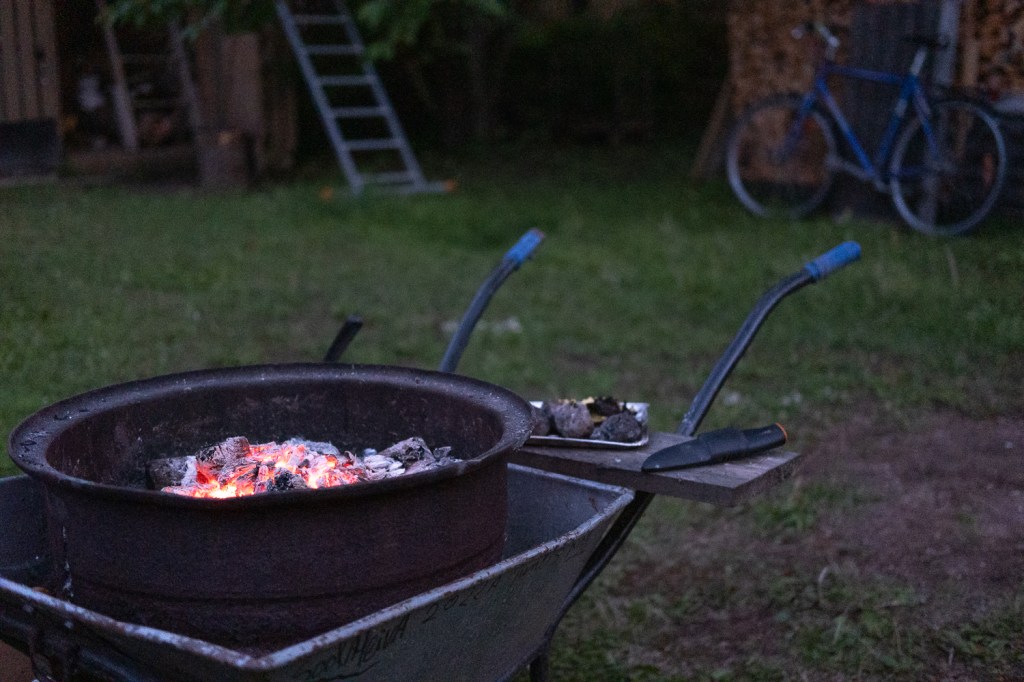
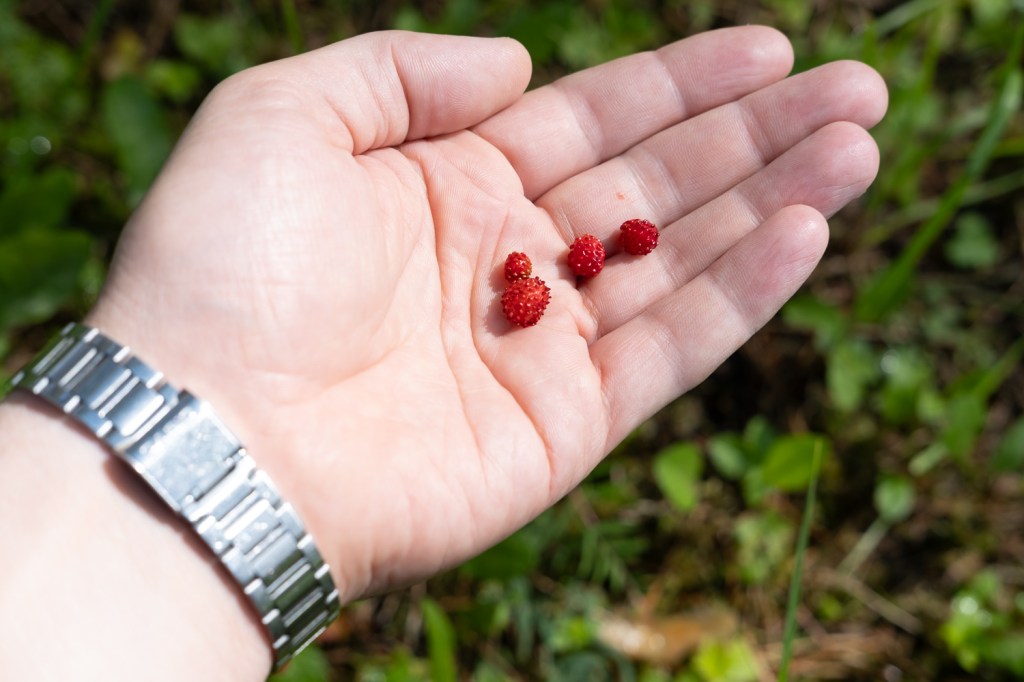
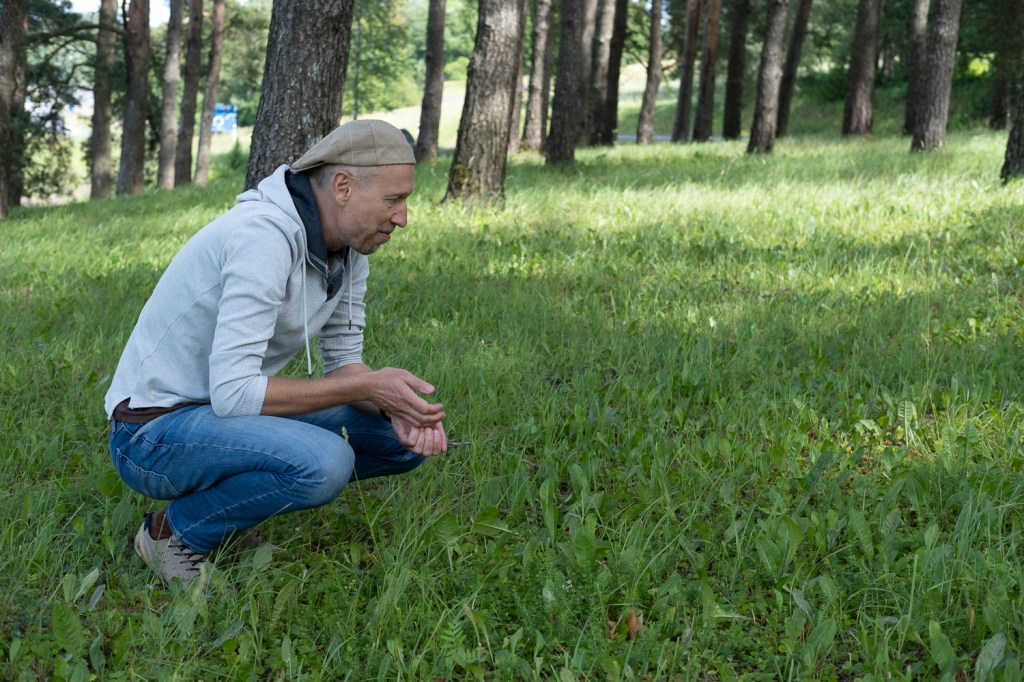
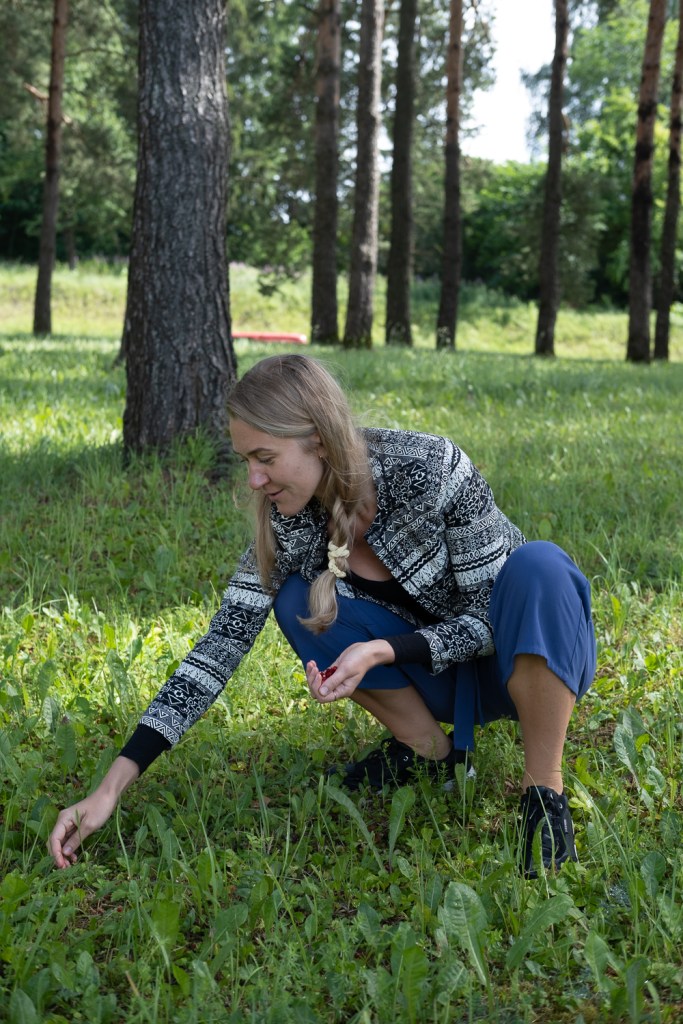
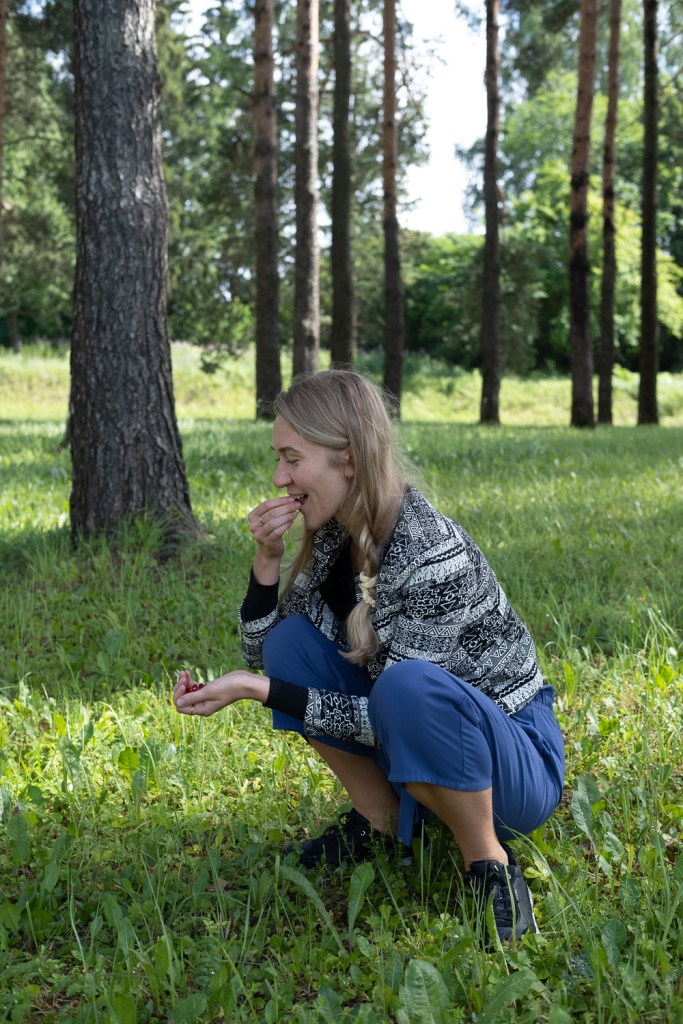
We can’t have got in early that night but we also didn’t get up late the following morning, continuing my general (lack of) sleep pattern for the trip so far, as we were off on another day trip to Viljandi, where we would be seeing one of the people from the other evening at the open house event. We picked her up at her parents’ house that she was looking after outside the town, and then stopped just a little further on for a hilltop view of the long, almost serpentine lake, one of the features for which the town is known. Among the trees at this wooded hilltop, to the delight of my friend’s partner – a veritable berry fiend, we found wild strawberries growing. If I had seen wild strawberries before, it was certainly long enough ago to have forgotten how small they are. We foraged for the while before leaving some for nature and heading into town.
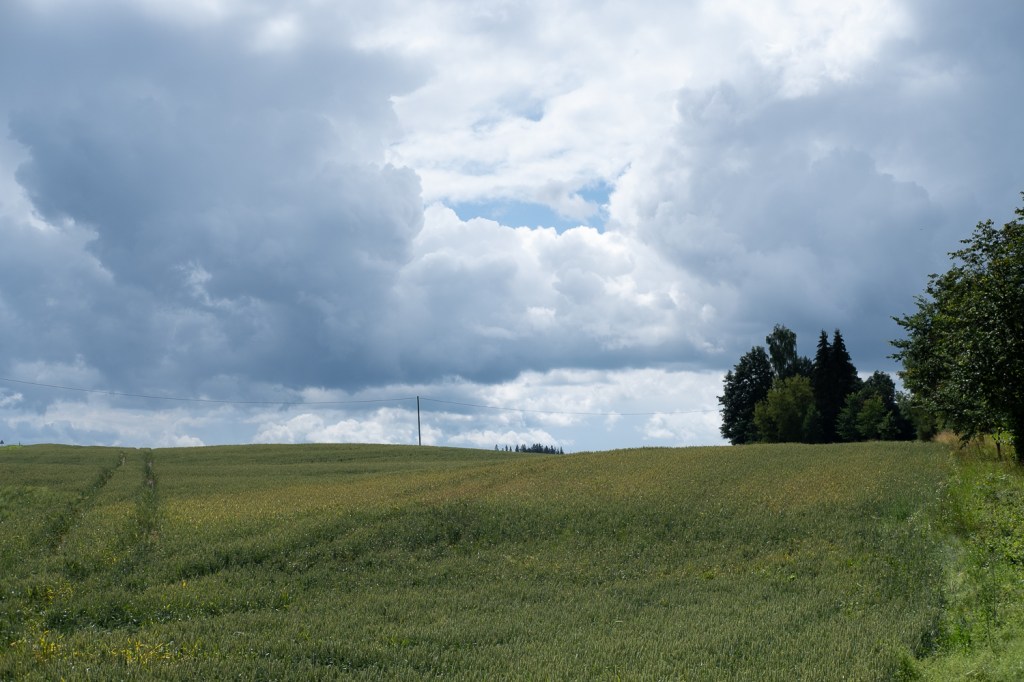
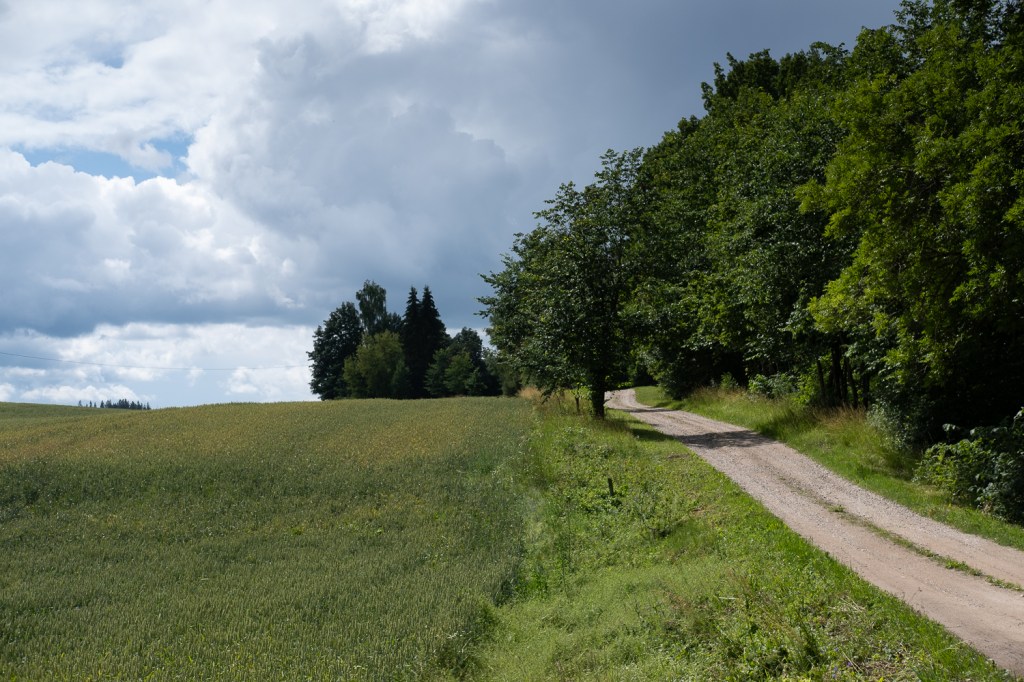
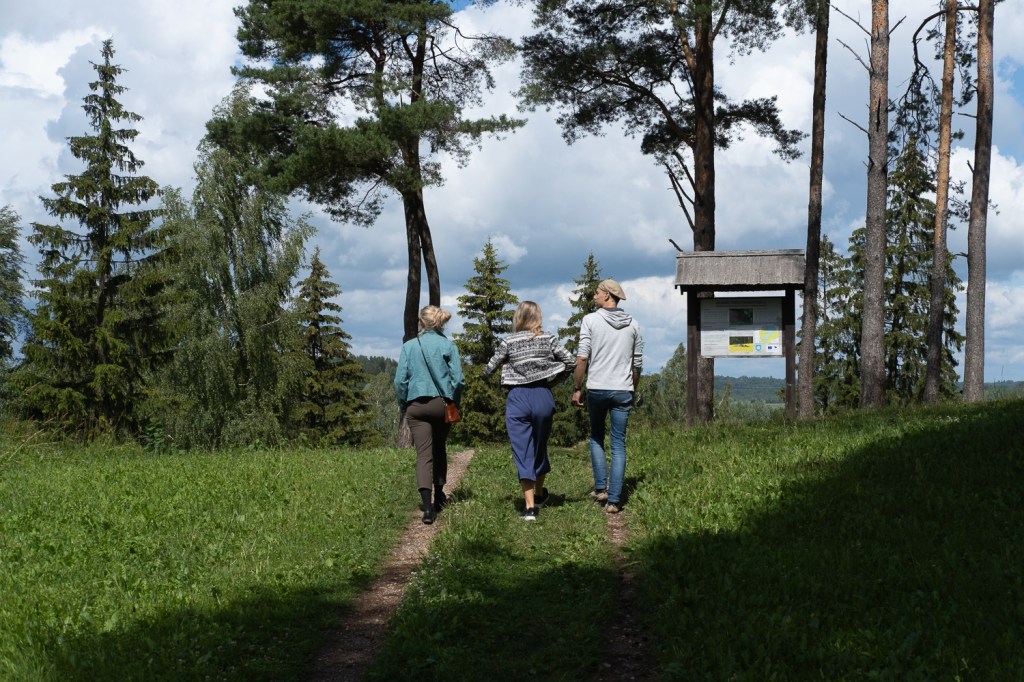
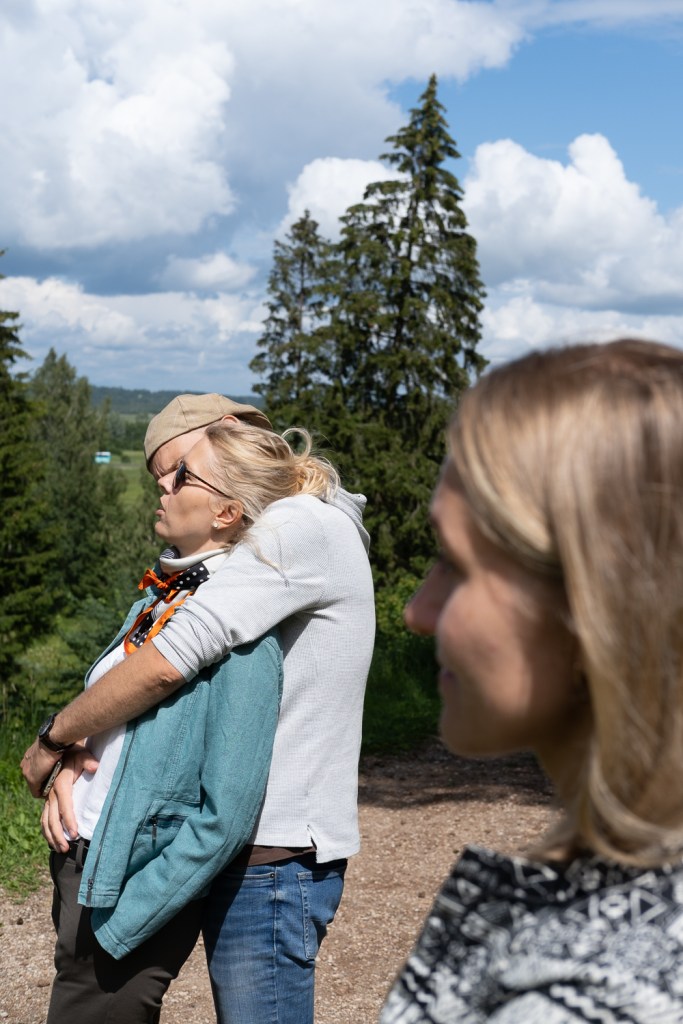


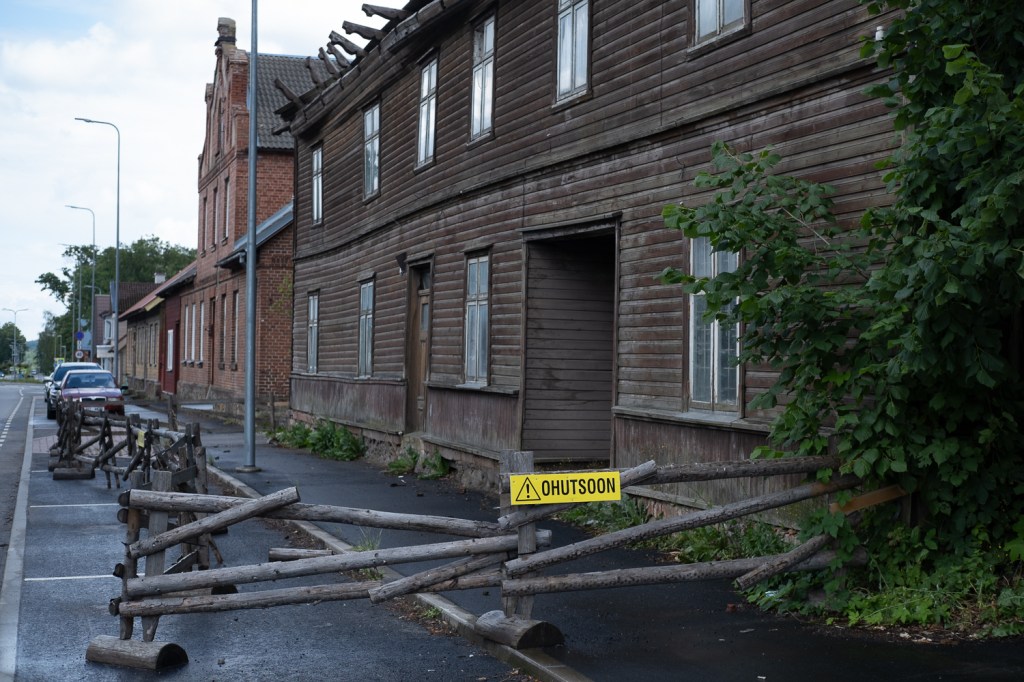
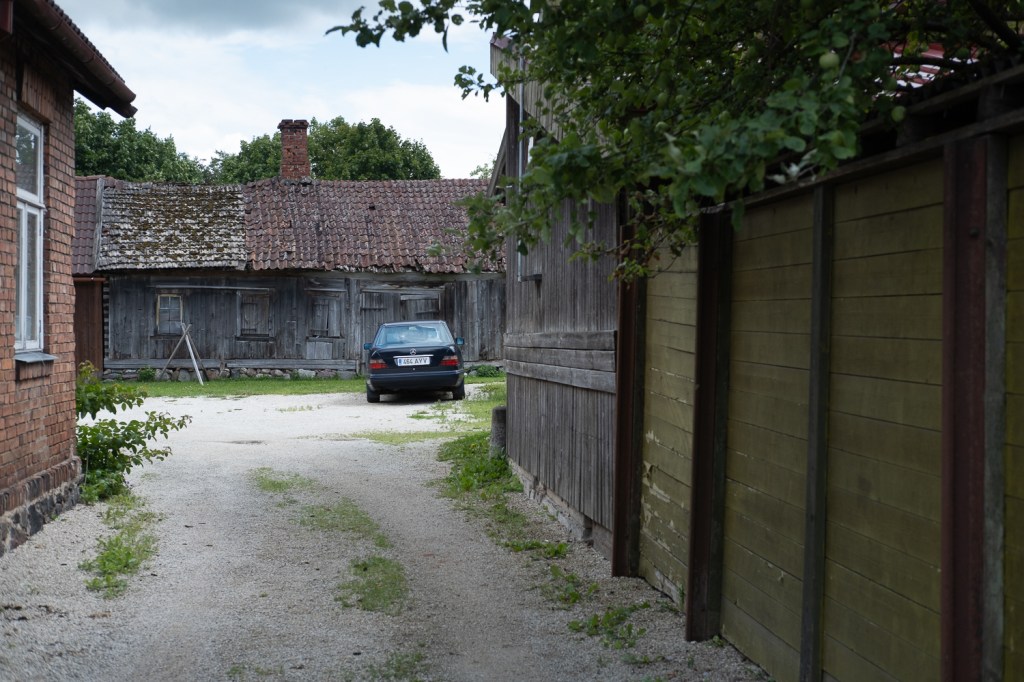
In Viljandi itself, there were of course plenty more wooden items to photograph, including some wooden road works barriers and a wooden water tower, but there was also the ruins of the stone castle overlooking the lake from on high. Clearly, building things out of stone just wasn’t meant to be, much better to stick with wood. We also ate at a Belorussian restaurant which was definitely a first for me. I’d say it was worth the wait, although the waiting time was indeed quite considerable, and I’m not sure my companions would actually say the same, I was just using that phrase to start the sentence. It really was quite a long wait. I certainly did my best to make the most of my final full day of photographing wooden buildings from every possible vantage point.


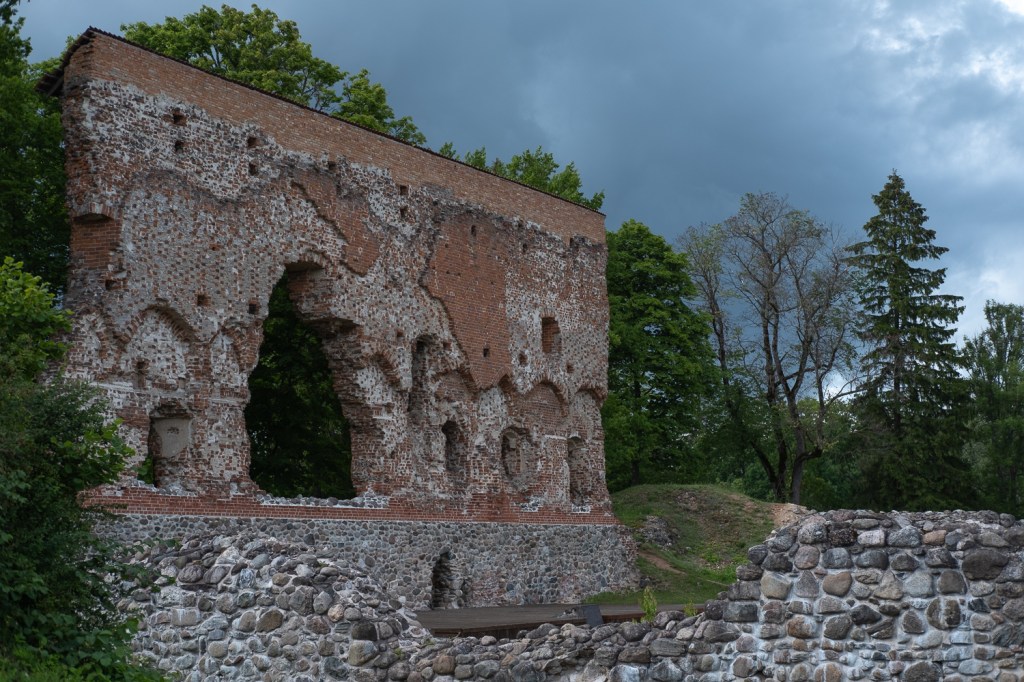
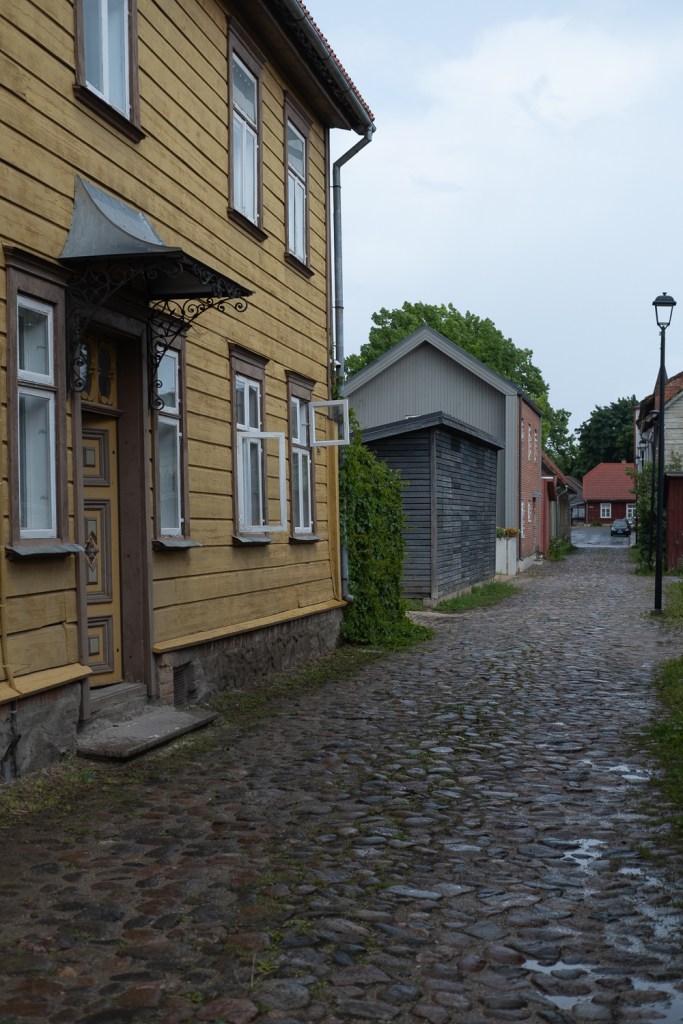
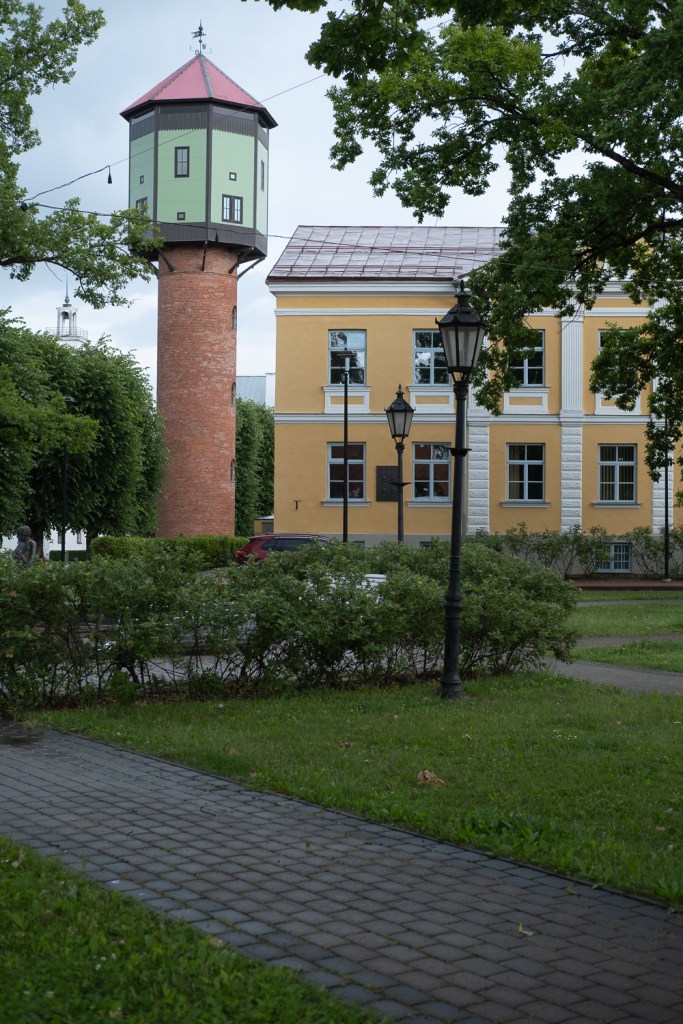
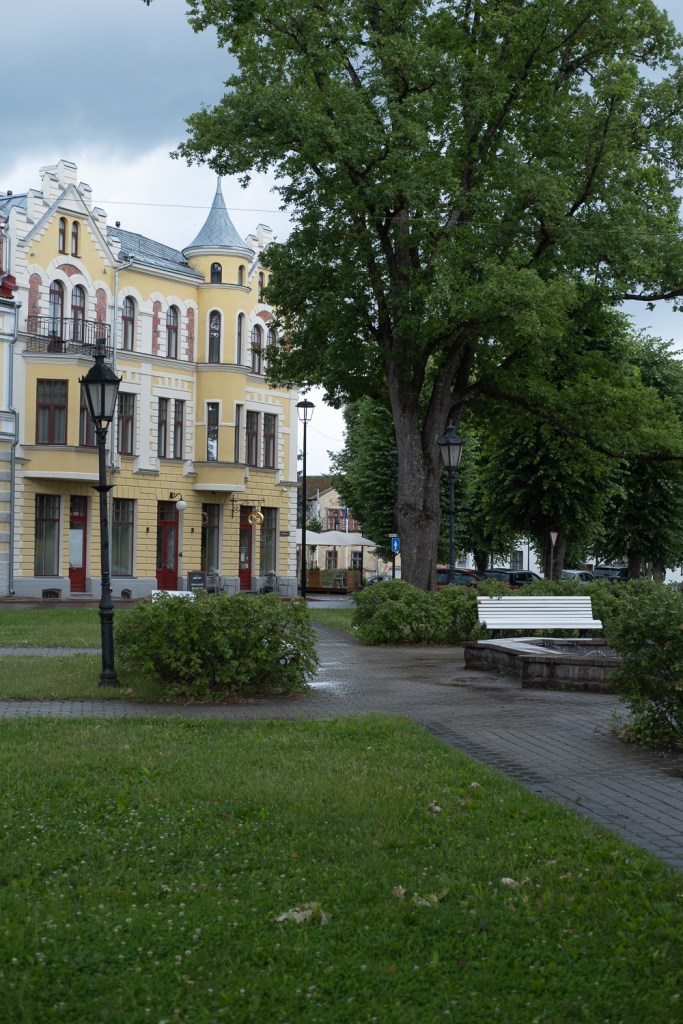
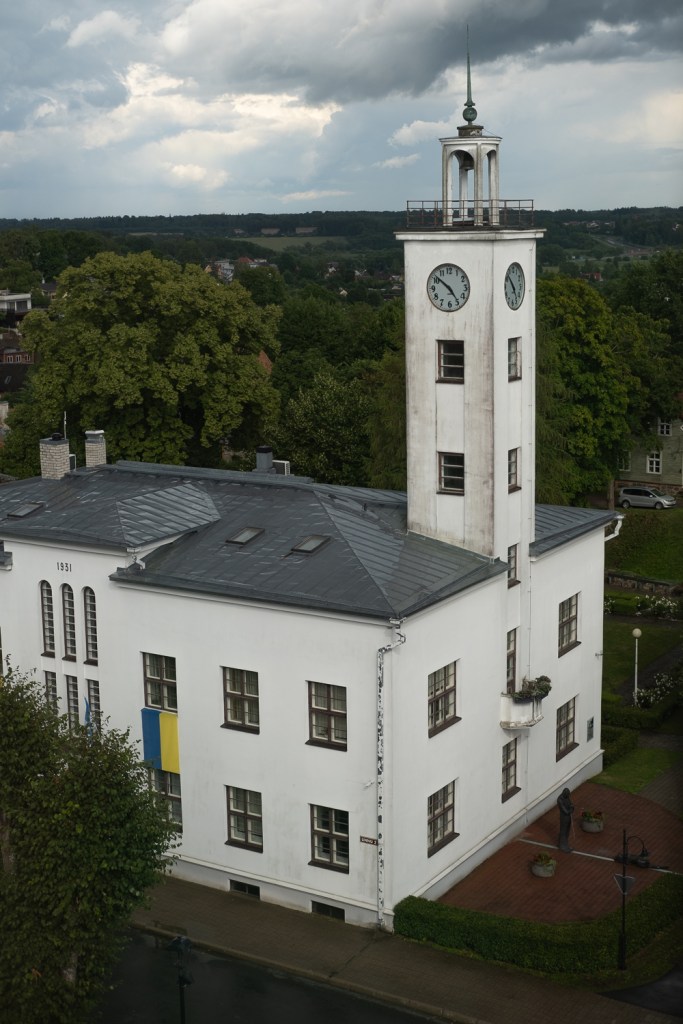
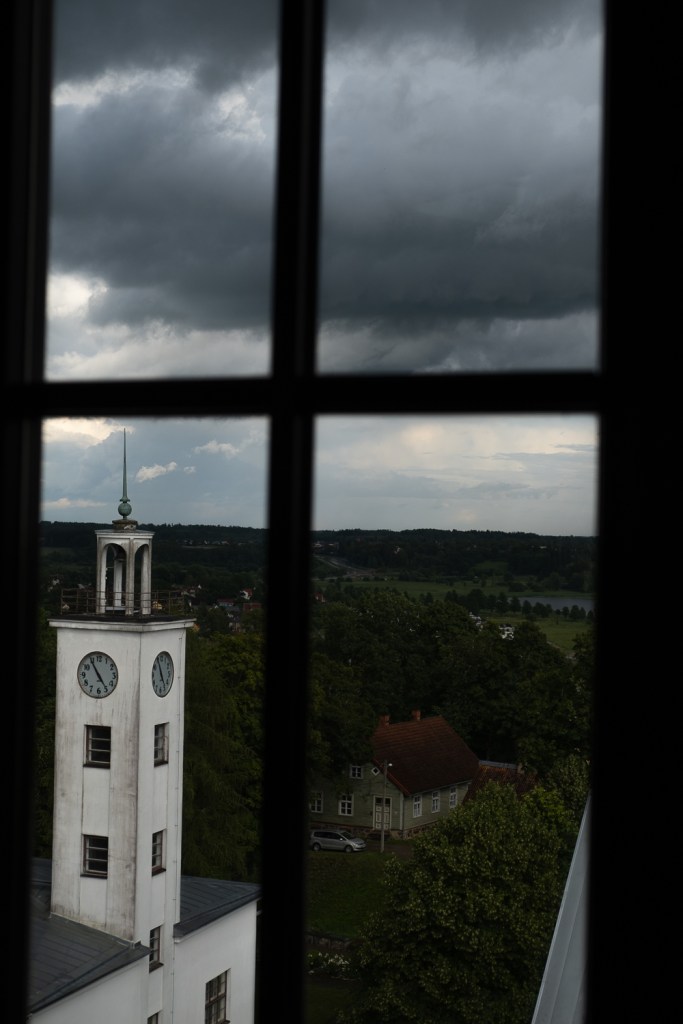
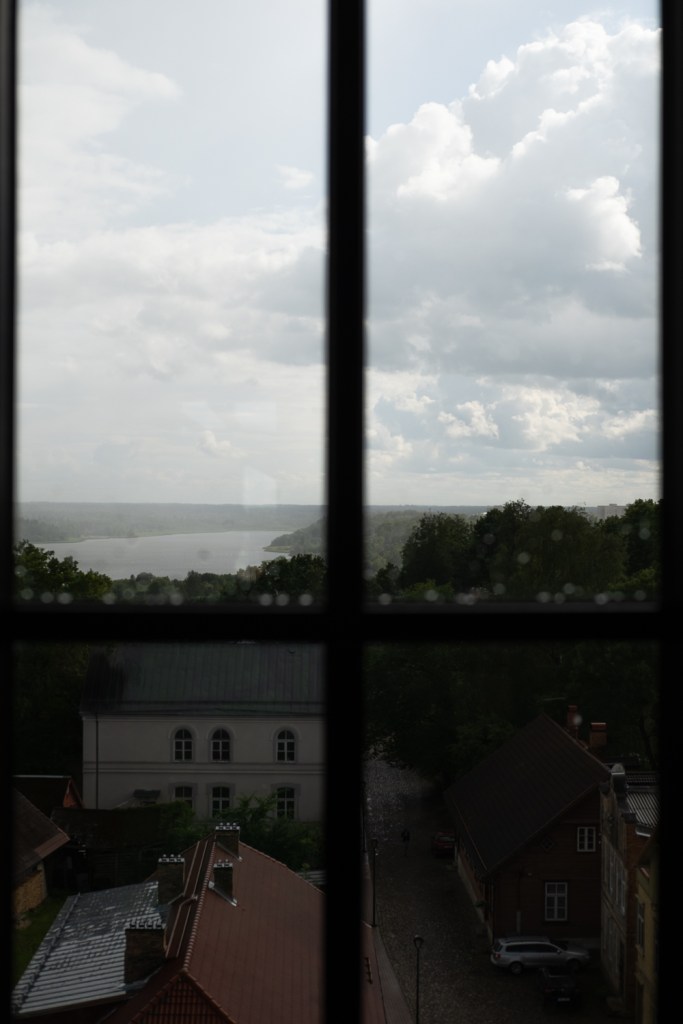

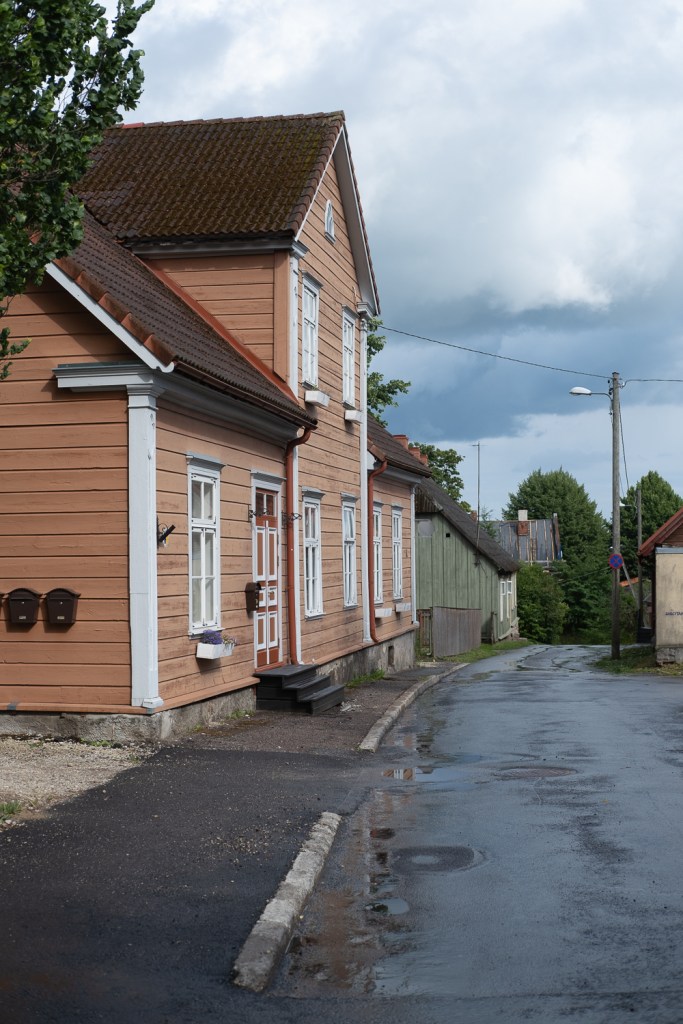
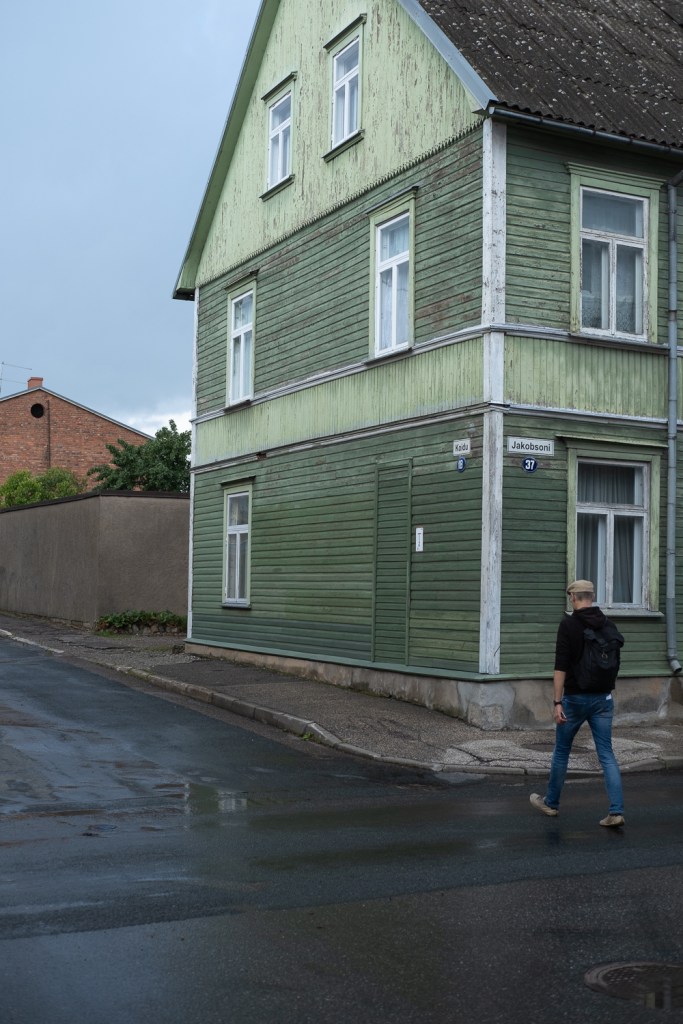
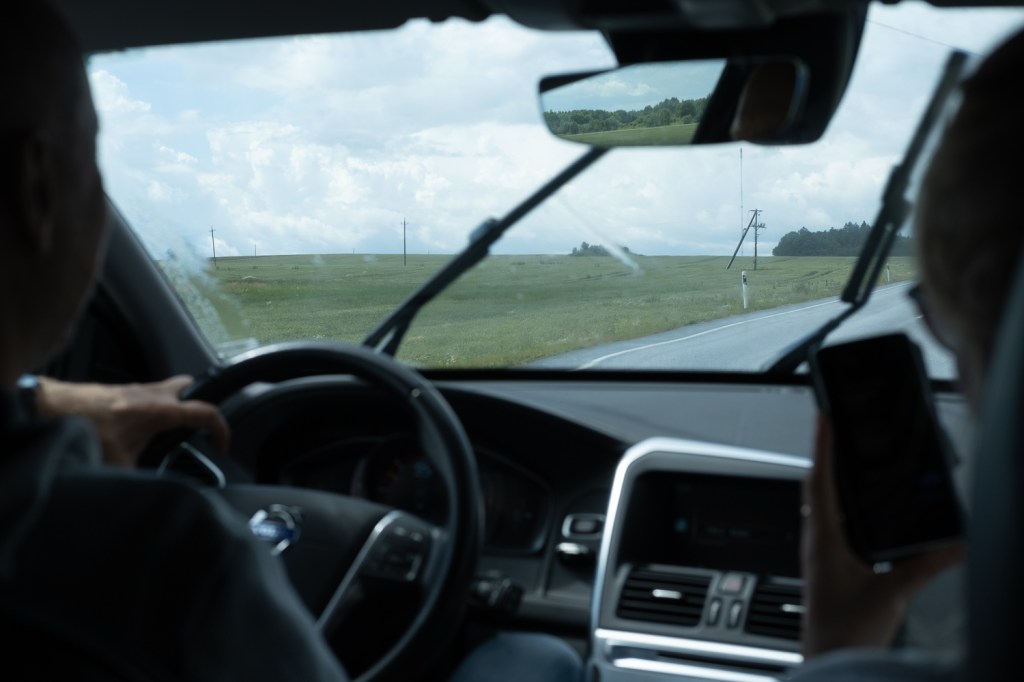
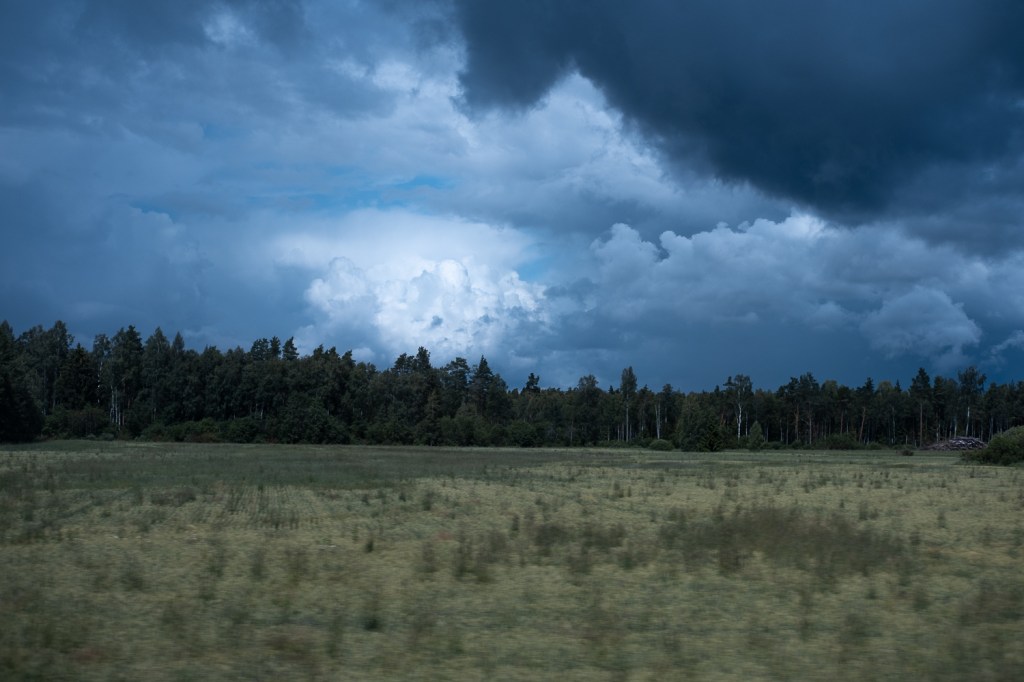
There had been intermittent summer showers throughout the day, and another descended as we departed Viljandi. This time I had finally opted to take the offered front seat and decided that actually photographing through the windscreen was now high art. It’s possibly because I’ve spent a long time living in a part of the world where any form of cloud is a novelty, but these did strike me as quite dramatic skies, certainly interesting enough when coupled with my second trip through the Estonian countryside to warrant a few photographs to document this landscape of low, gently rolling hills and forests. It’s entirely possible these photographs were only novel to me, a person who lived somewhere mostly scorched brown under cloudless, pale blue skies seeing green grass and clouds for the first time in a while …
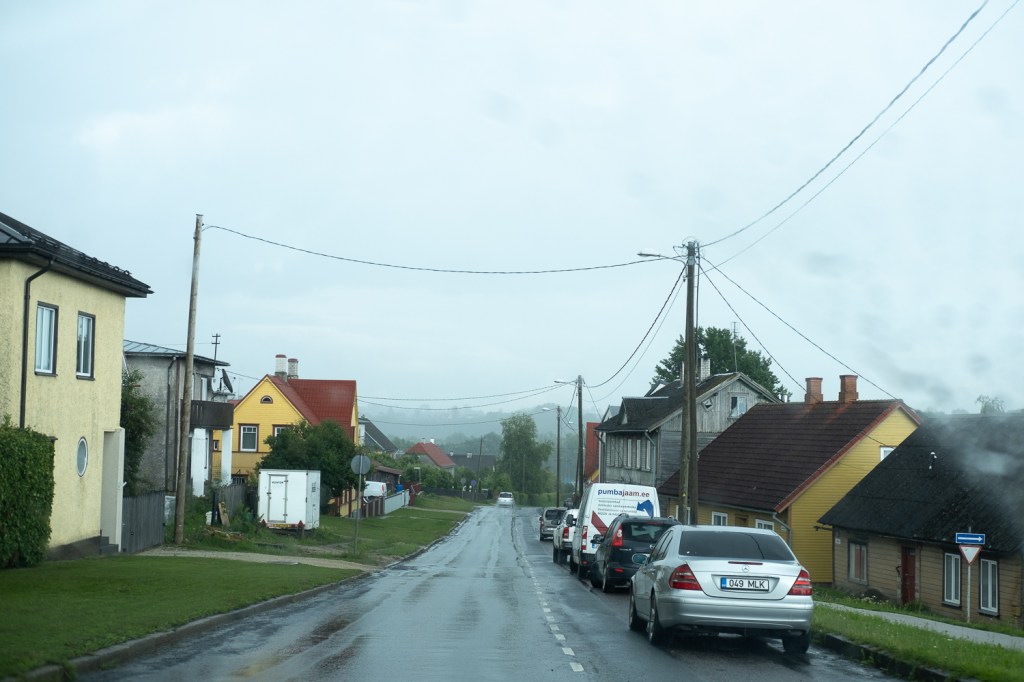
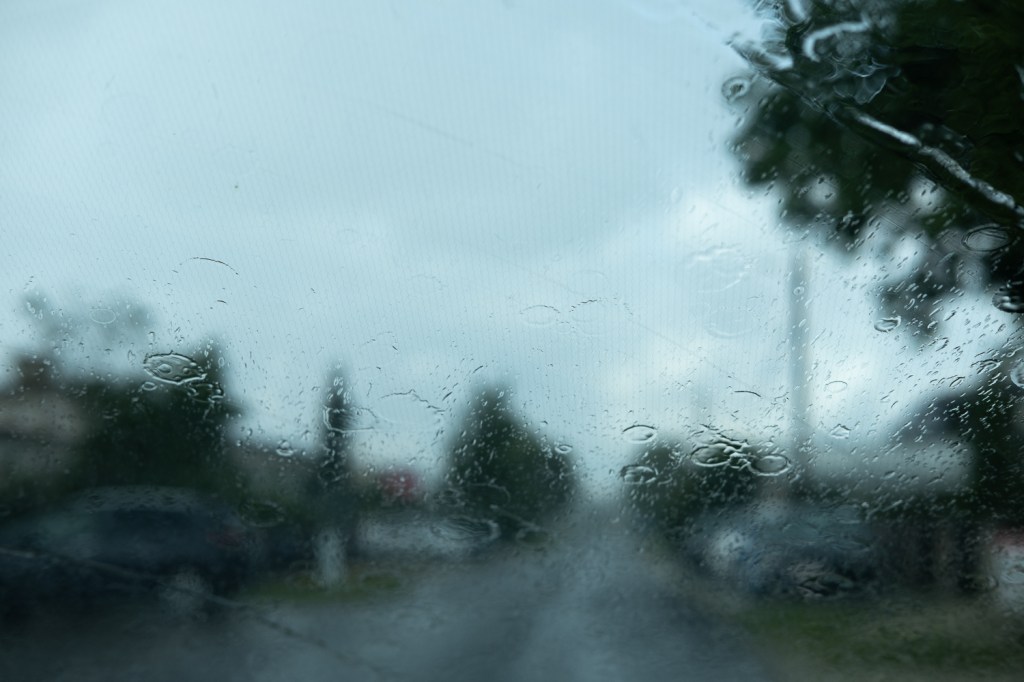
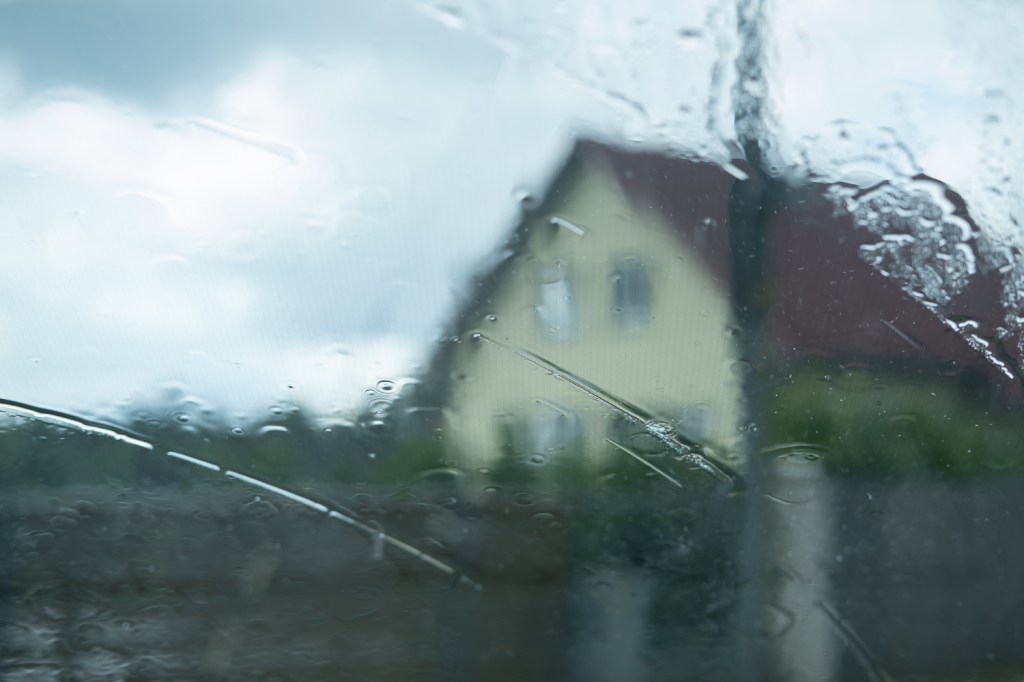
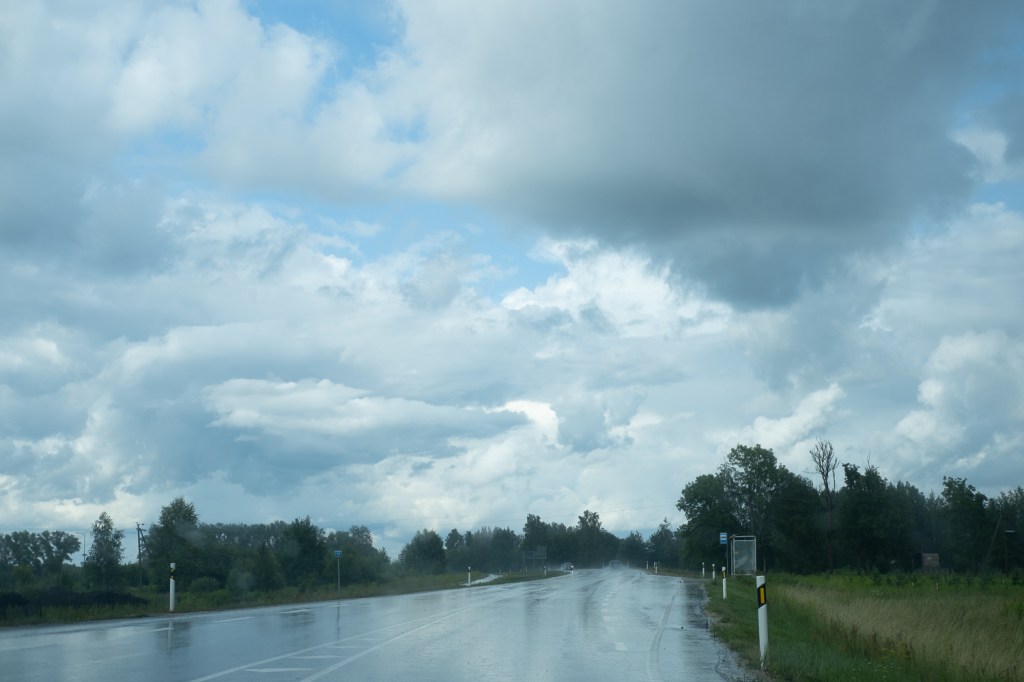
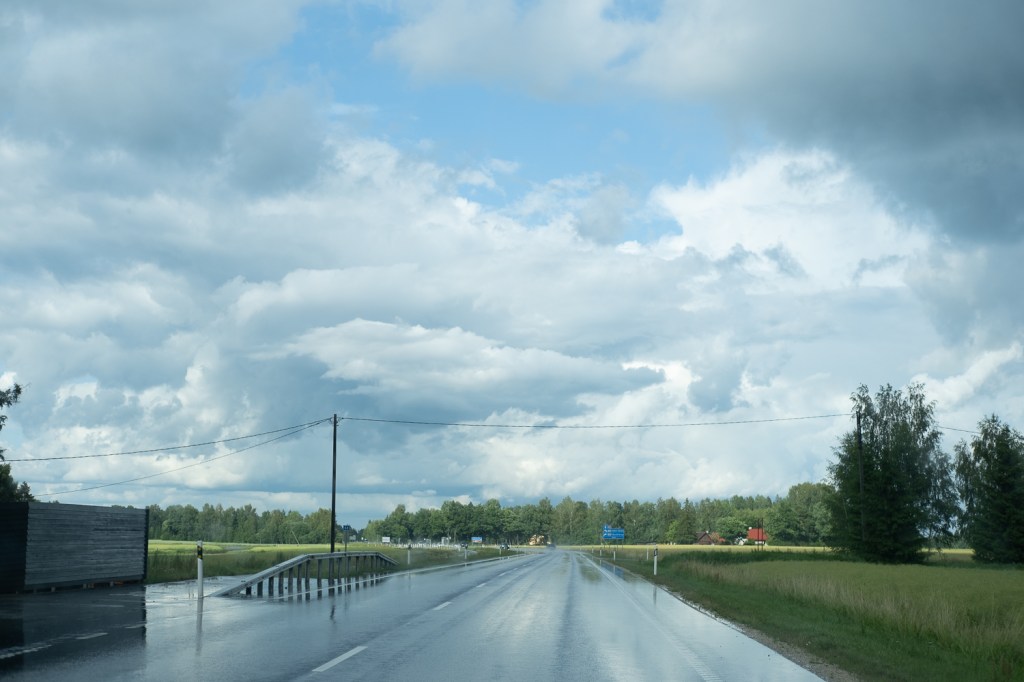
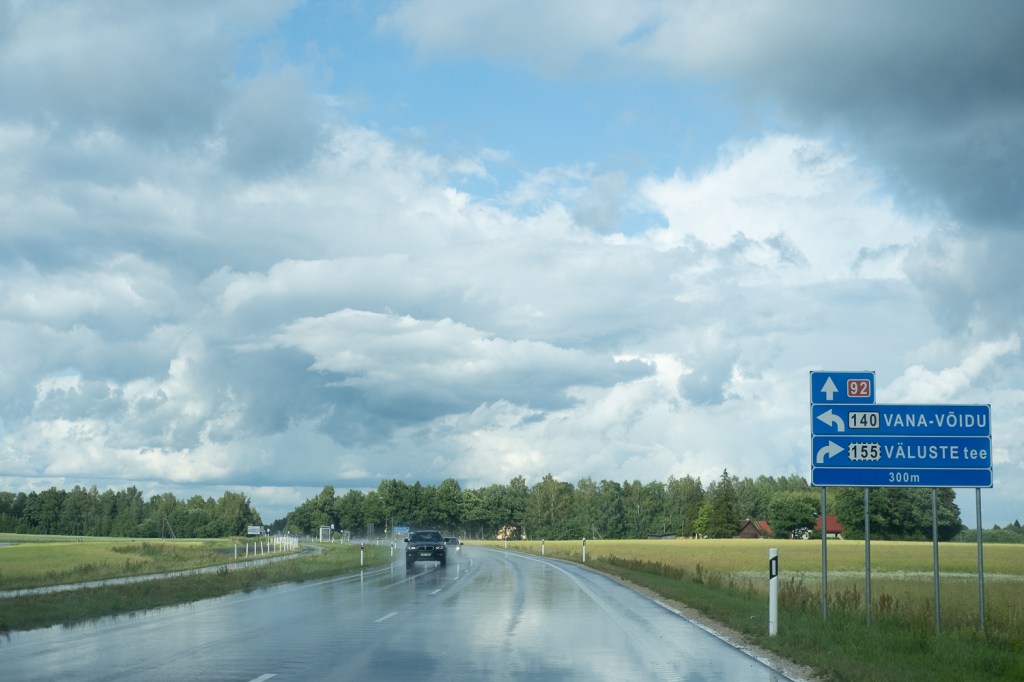
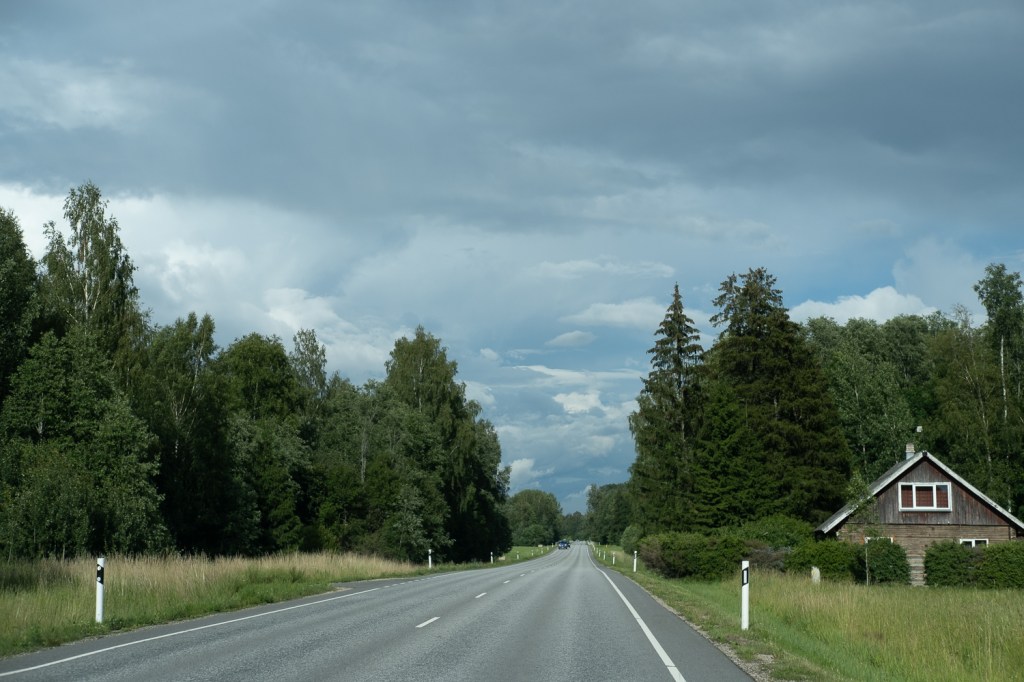
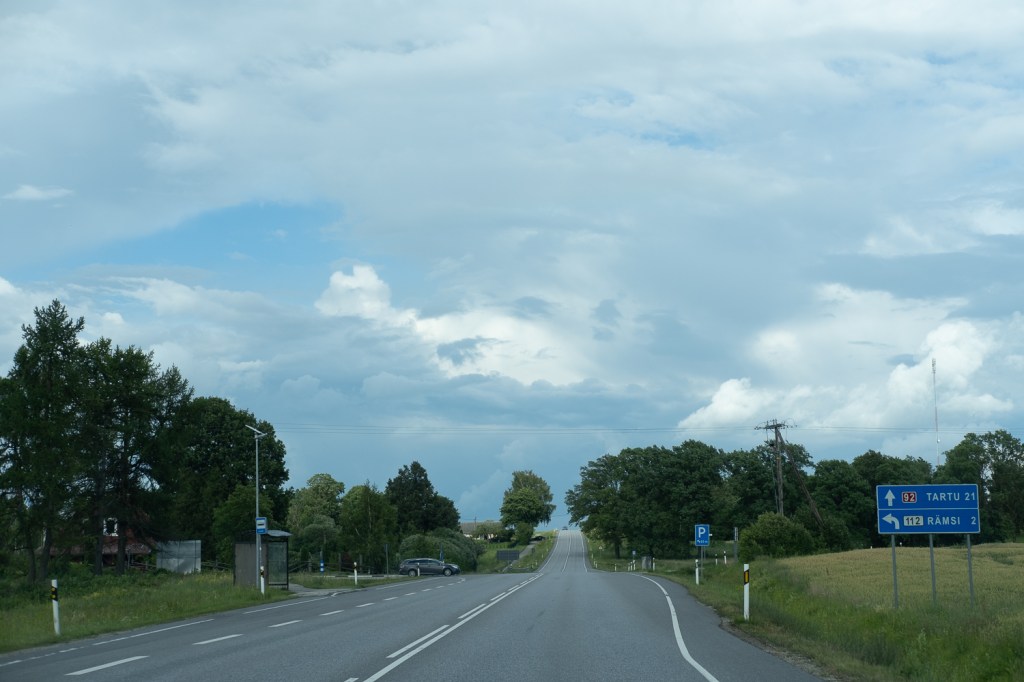
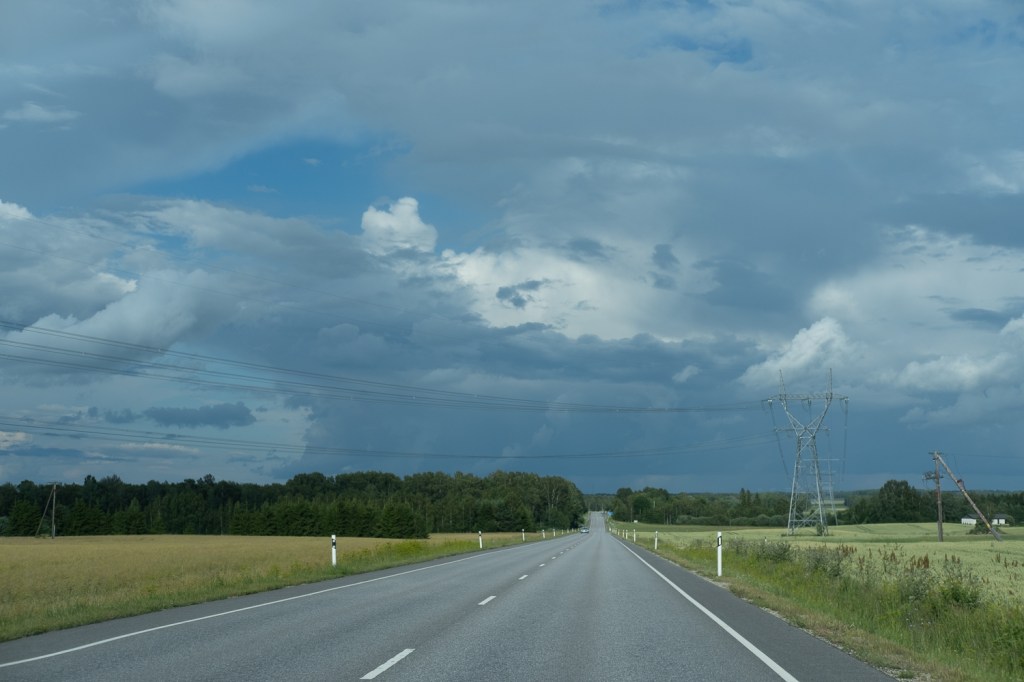
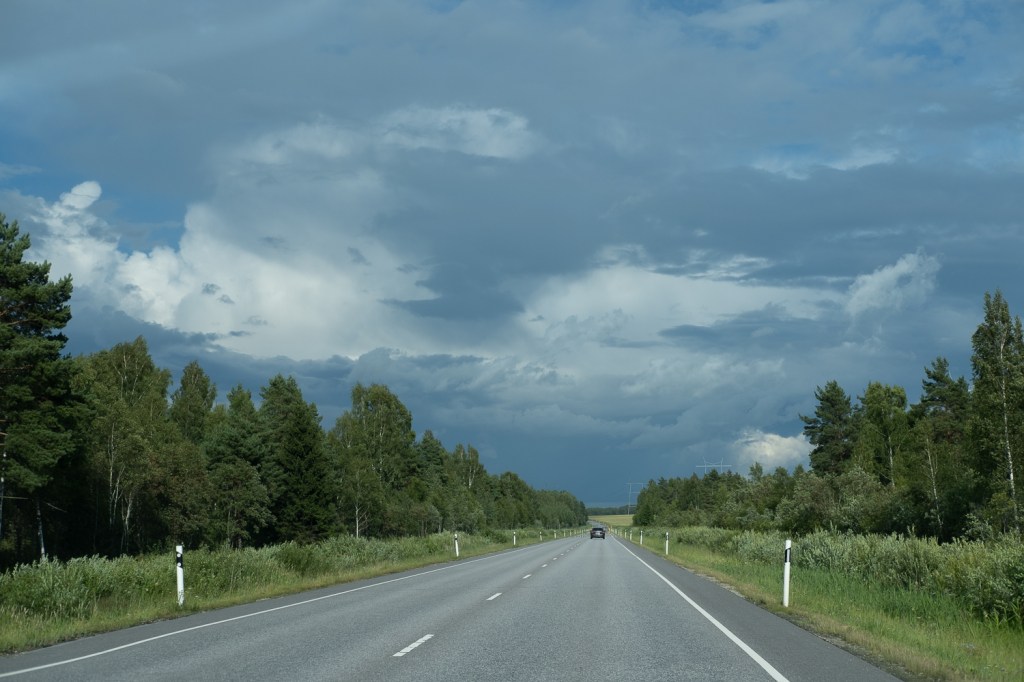
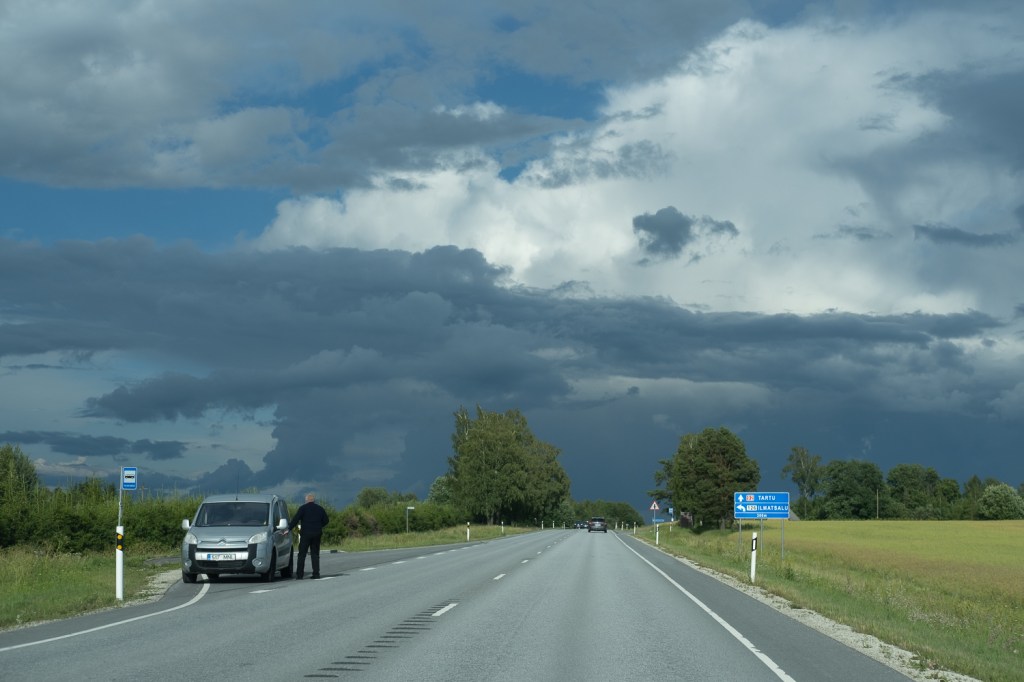
That was all she photographed but it wasn’t all she wrote (I normally use he/him but … artistic license) for I am about to write more. That evening we were bound for the Tartu institution that is Barlova, after the obligatory trip through the more traditionally iconic Toomemägi park which had somehow eluded me thus far, and then a number of diverting diversions as my friend’s partner and I tried to pick our way cross country to Karlova, the area of the city from which Barlova derives its name. There my friend had assembled quite the gathering, including her Spanish teacher and another one besides, with whom I’d spend most of the evening talking and, between the four of us who spoke Spanish, elevating the general noise levels of the bar above those generally produced by Estonian or Estonians speaking English.
After leaving Barlova, we wandered into the city centre in search of some kind of party, trying various venues none of which quite lived up to our exacting standards before my friend decided to call it a night. I had found another person who also professed to be concerned by the increasing predominance of the word ‘super’ within the adverb space, so I decided to stay out. It was already late and I wasn’t going to get a great deal of sleep had I gone home then, so I thought «why not have even less sleep?» and stayed out.
We ended up in another bar which my friend had shown me a couple of days earlier, but I now got to go inside where we came across some old friends (thus proving the earlier established rule that if you wander around the centre of Tartu for more than about 5 minutes you will find someone you know) of my new companion and shared a couple of drinks with them. We eventually left there at about 3am as the sun was preparing to «¡calienta que sales!» from just about below the horizon, and my newest friend made sure I had indeed correctly remembered where I had parked my borrowed bike on our route to our final destination. We said farewell at about 3:30 and I was up again at 5am to go and catch my bus back to Tallinn airport for my first flight to Milan.
I had actually not been to Italy before either, but in my brief transfer in Milan airport I did get to see everything I wanted … namely an Italian man angrily gesticulating about there being a spare table but an absence of chairs to accompany it. Ticked that off the bucket list.
It’s probably worth returning to Italy, I hear there’s some interesting historic sites and whatnot, but I also definitely plan to return to Tartu and have been recommending it to everyone I meet since this trip. When doing so, I am sure to add that it will be European Capital of Culture in 2024, so if you are somehow, for whatever reason, still reading this, consider yourself told … also consider getting a hobby or something, I don’t know.
Boutros, Boutros-Ghali,
Owain.
 Owain Shaw